
Uncategorized
How freaked out should we be about all these little earthquakes?
This partial text was computer generated. While our team has reviewed it, there may be errors.
Alexis Madrigal: Welcome to the forum. I'm Alexis Madrigal. There's nothing like a small earthquake too close to your home to remind you to check your emergency supplies. My family lives about a mile from the Hayward Fault, so we regularly experience small magnitude 3.0 earthquakes, which are strong enough to make you think, is this the big one? But then quickly enough to not be too exhausted.
However, what is happening in San Ramon now is something different. On one recent day, they experienced 19 earthquakes of magnitude 2.0 or higher. Here to discuss what's going on out there and answer all your earthquake-related questions, we're joined by Richard Allen, director of the Berkeley Seismological Laboratory and a professor in the Department of Earth and Planetary Sciences at UC Berkeley. Welcome.
Richard Allen: Thanks. It's great to be here.
ALEXIS MADRIGAL: And we have Anne Marie Baltay, who's a research geophysicist at the USGS Earthquake Sciences Center. Thank you for joining us.
Anne-Marie Baltay: Thank you so much for having me.
Alexis Madrigal: Richard, are we having more earthquakes than usual? How do you think about this?
Richard Allen: Well, yeah – I get asked this question all the time when we start going through some trauma. The answer is that we are not experiencing anything really unusual. It's true that we've had a lot of earthquakes along the Hayward Fault over the last few months, and then, of course, we have this swarm that's happening now.
But the swarm is actually not that unusual. We have had more than a dozen of these swarms over the past few decades. They flare up from time to time, last from days to weeks, and then usually fade away. What we haven't seen is that this swarm ends in a major earthquake. But, of course, that doesn't mean we won't have one this time. In the Bay Area, as we all know, we always have to be prepared for earthquakes of large magnitude.
Alexis Madrigal: But let's say you live in San Ramon. Will an earthquake swarm be an interesting phenomenon, or will it be something where you say, oh, it's no big deal — it's just another earthquake, and another earthquake, and another earthquake?
RICHARD ALLEN: I know it's very shocking for the people who live there. When you wake up regularly over several days, even these small earthquakes give you a very sudden and sharp jolt, which can wake people up. This is so shocking, unfortunately, there is no getting away from it.
But at the same time, we know we've seen this before. So we have to keep in mind that this is not a very serious problem.
Alexis Madrigal: Yes. Anne-Marie, What is an earthquake swarm or mass?
Anne-Marie Baltay: Yes, that's a great question. In a sense, it's just a matter of words. Traditionally, we talk about a sequence of main aftershocks, where the first earthquake is the largest, and then we know from observations and statistics that earthquakes tend to decrease in size and frequency over time.
A swarm is just a series of earthquakes that do not follow this pattern. In the case of San Ramon, what we have traditionally seen – as Richard said – over many decades is that the first earthquakes may not be the largest, but they are all of a similar size. We've seen quite a few magnitude 3.5 earthquakes in this swarm, and that's typical.
So it may be a slightly different physical mechanism, where earthquakes appear little by little, one after another, rather than as a big release of pressure as we see in the main aftershock sequences.
Alexis Madrigal: Very interesting. We're talking about the recent earthquake swarm in San Ramon and other earthquake issues in the area. You may have felt what happened in Sonoma County this weekend. You can call us with your earthquake questions — we've got your experts here — at 866-733-6786. You can send an email to [email protected]. You can find us on social media — BlueSky, Instagram, Discord — and we're on the KQED forum there, too.
Anne-Marie, is it the nature of the fault—the way the fault itself is assembled—that leads some places, like the Calaveras Fault, which is in San Ramon, to this kind of behavior?
Anne-Marie Baltay: Yes, we think so. But this is actually a big open question. We cannot bury our heads in the ground and see exactly what is happening. Much of what we know comes from observing faulting at the surface using seismometers or drilling into shallow subsurface strata.
What we think might happen at the northern end of the Calaveras Fault is that it ends up into a group of smaller faults that break up. There may be smaller activity occurring on those faults that host these swarms. We know that this area experiences swarms frequently, so there must be some physical explanation for this.
Alexis Madrigal: That's interesting. Error Calaveras seems like the third wheel here. We always talk about San Andreas, and of course Hayward's fault. Talk to me a little bit about the Calaveras error and its relationship to these two other errors.
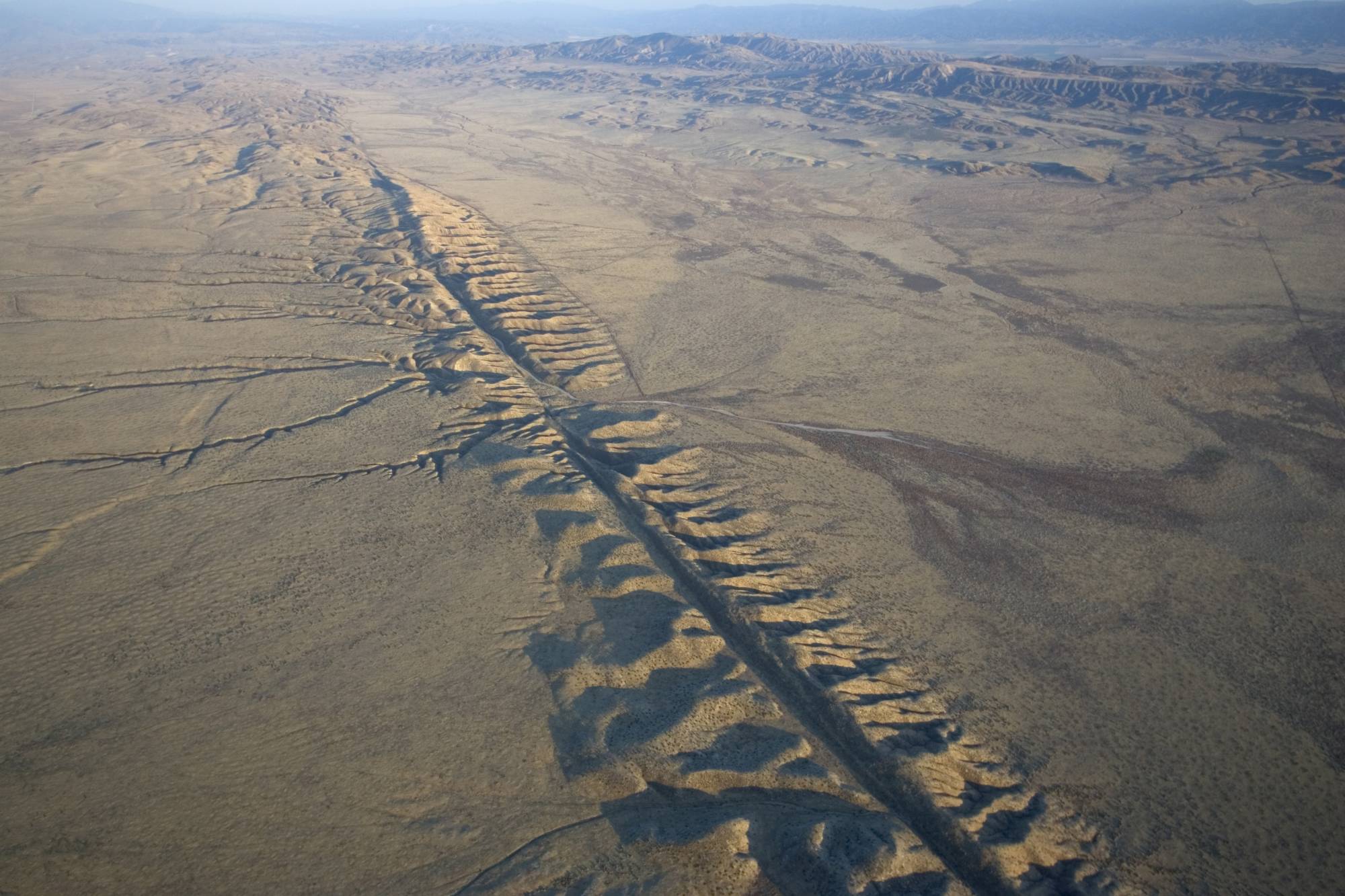
Richard Allen: Absolutely. San Andreas is the place everyone knows best. But when the San Andreas fault system reaches the Gulf region, it splits into several parallel faults. The second thing people think about is the Hayward fault, which runs right through Oakland and the East Bay. As you go east, you'll reach the Calaveras Fault.
This is actually a set of faults that accommodate the same process – the tectonic movement of plates between the Pacific plate and the North American plate moving past each other. This movement is distributed across these faults. There are more than just three, but these are the ones that appear to be the most active and have the highest probability of hosting a major earthquake in the future.
Alexis Madrigal: Does Calaveras Fault have this potential? Give me a ranking – what are our most serious mistakes?
Anne-Marie Baltay: Absolutely. The US Geological Survey makes forecasts for the Gulf region. Right now, we are in a forecast period that extends until 2043, which is about 18 years.
Alexis Madrigal: It's a long shot.
Anne-Marie Baltay: It is, that's the nature of it. We can't say exactly when or where the earthquake will occur, but during that period, there is a 72% chance of a 6.7 magnitude or larger earthquake occurring in the Bay Area.
We can then look statistically at which bugs are more likely to host 6.7. Hayward's error is most likely. It is also likely the San Andreas, followed by the Calaveras and the Concord Fault.
Alexis Madrigal: So the Calaveras error contributes to this overall probability.
Anne-Marie Baltay: Yes, that's true.
ALEXIS MADRIGAL: Hayward is right there, right, because the last big event was in 1868 – and the record is set about every 140 years, and we're past that now.
Richard Allen: That's right. The last was in 1868, ironically the same year that UC Berkeley was founded. We estimate the recurrence period to be about 140 to 150 years, with uncertainty of tens of years. This means that we have exceeded the average repetition interval.
So we have to be ready at any time, but it could also take years. This is the dilemma. There's no hiding the fact that we need to prepare for a major earthquake, even if it doesn't happen right away.
Alexis Madrigal: There's a lot of uncertainty out there. Do you think we'll get better at narrowing it down, Anne-Marie?
Anne-Marie Baltay: I think that's really the nature of the land. We can look back into historical and prehistoric times and see average recurrence rates. Let me give you an analogy for people in San Francisco: If you're waiting for line N — it's supposed to come every 15 minutes. But no one will be surprised if you wait 30 or 40 minutes, and then three trains appear at once.
This is how earthquakes work. We understand the long-term system, but on the human time scale, we cannot say exactly when or where they will occur.
Richard Allen: If I can add to that – while the statistics leave us with uncertainty, we are excited about new opportunities to learn more. The Hayward and Calaveras faults radiate a lot of information: creep, frequent small earthquakes, and other signals. Some errors are completely closed and silent. This is not so.
So, while uncertainties remain, we hope that we can learn more about our place in the earthquake cycle and say more in the future.
ALEXIS MADRIGAL: And if Hayward goes away, it's going to be one of the most underrated mistakes on the planet.
Richard Allen: Exactly. That's why the devices are important – collecting data before, during and after an earthquake.
ALEXIS MADRIGAL: Anne-Marie, these small earthquakes don't relieve the stress of a big earthquake, right?
Anne-Marie Baltay: That's right. There aren't enough of them, and they don't relieve enough stress.
Alexis Madrigal: Because the scale is exponential.
Anne-Marie Baltay: Exactly. A size 3 releases about 32 times more energy than a size 2, but there isn't enough 2S to total it.
Alexis Madrigal: Got it. We talk about the recent set of earthquakes in San Ramon and take your earthquake-related questions. We're joined by Annemarie Baltay of the USGS and Richard Allen of the University of California, Berkeley.
|
Sources 2/ https://www.kqed.org/forum/2010101912313/how-freaked-out-should-we-be-about-all-these-small-earthquakes The mention sources can contact us to remove/changing this article |
What Are The Main Benefits Of Comparing Car Insurance Quotes Online
LOS ANGELES, CA / ACCESSWIRE / June 24, 2020, / Compare-autoinsurance.Org has launched a new blog post that presents the main benefits of comparing multiple car insurance quotes. For more info and free online quotes, please visit https://compare-autoinsurance.Org/the-advantages-of-comparing-prices-with-car-insurance-quotes-online/ The modern society has numerous technological advantages. One important advantage is the speed at which information is sent and received. With the help of the internet, the shopping habits of many persons have drastically changed. The car insurance industry hasn't remained untouched by these changes. On the internet, drivers can compare insurance prices and find out which sellers have the best offers. View photos The advantages of comparing online car insurance quotes are the following: Online quotes can be obtained from anywhere and at any time. Unlike physical insurance agencies, websites don't have a specific schedule and they are available at any time. Drivers that have busy working schedules, can compare quotes from anywhere and at any time, even at midnight. Multiple choices. Almost all insurance providers, no matter if they are well-known brands or just local insurers, have an online presence. Online quotes will allow policyholders the chance to discover multiple insurance companies and check their prices. Drivers are no longer required to get quotes from just a few known insurance companies. Also, local and regional insurers can provide lower insurance rates for the same services. Accurate insurance estimates. Online quotes can only be accurate if the customers provide accurate and real info about their car models and driving history. Lying about past driving incidents can make the price estimates to be lower, but when dealing with an insurance company lying to them is useless. Usually, insurance companies will do research about a potential customer before granting him coverage. Online quotes can be sorted easily. Although drivers are recommended to not choose a policy just based on its price, drivers can easily sort quotes by insurance price. Using brokerage websites will allow drivers to get quotes from multiple insurers, thus making the comparison faster and easier. For additional info, money-saving tips, and free car insurance quotes, visit https://compare-autoinsurance.Org/ Compare-autoinsurance.Org is an online provider of life, home, health, and auto insurance quotes. This website is unique because it does not simply stick to one kind of insurance provider, but brings the clients the best deals from many different online insurance carriers. In this way, clients have access to offers from multiple carriers all in one place: this website. On this site, customers have access to quotes for insurance plans from various agencies, such as local or nationwide agencies, brand names insurance companies, etc. "Online quotes can easily help drivers obtain better car insurance deals. All they have to do is to complete an online form with accurate and real info, then compare prices", said Russell Rabichev, Marketing Director of Internet Marketing Company. CONTACT: Company Name: Internet Marketing CompanyPerson for contact Name: Gurgu CPhone Number: (818) 359-3898Email: [email protected]: https://compare-autoinsurance.Org/ SOURCE: Compare-autoinsurance.Org View source version on accesswire.Com:https://www.Accesswire.Com/595055/What-Are-The-Main-Benefits-Of-Comparing-Car-Insurance-Quotes-Online View photos

 |
 |
 |