
Politics
Britain is a swamp of lies and misinformation – and we arrived here on the Brexit bus | Jonathan Freedland
WWhen the anniversary comes later this month, few will want to look back. All political speeches will be about the Makerfield by-election, about the future of this government and this Prime Minister. And yet it would be wise to reflect on what happened on June 23, 2016 – if only because the choices facing Keir Starmer and his future successors, indeed the entire political and cultural landscape we live in today, are informed or have been shaped by this event. We live in Brexit Britain.
A useful prompt comes from the upcoming two-part BBC series Brexit: a very British civil wardirected by master documentarian Norma Percy. Speaking to (almost) all the key players, it brings it all back – the red bus, “taking back control”, the pantomime battle of Nigel Farage against Bob Geldof.
It reminds you of things that some may have forgotten, including how much of this was born out of sheer shenanigans, a clever tactical ploy, plotted by the reckless people who were running the country then. In 2013, David Cameron and George Osborne sought to appease vocal Eurosceptics in their own ranks by promising an entry/exit referendum after the next election – a pledge they thought they would never have to honor because they were sure they would fall short of an absolute majority in Parliament, after which they would happily trade that promise for a concession to the Liberal Democrats.
As if that wasn’t cavalier enough, Britain’s place in Europe became dependent on the soap opera dynamics on the Notting Hill set: it was tennis at Regent’s Park and weekends at Checkers, Michael (Gove) dumped Dave and what will Sam (Cameron) think of Boris. Johnson insists he ‘didn’t care about being prime minister’ as Osborne doesn’t want to agree: “It had nothing to do with the EU, Britain’s place in the world. It was Game of Thrones. That’s what Boris Johnson was playing. And he could see the Iron Throne about to be liberated.” It was a very gripping affair at the time – and yet what was at stake, as these Etonians played out their schoolboy rivalries, was nothing less than the fate of the United Kingdom. This recklessness regarding the future of 70 million people remains unforgivable – and the culpability belongs almost as much to Cameron and Osborne as to Gove and Johnson.
However, legacy is more important than the origin story. We see it around us every day. Start with the economy. The Remain campaign was ridiculed at the time as “project fear”, spreading gloom by warning that Britain outside the EU would be poorer, to the tune of 6% of GDP. However, here we are ten years later and, on the contrary, staying was not pessimistic enough. The drop in GDP is now estimated between 6% and 8%with investments down by up to 18%. Commerce is about to be 15% less than it would have been had we remained in the EU, according to the Office for Budget Responsibility, while a staggering number of people 85% of those who import or export goods report problems they didn’t have before. The others said Brexit would be a slow drain as the British economy drained. So it turned out, except it wasn’t that slow.
The other legacy of Brexit, apart from the upheaval of the old Labor-Conservative duopoly, is not measurable in euros or percentages, but it is just as real. This is seen in the swelling and darkening of the national discourse, in the aggression and even hatred that, previously relegated to the margins, now lurks at the center of the public square. This week, the leader of the party that brought us Brexit warned of civil war.
It would be a mistake to view the referendum as the sole cause of this change – Brexit was, in part, a symptom of this change – and we can all see the role that social media and those like Elon Musk have played in degrading the discourse. But Brexit has both accelerated and intensified this process.
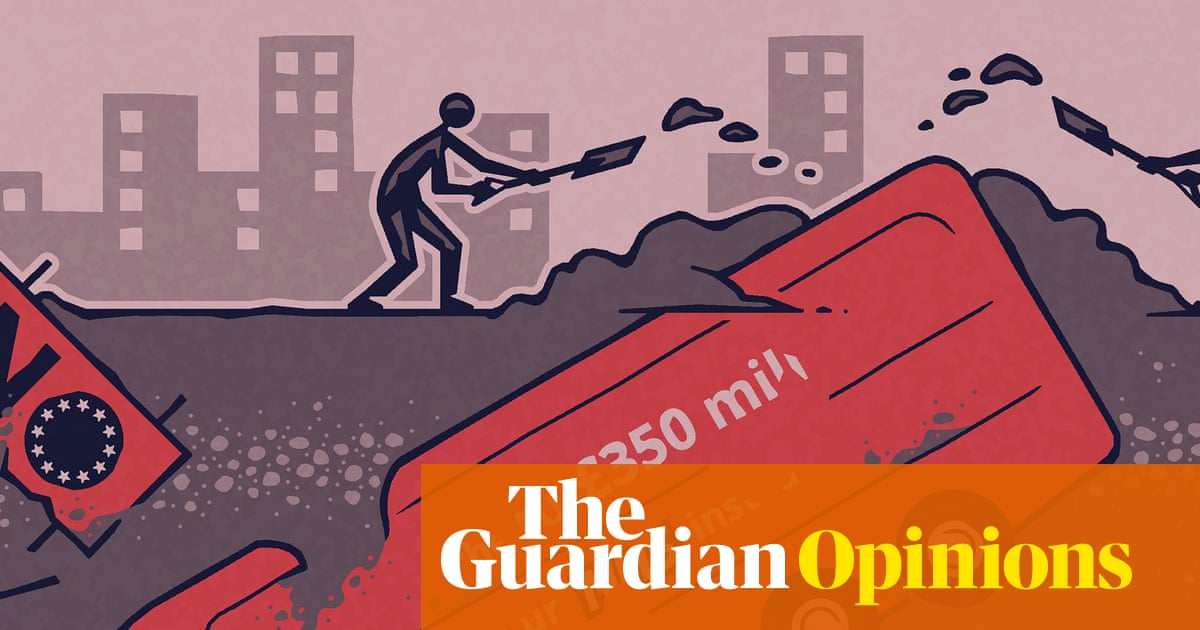
A disregard for facts – remember that the “post-truth” was that of the Oxford dictionaries word of the year 2016 – was a lasting gift from the Leave campaign. Percy’s documentary lays bare the conscious dishonesty of the claim that the UK was sending £350m to the EU every week, a raw figure – in every sense of the word – which did not include the more than £80m that came back in rebates or money spent by the EU in the UK. Johnson’s adviser Dominic Cummings I will brag later that “the point of using it was actually to try to drive the Remain campaign and the people running it crazy” – by deliberately boring his opponents into dry fact-checking of statistics, while he could push voters’ hottest buttons. “I love this bus,” an unrepentant Johnson now says, describing it as “the bus of truth.” In 2026, we are constantly wading through a swamp of lies and misinformation, especially online – but it was the referendum that pushed us into this swamp, and at full speed.
The motto of Cummings, Farage and others was fear and hatred. We see Farage’s ‘breaking point’ poster again, with his brown-skinned men apparently massing at our borders, and Vote Leave’s totally false advert suggesting that 76 million Turks could soon enter Britain via the EU, leaving a trail of dirty footprints behind them. These were thinly veiled racist and xenophobic messages – and they worked.
So it’s hardly surprising that, ten years later, we have the man who may well be in Downing Street after the next election – and who, tellingly, rarely speaks about Brexit these days – complaining of “anti-white bias” and calling for “pure cold rage” after the murder of a young white man, even as that man’s parents pleaded that his death not be used to turn British people against each other. Restore Britain, a party that approved by white supremacists and unapologetic neo-Nazis, is on the ballot in Makerfield and could earn 10% of the vote. There has always been a far right in Britain, but it was once confined to the margins. Brexit invited it.
By dividing us into Leave or Remain, Brexit has polarized our politics in a new and sharper way. Looking back, it’s clear that Remain could never win a contest like that, because it was never really about the UK’s membership of the EU. Indeed, the question became: “Do you want things to stay as they are, or would you like to leave the current reality of your life for something better?” » In this competition, there would only be one winner.
Additionally, the sustaining case was doomed to failure because of the timing. If the vote had taken place now, in a world threatened by Donald Trump and Vladimir Putin, the folly of remaining alone, away from our closest neighbors, would be evident. But Trump was just a mere candidate in June 2016, and even though Crimea had been seized two years earlier, Russia’s full-scale assault on Ukraine was still to come. The geopolitical madness of Brexit was not as evident then as it is now.
It’s a tragic story – a once-confident nation makes such a frightening and self-destructive decision. Our economy, our politics, our daily lives in 2026 – all of this bears the imprint of this calamitous mistake. But this story is not over. The BBC documentary confirms the determination that allowed Brexiteers to turn an eccentric lost cause into a winning movement. In total, it took the Leavers 41 years, from 1975 to 2016, to overturn our first vote on entry into the EU. Joining is already the established preference of a majority of Britons, 56% to 35% by the most recent count – and besides, politics moves twice as fast now. If this calculation is correct and it will take 20 years to overturn the 2016 verdict, we should not be discouraged – after all, we are halfway there.
-
Jonathan Freedland is a columnist for the Guardian
-
Do you have an opinion on the issues raised in this article? If you would like to submit a response of up to 300 words by email to be considered for publication in our letters section, please click here.
|
Sources 2/ https://www.theguardian.com/commentisfree/2026/jun/05/britain-lies-disinformation-brexit-bus-economy-vote The mention sources can contact us to remove/changing this article |
What Are The Main Benefits Of Comparing Car Insurance Quotes Online
LOS ANGELES, CA / ACCESSWIRE / June 24, 2020, / Compare-autoinsurance.Org has launched a new blog post that presents the main benefits of comparing multiple car insurance quotes. For more info and free online quotes, please visit https://compare-autoinsurance.Org/the-advantages-of-comparing-prices-with-car-insurance-quotes-online/ The modern society has numerous technological advantages. One important advantage is the speed at which information is sent and received. With the help of the internet, the shopping habits of many persons have drastically changed. The car insurance industry hasn't remained untouched by these changes. On the internet, drivers can compare insurance prices and find out which sellers have the best offers. View photos The advantages of comparing online car insurance quotes are the following: Online quotes can be obtained from anywhere and at any time. Unlike physical insurance agencies, websites don't have a specific schedule and they are available at any time. Drivers that have busy working schedules, can compare quotes from anywhere and at any time, even at midnight. Multiple choices. Almost all insurance providers, no matter if they are well-known brands or just local insurers, have an online presence. Online quotes will allow policyholders the chance to discover multiple insurance companies and check their prices. Drivers are no longer required to get quotes from just a few known insurance companies. Also, local and regional insurers can provide lower insurance rates for the same services. Accurate insurance estimates. Online quotes can only be accurate if the customers provide accurate and real info about their car models and driving history. Lying about past driving incidents can make the price estimates to be lower, but when dealing with an insurance company lying to them is useless. Usually, insurance companies will do research about a potential customer before granting him coverage. Online quotes can be sorted easily. Although drivers are recommended to not choose a policy just based on its price, drivers can easily sort quotes by insurance price. Using brokerage websites will allow drivers to get quotes from multiple insurers, thus making the comparison faster and easier. For additional info, money-saving tips, and free car insurance quotes, visit https://compare-autoinsurance.Org/ Compare-autoinsurance.Org is an online provider of life, home, health, and auto insurance quotes. This website is unique because it does not simply stick to one kind of insurance provider, but brings the clients the best deals from many different online insurance carriers. In this way, clients have access to offers from multiple carriers all in one place: this website. On this site, customers have access to quotes for insurance plans from various agencies, such as local or nationwide agencies, brand names insurance companies, etc. "Online quotes can easily help drivers obtain better car insurance deals. All they have to do is to complete an online form with accurate and real info, then compare prices", said Russell Rabichev, Marketing Director of Internet Marketing Company. CONTACT: Company Name: Internet Marketing CompanyPerson for contact Name: Gurgu CPhone Number: (818) 359-3898Email: [email protected]: https://compare-autoinsurance.Org/ SOURCE: Compare-autoinsurance.Org View source version on accesswire.Com:https://www.Accesswire.Com/595055/What-Are-The-Main-Benefits-Of-Comparing-Car-Insurance-Quotes-Online View photos

 |
 |
 |