
Uncategorized
A parasitic infection that can become fatal with corticosteroids
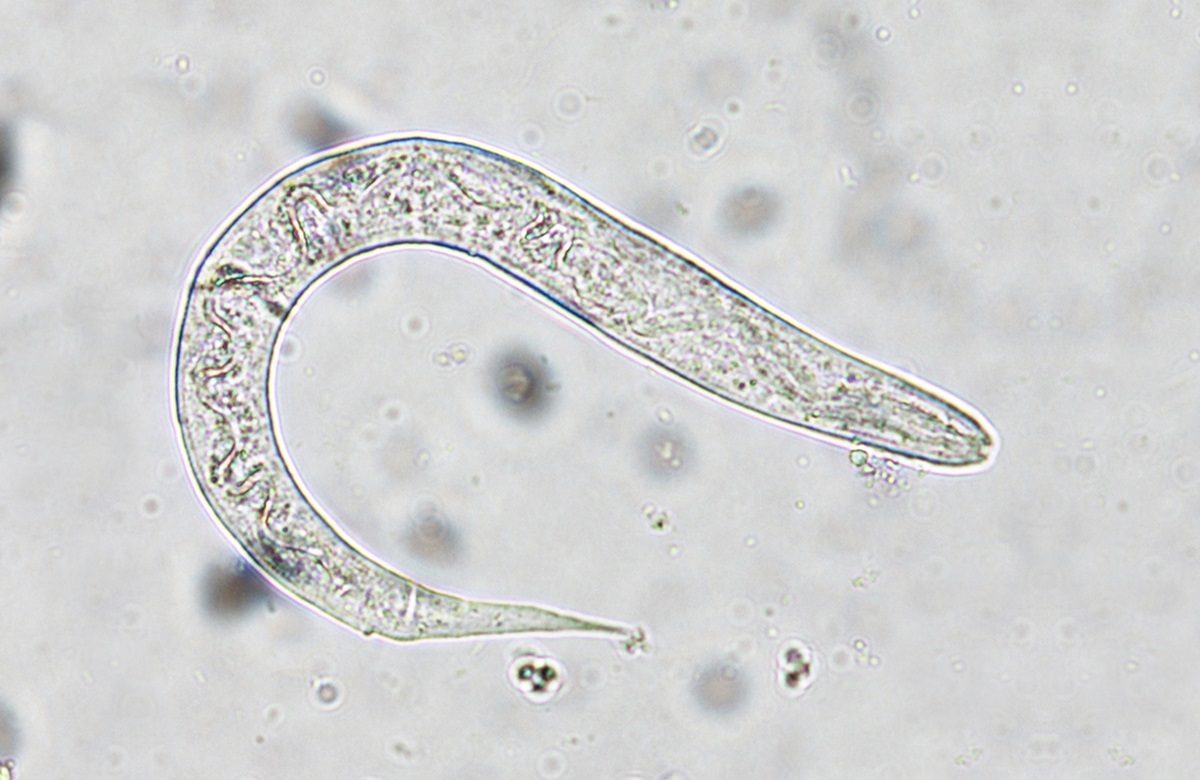
Healthcare professionals in tropical and subtropical environments where strongyloidiasis is prevalent or who care for patients who have traveled to such areas should maintain a high level of awareness about corticosteroid use, including when this type of anti-inflammatory agent is given to patients suspected of having SARS-CoV-2 infection. .
Strongyloidiosis – an infection with parasitic worms – is estimated to affect millions of people and is associated with marginalized communities who often walk barefoot. Although often subclinical, immunosuppression resulting from diseases such as AIDS, lymphoma, and leukemia, or continued use of corticosteroids can turn it into a serious and deadly “hyperinfection” syndrome.
Risks in the COVID-19 era
The current COVID-19 pandemic serves to highlight the risk of systemic corticosteroids and, to a lesser extent, other immunosuppressive therapies, in populations with a significant risk of underlying strongyloidiasis. Cases of strongyloidiasis hyperinfection under corticosteroid therapy as COVID-19 therapy have been reported.1.2 and draw attention to the need to address the risk of iatrogenic strongyloidiasis syndrome in infected individuals before corticosteroid administration.
Although this has gained in importance amid a pandemic in which corticosteroids are one of the few therapies to improve mortality3, its importance is much broader given that corticosteroids and other immunosuppressive therapies are increasingly common in the treatment of chronic diseases (e.g., asthma or certain rheumatic conditions).
The risk of using strongyloidiasis and corticosteroids further becomes globally relevant, as at-risk populations include not only those living in endemic areas, but also migrant communities in non-endemic areas.
Disease and immunosuppression
Strongyloidiasis, most often due to Strongyloides stercoralis in humans, the parasitic (nematode) infection is endemic in most tropical and subtropical regions of the world, with an overall global prevalence of 8% and the highest burden in Southeast Asia, the Western Pacific and WHO African regions.4.
Humans become infected by contact with contaminated soil when the larvae penetrate the skin and then migrate into the intestines. Eggs (or larvae) are then excreted back into the environment where they can infect a new host. Unlike other intestinal nematode infections, S. stercoralis has a unique ability to auto-inoculate (re-infect) its human host, not requiring passage through the soil, giving parasite the ability of the host to become chronically infected for decades.
Most infections are asymptomatic or subclinical, although they may be associated with abdominal discomfort, skin rash, cough, constipation, or other less common complications. However, fears of complications, hyperinfection syndrome, or spread occur when the patient becomes immunosuppressed, most commonly due to corticosteroid treatment.5.
In addition to pharmacological immunosuppression, coinfection with human T-lymphotropic virus type 1 (HTLV-1), another common tropical / subtropical chronic infection, increases the risk of hyperinfection.
Prevention is crucial
The most common clinical presentation of hyperinfection syndrome is acute decompensation of a patient diagnosed with gram-negative bacteremia or central nervous system infection (meningitis). In areas of the world that do not have access to reliable diagnostics, including microbiological cultures, the underlying condition of strongyloidiasis is not sufficiently recognized. Even in areas with advanced diagnostics, the etiology is often neglected, and when diagnosed, it is found by chance. Although eosinophilia can help diagnose chronic strongyloidiasis, it is often absent in cases of hyperinfection, emphasizing the importance of high clinical acuity in recognizing this process. Prevention is paramount given that even in treated cases mortality far exceeds 50%.
Treatment
Treatment of chronic strongyloidiasis with ivermectin 200 µg / kg daily orally x 1-2 days is considered safe with potential contraindications, including possible Absolutely infection (endemic in West and Central Africa), pregnancy and weight <15 kg.
Given the safety profile of ivermectin, the United States has used presumed ivermectin treatment for strongyloidiasis in refugees migrating from endemic areas, and Canada and the European Center for Disease Prevention and Control have issued guidelines on presumed treatment to avoid hyperinfection in at-risk populations.6-8. Screening and treatment, or where not available, the addition of ivermectin to mass drug delivery programs, should be studied and considered.
Presumed treatment
Corticosteroids are extremely cheap, widely available and effective treatment for countless conditions. The actual risk of hyperinfection syndrome in any person placed on corticosteroids is unknown. However, when it does occur, it generally has a devastating outcome.
Risk stratification for chronic strongyloidiasis puts those receiving corticosteroid therapy (or having HTLV-1 infection) at high risk of hyperinfection if they have been born,, residence, or had long-term travel in Southeast Asia, Oceania, sub-Saharan Africa, South America or the Caribbean. Similarly, the risk is considered moderate in Central America, Eastern Europe, the Mediterranean, Mexico, the Middle East, North Africa, the Indian subcontinent, or Asia (low risk in Australia, Canada, the United States, or Western Europe).8.
When initiating therapy with corticosteroids, including COVID-19, treatment with ivermectin (with or without laboratory screening) with ivermectin is recommended for those with a high or moderate risk of hyperinfection.9.
High level of clinician awareness
When prescribing corticosteroids, including treatment of patients with COVID-19, clinicians must maintain a high level of awareness of strongyloidiasis that causes chronic subclinical infections that can become fatal under conditions of hyperinfection by immunosuppression.
Due to high endemicity S. stercoralis in tropical and subtropical areas of the world, people with a history of living or long travel in these areas should be considered for presumed ivermectin treatment prior to corticosteroid administration to prevent hyperinfection.
Further studies and data are needed regarding the presumed treatment and possible addition of ivermectin to other existing mass drug delivery programs. The diagnosis and treatment of a suspected or established hyperinfective system strongyloidiasis should be discussed with a specialist.
References:
- Case report: Disseminated Strongyloidiasis in patients with COVID-19. American Journal of Tropical Medicine and Hygiene. 2020; 103 (4): 1590-1592. doi: 10.4269 / ajtmh.20-0699
- Strongyloides infection manifested during immunosuppressive therapy for SARS-CoV-2 pneumonia. Infection. Published online September 10, 2020: 1-4. doi: 10.1007 / s15010-020-01522-4
- Recovery Collaborative Group. Dexamethasone in hospitalized patients with Covid-19 – preliminary report. New England Journal of Medicine. 2020; 0 (0): nothing. doi: 10.1056 / NEJMoa2021436
- Buonfrate D, Bisanzio D, Giorli G, et al. Global prevalence of Strongyloides stercoralis infection. Pathogens. 2020; 9 (6). doi: 10.3390 / pathogens9060468
- Krolewiecki A, Nutman TB. Strongyloidiasis: a neglected tropical disease. Infectious Diseases Clinics of North America. 2019; 33 (1): 135-151. doi: 10.1016 / j.idc.2018.10.006
- Center for Disease Control and Prevention. Department of Global Migration and Quarantine: Guidelines for Presumed Treatment of Overseas Diseases Strongiloidiasis, Schistosomiasis and Helminthic Infections Transmitted by Soil | Health of immigrants and refugees CDC. Published 2019 Accessed November 13, 2020 https://www.cdc.gov/immigrantrefugeehealth/guidelines/overseas/intestinal-parasites-overseas.html
- The ECDC issues guidelines for the screening of migrants and guidelines for vaccination. European Center for Disease Prevention and Control. Published 5 December 2018. Accessed 1 December 2020 https://www.ecdc.europa.eu/en/news-events/ecdc-issues-migrant-screening-and-vaccination-guidance
- Boggild A, Libman M, Greenaway C, McCarthy A. CATMAT statement on disseminated strongyloidiasis: Guidelines for prevention, assessment and management. Can Commun Dis Rep. 2016; 42 (1): 12-19. doi: 10.14745 / ccdr.v42i01a03
- Stauffer WM, Alpern JD, Walker PF. COVID-19 and dexamethasone: A potential strategy to avoid steroid-related Strongyloides hyperinfection. PIT. 2020; 324 (7): 623. doi: 10.1001 / pit.2020.13170
What Are The Main Benefits Of Comparing Car Insurance Quotes Online
LOS ANGELES, CA / ACCESSWIRE / June 24, 2020, / Compare-autoinsurance.Org has launched a new blog post that presents the main benefits of comparing multiple car insurance quotes. For more info and free online quotes, please visit https://compare-autoinsurance.Org/the-advantages-of-comparing-prices-with-car-insurance-quotes-online/ The modern society has numerous technological advantages. One important advantage is the speed at which information is sent and received. With the help of the internet, the shopping habits of many persons have drastically changed. The car insurance industry hasn't remained untouched by these changes. On the internet, drivers can compare insurance prices and find out which sellers have the best offers. View photos The advantages of comparing online car insurance quotes are the following: Online quotes can be obtained from anywhere and at any time. Unlike physical insurance agencies, websites don't have a specific schedule and they are available at any time. Drivers that have busy working schedules, can compare quotes from anywhere and at any time, even at midnight. Multiple choices. Almost all insurance providers, no matter if they are well-known brands or just local insurers, have an online presence. Online quotes will allow policyholders the chance to discover multiple insurance companies and check their prices. Drivers are no longer required to get quotes from just a few known insurance companies. Also, local and regional insurers can provide lower insurance rates for the same services. Accurate insurance estimates. Online quotes can only be accurate if the customers provide accurate and real info about their car models and driving history. Lying about past driving incidents can make the price estimates to be lower, but when dealing with an insurance company lying to them is useless. Usually, insurance companies will do research about a potential customer before granting him coverage. Online quotes can be sorted easily. Although drivers are recommended to not choose a policy just based on its price, drivers can easily sort quotes by insurance price. Using brokerage websites will allow drivers to get quotes from multiple insurers, thus making the comparison faster and easier. For additional info, money-saving tips, and free car insurance quotes, visit https://compare-autoinsurance.Org/ Compare-autoinsurance.Org is an online provider of life, home, health, and auto insurance quotes. This website is unique because it does not simply stick to one kind of insurance provider, but brings the clients the best deals from many different online insurance carriers. In this way, clients have access to offers from multiple carriers all in one place: this website. On this site, customers have access to quotes for insurance plans from various agencies, such as local or nationwide agencies, brand names insurance companies, etc. "Online quotes can easily help drivers obtain better car insurance deals. All they have to do is to complete an online form with accurate and real info, then compare prices", said Russell Rabichev, Marketing Director of Internet Marketing Company. CONTACT: Company Name: Internet Marketing CompanyPerson for contact Name: Gurgu CPhone Number: (818) 359-3898Email: [email protected]: https://compare-autoinsurance.Org/ SOURCE: Compare-autoinsurance.Org View source version on accesswire.Com:https://www.Accesswire.Com/595055/What-Are-The-Main-Benefits-Of-Comparing-Car-Insurance-Quotes-Online View photos
Thanks WHO For Help!

 |
 |
 |