
Business
Can a portable air purifier protect your home from COVID-19?
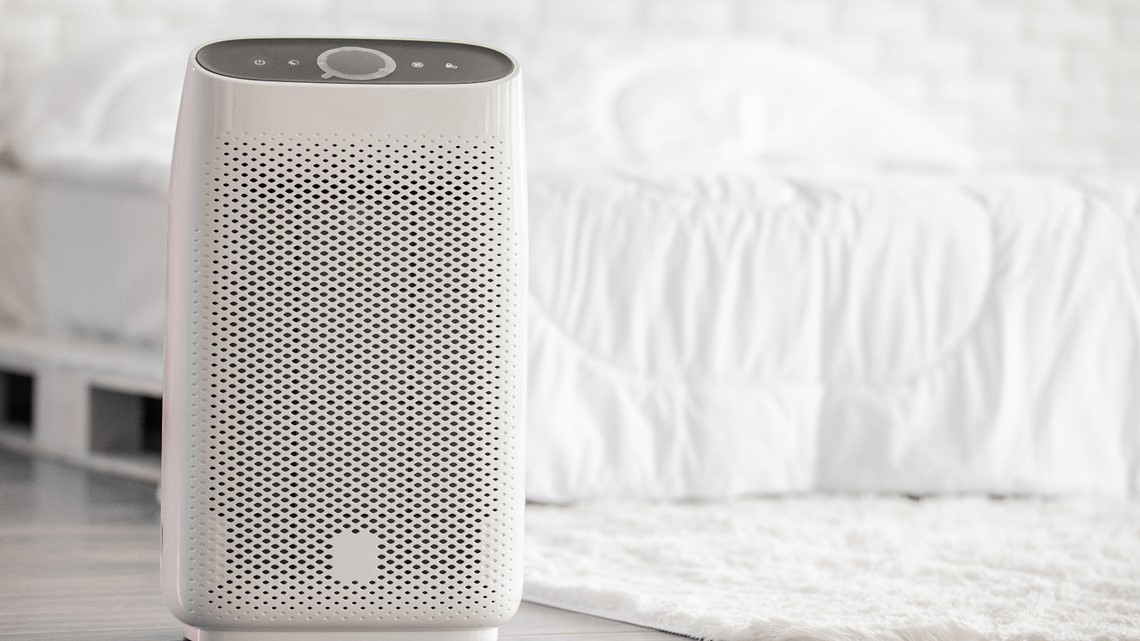
Home air purifiers seem to be a tempting option for the winter months. But do they work against the coronavirus?
With the onset of winter and the end of the patio season in sight, the fear of several months of isolation under the shadow of COVID-19 is palpable in Minnesota.
Is there anything you can do to make sure your friends or family are safe to visit your home, when the yard is filled with snow and the temperatures are dropping below freezing?
One possibility emerging in Internet advertisements and science blogs is the portable air purifier. It sounds simple: clean the coronavirus particles from your indoor air to make it safe for breathing.
But will it work? We went to see Professor Chris Hogan at the College of Science and Engineering at the University of Minnesota to find out. He studies the transport of small particles in the air and is the editor of the Journal of Aerosol Science.
The short answer: An air purifier can help mitigate risk, but it isn’t a substitute for social distancing and wearing a mask.
That being said, there are indeed additional steps you can do to make the air in your home cleaner – and safer – for your family and loved ones.
So you want to buy an air purifier
OK, so you know your best options are to limit the number of people in your home, social distancing, and wearing masks. But you still want the added protection of an air purifier for necessary meetings – or times when you choose to take the risk and have someone.
There are three main types of purifiers that you can look at.
HEPA filters
The most common air purifiers that you will see advertised these days are those that incorporate a HEPA filter. HEPA stands for High Efficiency Particulate Air. This type of filter is actually fine enough in theory to capture the coronavirus particles – which are smaller than most lower-grade air filters will capture.
“HEPA filters are extremely effective,” Hogan said. “99.97% or better. They are really good.”
HEPA filters are designed to capture particles as efficiently as possible. Air purifiers that incorporate these filters only bring in air and recycle it.
“So they really purify the air in the room,” Hogan said. “You can think of it as incoming dirty air, particle-free air for all particle sizes.”
Of all the types of air purifiers available today, Hogan said the one that was the safest bet was probably the one that included a HEPA filter, because to have the HEPA rating, the company must have done so. collection efficiency tests.
“The challenge is to make sure it cleans enough air per minute or per hour to actually help reduce the concentrations in that room,” Hogan said.
To verify this, check the Clean Air Diffusion Rate (CADR). This is usually in cubic feet per minute or per hour. You want to estimate the dimensions of the room you’re installing it in, then make sure that it cleans the air in that room more than five times per hour. Hogan said seven times an hour was even better, although it could be harder to find.
“Make sure it’s been actually tested and not, you know, rated by someone,” Hogan said.
This is part of the problem – companies don’t really have to specifically test CADR. Hogan said, however, that the companies that took the test say so pretty quickly and put the test report on their website.
“You should feel free to contact the companies and ask them that,” he said. “I think there is pressure between companies to do it.”
Hogan said most companies are probably doing CADR testing now – and if they do, they’re bragging about it.
“It would be really weird for a company to have the test done and not mention it,” Hogan said. “And if they don’t mention it, they probably didn’t or they weren’t happy with the outcome.”
Finally, don’t expect the device to clean your entire house – focus on just one room. Hogan says if you’re hosting someone, the most efficient place for your air purifier is right between the two parties.
Another caveat: the higher the CADR, the louder the unit will be – much like an oven.
UV light
Other air purifiers may use different technology, such as UVC light. It’s a tactic that’s been used for 100 years, Hogan said, and was even used in school conduits to reduce measles infections before there was a vaccine.
“The only concern is that there are so many companies selling these products and there aren’t a lot of standards, in the sense that there aren’t a lot of standard tests for things.” , did he declare.
So while UVC light can in theory kill coronaviruses – in fact, Hogan has shown this in his lab at the University of Montreal – you may not be sure if the particular device you’re buying has been tested.
Some HEPA filters also incorporate UVCs, Hogan said. The filter captures the particles, but it’s the ultraviolet light that kills them – or tries to do so. The most important thing to check with UVC light devices is that they are designed to be safe, as exposure to this light can be harmful.
Electrostatic precipitator
A third type of air purifier uses an electrostatic precipitator, which ionizes the particles, charges them, and causes them to adhere to a wall inside the device.
“They can also be very effective if designed correctly,” Hogan said. “But again, the company will need to have performed the proper tests for this to work.”
Improve air circulation
It might sound simple, but improving the airflow in your home is another way to reduce the risk of COVID-19 particles lying around.
Hogan said that to purify the air in your home, your number one option should be to improve the rate of air change in the home. This could mean having more powerful fans or fans to replace the ones that already circulate the air in your home.
There is also already a filter in your house, near your furnace, which purifies the air. It may be tempting to replace it with a HEPA filter, but Hogan said not to. If your fan isn’t powerful enough, the ultra-fine HEPA filter will actually slow your air change rate because the system isn’t powerful enough to move the air.
Instead, you’ll want a higher MERV rating – that’s the typical home air filter rating, a notch below HEPA. MERV scores range from zero to 16. Eight is common in home systems and 16 is the best. A higher MERV rating might be a good option for your home.
The hard truth: distance, distance, distance
“First and foremost, the best way to protect your home from COVID is to continue to maintain social distancing,” Hogan said.
Classic public health recommendations for social distancing and wearing a mask are still the best ways to protect yourself and your loved ones, Hogan said.
“I would say if this is really on your mind, the first thing you can do is limit the number of people who come into your house,” he said.
The other somewhat simple tactic is this: if you have people, limit the number of people in the space and the length of time they are there. Hogan said there was a big difference in risk between a 10-minute visit and a 30-minute visit.
“The number of people in the room multiplied by the time is your risk,” he says. “These two multiplied together.”
Hogan said that during the cold months (okay, maybe not in February) bonfires are among the safest places to hang out with other people.
“Campfires also do a lot of air exchange, and it is quite difficult for viruses and bacteria to survive the temperatures of fires,” he said. “And you are outside.
What are the experts doing?
Professor Chris Hogan cannot endorse a particular brand of HEPA filter. In fact, he’s not allowed to – he studies that stuff for work. But he will admit to having one at home. He said he bought it to improve the air quality in his basement, not to prevent COVID transmission.
“I think they can be effective, but they can also be ineffective, depending on, you know, which one you buy,” Hogan said.
When he bought his purifier, he looked at the CADR and the room size to do his math.
For others, he says, he doesn’t necessarily recommend going out and buying one.
“If you are having large family gatherings, I encourage you to think about: First, how long is this going to last? Two, how many people are going to be there? Third, how can I keep the space ventilated, with a sense of ventilation, how do I get the air out of here? “Said Hogan.” But I would never say you have to buy this technology to do that. It is an option. It is certainly an option. “
Finally, if you buy one, Hogan has a disclaimer: “If there is anything that seems a bit nifty about how it works, it probably hasn’t been tested yet.”
What Are The Main Benefits Of Comparing Car Insurance Quotes Online
LOS ANGELES, CA / ACCESSWIRE / June 24, 2020, / Compare-autoinsurance.Org has launched a new blog post that presents the main benefits of comparing multiple car insurance quotes. For more info and free online quotes, please visit https://compare-autoinsurance.Org/the-advantages-of-comparing-prices-with-car-insurance-quotes-online/ The modern society has numerous technological advantages. One important advantage is the speed at which information is sent and received. With the help of the internet, the shopping habits of many persons have drastically changed. The car insurance industry hasn't remained untouched by these changes. On the internet, drivers can compare insurance prices and find out which sellers have the best offers. View photos The advantages of comparing online car insurance quotes are the following: Online quotes can be obtained from anywhere and at any time. Unlike physical insurance agencies, websites don't have a specific schedule and they are available at any time. Drivers that have busy working schedules, can compare quotes from anywhere and at any time, even at midnight. Multiple choices. Almost all insurance providers, no matter if they are well-known brands or just local insurers, have an online presence. Online quotes will allow policyholders the chance to discover multiple insurance companies and check their prices. Drivers are no longer required to get quotes from just a few known insurance companies. Also, local and regional insurers can provide lower insurance rates for the same services. Accurate insurance estimates. Online quotes can only be accurate if the customers provide accurate and real info about their car models and driving history. Lying about past driving incidents can make the price estimates to be lower, but when dealing with an insurance company lying to them is useless. Usually, insurance companies will do research about a potential customer before granting him coverage. Online quotes can be sorted easily. Although drivers are recommended to not choose a policy just based on its price, drivers can easily sort quotes by insurance price. Using brokerage websites will allow drivers to get quotes from multiple insurers, thus making the comparison faster and easier. For additional info, money-saving tips, and free car insurance quotes, visit https://compare-autoinsurance.Org/ Compare-autoinsurance.Org is an online provider of life, home, health, and auto insurance quotes. This website is unique because it does not simply stick to one kind of insurance provider, but brings the clients the best deals from many different online insurance carriers. In this way, clients have access to offers from multiple carriers all in one place: this website. On this site, customers have access to quotes for insurance plans from various agencies, such as local or nationwide agencies, brand names insurance companies, etc. "Online quotes can easily help drivers obtain better car insurance deals. All they have to do is to complete an online form with accurate and real info, then compare prices", said Russell Rabichev, Marketing Director of Internet Marketing Company. CONTACT: Company Name: Internet Marketing CompanyPerson for contact Name: Gurgu CPhone Number: (818) 359-3898Email: [email protected]: https://compare-autoinsurance.Org/ SOURCE: Compare-autoinsurance.Org View source version on accesswire.Com:https://www.Accesswire.Com/595055/What-Are-The-Main-Benefits-Of-Comparing-Car-Insurance-Quotes-Online View photos
picture credit

 |
 |
 |