
Uncategorized
Oregon's ShakeAlert earthquake early warning system marks three years of operation
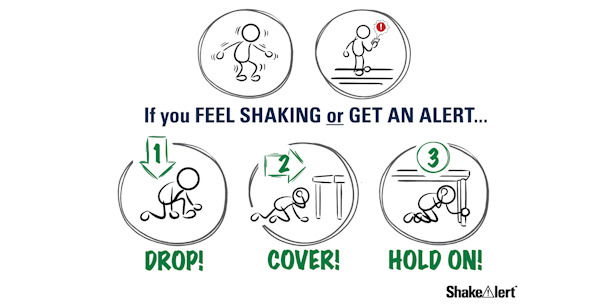
SALEM, OR (KTVZ) – Monday marked three years since Oregon's ShakeAlert® earthquake early warning system became operational. The earthquake detection tool, operated by the U.S. Geological Survey (USGS), uses science and technology to detect large earthquakes so alerts can be delivered to people on their cell phones before harmful vibrations reach their location.
ShakeAlert can save lives and reduce injuries by giving people seconds to take protective actions, such as falling, covering and stabilizing, or moving away from hazardous areas if they feel shaking or receive an alert.
“ShakeAlert arrives in Oregon 10 years after the devastating 2011 Tohoku earthquake and tsunami in Japan, which served as a wake-up call for those of us on the West Coast facing the imminent threat of a Cascadia Subduction Zone earthquake,” said Oregon Division of Emergency Management Director Erin McMahon. “ShakeAlert is a life-saving tool that can provide critical seconds of warning before we feel the effects of an earthquake, alerting people to protect themselves.”
The Pacific Northwest Seismic Network (PNSN) installs, operates, and maintains earthquake monitoring stations that contribute real-time data to the ShakeAlert system. The PNSN is operated collaboratively by the University of Washington, the USGS, and the Oregon Hazards Laboratory at the University of Oregon.
In the three years since ShakeAlert arrived in Oregon, the system has achieved numerous milestones in Oregon to help people, facilities and critical infrastructure better prepare for earthquakes. Today, there are 219 seismic stations across Oregon that contribute data to the ShakeAlert system, a 38% increase since the system debuted. Increasing the density of these stations improves alert speed, accuracy, and reliability. The network is 98% complete in Oregon and should reach 100% by the end of 2024. This growth can be attributed to investment from the State of Oregon and recurring funding from the USGS ShakeAlert program.
“The real-time seismic network captures the complex dynamics of both natural background earthquakes and major subduction zone earthquakes,” said Doug Toomey, director of the Oregon Hazards Laboratory. “Not only does this data enable rapid detection of earthquakes, it also enables scientists to better model the specific local and regional impacts of future earthquakes. This knowledge will help communities better prepare by improving infrastructure and creating more informed emergency plans.”
ShakeAlert can also protect people and infrastructure by activating other pre-programmed actions when earthquakes are detected, such as slowing trains to prevent derailments, opening firehouse doors so they don't close, activating hospital generators to ensure continuity of service, and closing valves for protection. Water and natural gas systems. Two Oregon utilities program their alert delivery system using ShakeAlert data, and six other utilities worked with a licensed vendor to connect their control systems to the ShakeAlert system. Additionally, one university, one school district, and one hospital in Oregon are end users of ShakeAlert. These automated action applications allow communities to recover from an earthquake faster.
Seven alert delivery partners in Oregon can currently integrate ShakeAlert technology into critical community lifelines, utilities and infrastructure. They include Early Warning Labs, Varius, Valcom, RH2 Engineering, Kinemetrics, SkyAlert, and GSSNet/AlertFM.
There are several ways to get alerts powered by ShakeAlert on your cell phone:
Wireless Emergency Alerts (WEA): These text alerts are sent by authorized national, state, or local government authorities in connection with public safety emergencies, such as severe weather, missing children, or the need for evacuation. Wireless emergency alerts are broadcast to geographic areas affected by the emergency and sent to participating wireless carriers, which then transmit messages outward. Wireless emergency alerts automatically reach most cell phones. You don't need to register, but you do need to check your phone settings and enable wireless emergency or government alerts. Android Alerts: Android phones have a built-in service that works with ShakeAlert to provide notification-based alerts. Warnings automatically pop up on your phone's lock screen, as long as location services and emergency notifications are enabled. Go to Settings → Notifications → Advanced settings → Wireless emergency alerts → All government alerts, including tests. iPhone Alerts: Government alerts are turned on by default on iPhones. Such alerts are accompanied by a special sound that resembles an alarm clock. In iOS 17.2, Apple added a new local awareness option for emergency alerts. Enable local awareness uses your approximate location to improve the timeliness, accuracy, and reliability of emergency alerts. Go to Settings → Notifications → Emergency Alerts → Local Awareness. MyShake: This app can be downloaded for free from the Apple iTunes and Google Play stores.
The Cascadia Subduction Zone is a 600-mile-long fault that extends from northern California to British Columbia and is about 70 to 100 miles offshore of the Pacific Coast. 43 earthquakes have occurred over the past 10,000 years within this fault. The last earthquake occurred on January 26, 1700, with an estimated magnitude of 9.0; It also sent a large tsunami to the coast of Japan.
In addition to enabling WEA and ShakeAlert on phones, the Oregon Department of Emergency Management advises Oregonians to sign up to receive local emergency notifications at oralert.gov; Create and practice a home emergency plan that includes where to meet and how to communicate in the event of a disaster; Build a home emergency kit that contains at least two weeks' worth of food, water, and vital supplies for each person and pet; And pack a go bag in case of evacuation.
Learn more about the ShakeAlert earthquake early warning system at ShakeAlert.org. Learn more about individual and community disaster preparedness at oregon.gov/oem/Be2WeeksReady.
# # #
About ShakeAlert The ShakeAlert® Earthquake Early Warning System, operated by the USGS, detects large earthquakes quickly enough that alerts can be delivered to people and automated systems seconds before harmful tremors arrive. The purpose of the system is to reduce the impact of earthquakes to save lives and property.
About the Oregon Division of Emergency Management The Oregon Division of Emergency Management coordinates and maintains the statewide emergency services system for emergency and disaster communications, supporting 18 emergency support functions and more than 50 local county, city, and tribal emergency management offices throughout the state.
About the Oregon Hazards Laboratory at the University of Oregon The Oregon Hazards Laboratory (OHAZ) is the hazards oversight group at the University of Oregon. OHAZ is developing a regional sensor network to understand, detect and mitigate multiple hazards in the Pacific Northwest. The data collected by its tools advances knowledge of natural disasters and the environment, protects the public through real-time alerting, and contributes to strengthening resilience at the community level.
About the University of Oregon The University of Oregon is a Carnegie R1 research university and a member of the Association of American Universities. The UO faculty includes a Nobel laureate, a MacArthur Fellow, a pair of National Medal of Science winners and a Pulitzer Prize winner. UO has more than 500 student-athletes competing in 20 sports. UO teams have captured 38 national championships.
|
Sources 2/ https://ktvz.com/news/earthquake/2024/03/11/oregons-shakealert-earthquake-early-warning-system-marks-three-years-since-going-live/ The mention sources can contact us to remove/changing this article |
What Are The Main Benefits Of Comparing Car Insurance Quotes Online
LOS ANGELES, CA / ACCESSWIRE / June 24, 2020, / Compare-autoinsurance.Org has launched a new blog post that presents the main benefits of comparing multiple car insurance quotes. For more info and free online quotes, please visit https://compare-autoinsurance.Org/the-advantages-of-comparing-prices-with-car-insurance-quotes-online/ The modern society has numerous technological advantages. One important advantage is the speed at which information is sent and received. With the help of the internet, the shopping habits of many persons have drastically changed. The car insurance industry hasn't remained untouched by these changes. On the internet, drivers can compare insurance prices and find out which sellers have the best offers. View photos The advantages of comparing online car insurance quotes are the following: Online quotes can be obtained from anywhere and at any time. Unlike physical insurance agencies, websites don't have a specific schedule and they are available at any time. Drivers that have busy working schedules, can compare quotes from anywhere and at any time, even at midnight. Multiple choices. Almost all insurance providers, no matter if they are well-known brands or just local insurers, have an online presence. Online quotes will allow policyholders the chance to discover multiple insurance companies and check their prices. Drivers are no longer required to get quotes from just a few known insurance companies. Also, local and regional insurers can provide lower insurance rates for the same services. Accurate insurance estimates. Online quotes can only be accurate if the customers provide accurate and real info about their car models and driving history. Lying about past driving incidents can make the price estimates to be lower, but when dealing with an insurance company lying to them is useless. Usually, insurance companies will do research about a potential customer before granting him coverage. Online quotes can be sorted easily. Although drivers are recommended to not choose a policy just based on its price, drivers can easily sort quotes by insurance price. Using brokerage websites will allow drivers to get quotes from multiple insurers, thus making the comparison faster and easier. For additional info, money-saving tips, and free car insurance quotes, visit https://compare-autoinsurance.Org/ Compare-autoinsurance.Org is an online provider of life, home, health, and auto insurance quotes. This website is unique because it does not simply stick to one kind of insurance provider, but brings the clients the best deals from many different online insurance carriers. In this way, clients have access to offers from multiple carriers all in one place: this website. On this site, customers have access to quotes for insurance plans from various agencies, such as local or nationwide agencies, brand names insurance companies, etc. "Online quotes can easily help drivers obtain better car insurance deals. All they have to do is to complete an online form with accurate and real info, then compare prices", said Russell Rabichev, Marketing Director of Internet Marketing Company. CONTACT: Company Name: Internet Marketing CompanyPerson for contact Name: Gurgu CPhone Number: (818) 359-3898Email: [email protected]: https://compare-autoinsurance.Org/ SOURCE: Compare-autoinsurance.Org View source version on accesswire.Com:https://www.Accesswire.Com/595055/What-Are-The-Main-Benefits-Of-Comparing-Car-Insurance-Quotes-Online View photos

 |
 |
 |