
Uncategorized
Twin tremors may be connected to produce 'huge earthquake'
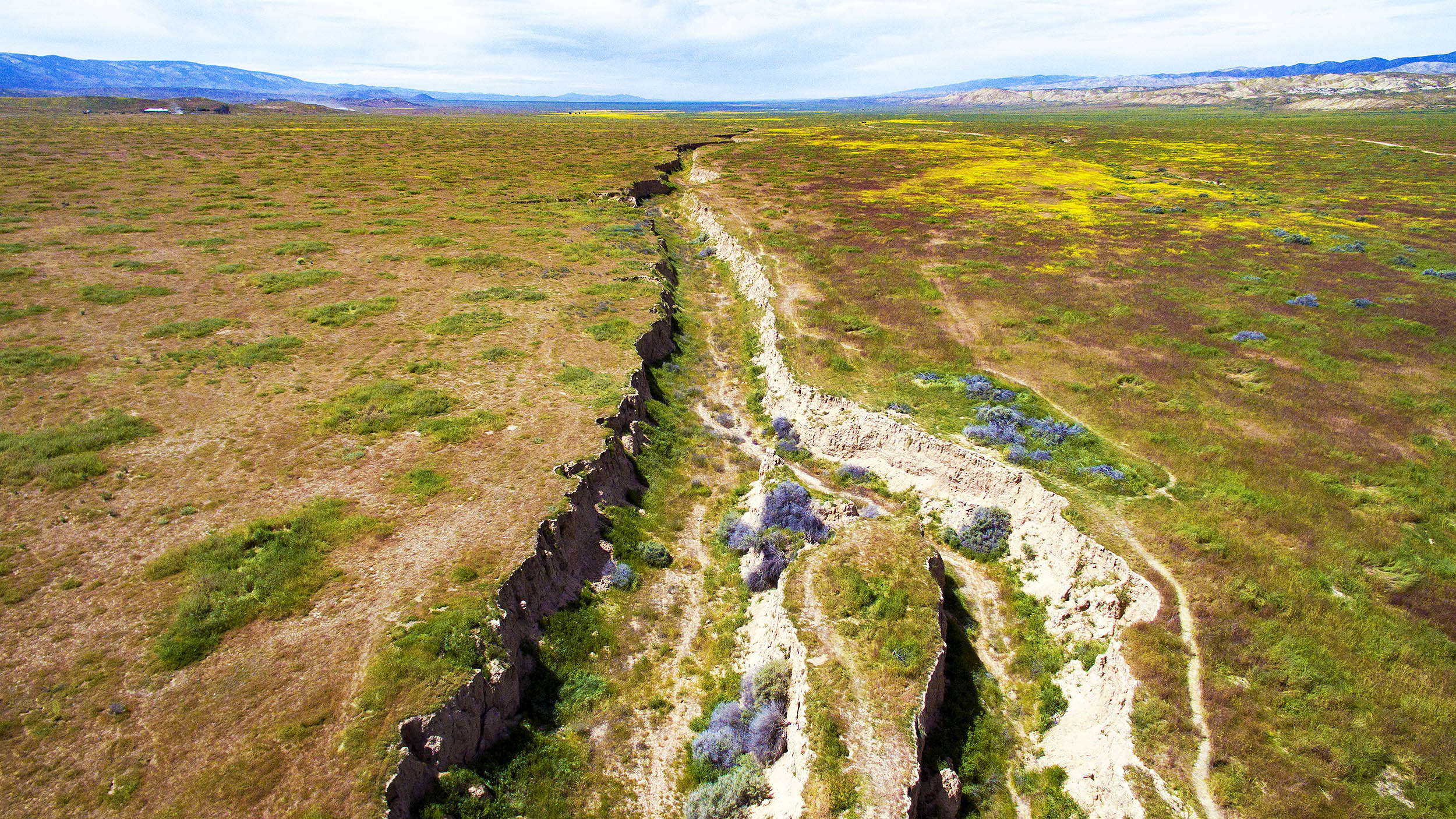
For decades, residents in the Pacific Northwest and California have been trained to anticipate the imminent arrival of the “big one,” a catastrophic, massive 8.0-magnitude quake that could level the entire Pacific coast.
New research suggests that this massive, deadly earthquake may have been caused by two volatile faults striking in unison, one propelling the other into destructive motion.
Twin faults may share stress cracks
If you live anywhere from Northern California to British Columbia, you've probably heard of the Cascadia Subduction Zone that lies beneath the Pacific Ocean, as well as the San Andreas Fault.
The massive 700-mile-long Cascadia Fault offshore, which begins near Cape Mendocino and ends on Vancouver Island in Canada, consists of one tectonic plate being pushed beneath another.
The San Andreas Fault is a large fault, 800 miles long. It extends from the northern end of the Gulf of California across much of western California and into Tomales Bay within the Pacific Ocean, near San Francisco.
Because these two crustal masses slide horizontally, Cascadia's volatile structure can produce earthquakes of magnitude 9.0 or higher.
On January 26, 1700, one of these catastrophic events was recorded. The 1700 Cascadia earthquake had a magnitude of between 8.2 and 9.2, triggering a powerful tsunami that reached Japan.
A long, careful look at seafloor stratigraphic memory shows that the two famous faults may share pressure cracks over time and distance.
New evidence for stratigraphic events
The research was led by Chris Goldfinger of Oregon State University. The team recovered samples of deep-sea sediments drilled from the ocean floor, which capture about 3,100 years of earthquake history, and measured how those layers aligned across the two fault systems.
In the cores, the researchers found repeated double residues called dimers. These are two stacked layers formed by converging temporal events that place a fine unit beneath a coarse unit in an unusual inverted arrangement.
This pattern is most pronounced near the Cape Mendocino triple junction, the point where three tectonic plates meet, and fades in opposite directions along each fault. This is evidence that there are two sources involved.
The record indicates that there have been 18 earthquake sites in southern Cascadia and 19 in the Noyo Channel along the northern San Andreas during the past three millennia.
The data also recorded 10 pairs lining up closely in time, with an average age difference of 63 years.
Some deposits indicate that the second layer followed within minutes to hours, a close connection important for emergency planning in many West Coast cities. The Cascadia event of 1700 marks the earliest end of this pattern, according to the USGS.
Two faults rupture close together
Earthquakes can trigger submarine landslides that push down the slope and settle as sedimentary layers that form underwater when loose material falls down continental slopes.
The sediments form distinct layers that allow scientists to read sequences of events when the faults themselves lie offshore and are difficult to study directly.
Using these layers as a seismic indicator, or surrogate indicator, is one of the pillars of paleoseismology, the study of ancient earthquakes using geological records.
This approach has been tested extensively in Cascadia, where event strata are linked between canyons and along hundreds of miles.
Methods include correlation of layer structure, regional mapping and calibrated radiocarbon dating to separate local slope failures from large-scale seismic events.
By comparing the timing and internal structure of the beds on either side of the Mendocino region, the authors see that two large faults sometimes ruptured close to each other.
The characteristic inverted binaries in the Noyo Channel are interpreted as a fine unit from the more distant Cascadia earthquake, followed by a coarser unit from the closer San Andreas rupture.
Synchronization of faults and mega-earthquakes
Scientists have long suspected that a large earthquake could shift stress cracks and cause an adjacent fault to fail.
A recent, well-documented example is in the Indian Ocean, where a 9.0 magnitude event in December 2004 was followed approximately three months later by a 8.6 to 8.7 magnitude rupture southward along the same subduction margin.
The USGS explains the differences between these events and notes their close timing, providing a useful representation of how the sequences unfolded.
Error systems may affect each other
The Cascadia/San Andreas case is different because it involves two distinct fault systems that meet at the coast – not one long subduction front.
However, the basic physics of stress crack changes affecting nearby faults provides a plausible path for short time periods between large events.
The new paper infers partial concurrency, meaning that faults may sometimes affect each other but does not always separate, and emphasizes that the redundancy near the intersection is not the sum of both faults.
This observation is consistent with the idea that the double beds represent two beds stacked together, rather than an exaggerated number of events.
A huge earthquake can be devastating
History shows how serious individual events can be. The Great San Francisco Earthquake of 1906, a magnitude 7.9 earthquake, began near San Francisco at 5:12 a.m. on April 18, 1906, and tore up nearly 296 miles of the San Andreas, sending violent shockwaves throughout the region.
Now, consider the scenario in which Cascadia ruptures first and the northern San Andreas follows shortly after. It could lead to a huge earthquake of catastrophic proportions.
Even if the second rupture occurs days or months later, response capacity, supply chains, medical systems, and transportation networks could stretch across multiple states at once.
The researchers stress that the evidence they have found speaks of partial synchronization and stress crack transfer, not determinism.
However, the pattern they document prompts risk planners to consider multiple error timelines when they exercise response plans for Portland, Seattle, Vancouver, San Francisco, and smaller coastal communities.
It's not a question of if, but when
The looming threat of “large scale” has kept volcanologists, seismologists, scientists and residents along the Pacific Coast on edge for decades.
Scientists say it's likely not a matter of if a massive, catastrophic earthquake might hit the U.S. West Coast, but when.
“It's hard to overstate what a M9.0 earthquake would be like in the Pacific Northwest,” Goldfinger said.
The team's findings describe in depth how the signal is strongest near the Mendocino region and fades along each system, which is what one would expect if two sources were combined in time.
“We conclude that the stratigraphy is best explained by earthquakes occurring on both systems spaced apart in time, starting in the Cascadia subduction zone, rather than aftershock sequences, hydrodynamics, or other causes,” the study authors wrote.
Hazard and communications models may need to reflect non-additive redundancy near the intersection and allow for coupled events in emergency drills.
This framework is consistent with the number of beds and layer structure and avoids overestimation of the overall event rate.
Until a major earthquake occurs, diligent monitoring and surveillance will continue, and the public will remain informed and continue training for preparedness.
The study was published in the journal Geosphere.
—–
Like what I read? Subscribe to our newsletter to get engaging articles, exclusive content and latest updates.
Visit us at EarthSnap, a free app brought to you by Eric Ralls and Earth.com.
—–
|
Sources 2/ https://www.earth.com/news/mega-earthquake-hidden-link-between-cascadia-and-san-andreas-faults/ The mention sources can contact us to remove/changing this article |
What Are The Main Benefits Of Comparing Car Insurance Quotes Online
LOS ANGELES, CA / ACCESSWIRE / June 24, 2020, / Compare-autoinsurance.Org has launched a new blog post that presents the main benefits of comparing multiple car insurance quotes. For more info and free online quotes, please visit https://compare-autoinsurance.Org/the-advantages-of-comparing-prices-with-car-insurance-quotes-online/ The modern society has numerous technological advantages. One important advantage is the speed at which information is sent and received. With the help of the internet, the shopping habits of many persons have drastically changed. The car insurance industry hasn't remained untouched by these changes. On the internet, drivers can compare insurance prices and find out which sellers have the best offers. View photos The advantages of comparing online car insurance quotes are the following: Online quotes can be obtained from anywhere and at any time. Unlike physical insurance agencies, websites don't have a specific schedule and they are available at any time. Drivers that have busy working schedules, can compare quotes from anywhere and at any time, even at midnight. Multiple choices. Almost all insurance providers, no matter if they are well-known brands or just local insurers, have an online presence. Online quotes will allow policyholders the chance to discover multiple insurance companies and check their prices. Drivers are no longer required to get quotes from just a few known insurance companies. Also, local and regional insurers can provide lower insurance rates for the same services. Accurate insurance estimates. Online quotes can only be accurate if the customers provide accurate and real info about their car models and driving history. Lying about past driving incidents can make the price estimates to be lower, but when dealing with an insurance company lying to them is useless. Usually, insurance companies will do research about a potential customer before granting him coverage. Online quotes can be sorted easily. Although drivers are recommended to not choose a policy just based on its price, drivers can easily sort quotes by insurance price. Using brokerage websites will allow drivers to get quotes from multiple insurers, thus making the comparison faster and easier. For additional info, money-saving tips, and free car insurance quotes, visit https://compare-autoinsurance.Org/ Compare-autoinsurance.Org is an online provider of life, home, health, and auto insurance quotes. This website is unique because it does not simply stick to one kind of insurance provider, but brings the clients the best deals from many different online insurance carriers. In this way, clients have access to offers from multiple carriers all in one place: this website. On this site, customers have access to quotes for insurance plans from various agencies, such as local or nationwide agencies, brand names insurance companies, etc. "Online quotes can easily help drivers obtain better car insurance deals. All they have to do is to complete an online form with accurate and real info, then compare prices", said Russell Rabichev, Marketing Director of Internet Marketing Company. CONTACT: Company Name: Internet Marketing CompanyPerson for contact Name: Gurgu CPhone Number: (818) 359-3898Email: [email protected]: https://compare-autoinsurance.Org/ SOURCE: Compare-autoinsurance.Org View source version on accesswire.Com:https://www.Accesswire.Com/595055/What-Are-The-Main-Benefits-Of-Comparing-Car-Insurance-Quotes-Online View photos

 |
 |
 |