
Uncategorized
Satellite data is helping UNM researchers map the massive rupture of the 2025 Myanmar earthquake
Understanding the physics of “mature” faults helps understand the general mechanics of the Earth's crust, improving earthquake hazard models globally.
The Myanmar earthquake that occurred on March 28, 2025, gave scientists a rare look at how some of the world's most dangerous fault systems behave, including the San Andreas Fault in California. Earthquakes are known to be messy and complex, but this one struck along an unusually straight and geologically “mature” fault, creating near-perfect conditions for researchers to observe how the Earth releases energy during a major continental rupture.
An international team of researchers led by the University of New Mexico set out to understand how these mature faults break during massive seismic events, focusing on a long-discussed phenomenon known as “shallow slip deficit.” In many earthquakes, the surface moves much less than the rocks deep underground, leaving scientists wondering whether the lost energy is absorbed by the surrounding rocks or if it is simply immeasurable. By analyzing the 2025 Myanmar earthquake, the team aimed to determine how a simple, ancient fault system releases energy, and whether that energy reaches the surface.
The research, titled “Mature fault mechanics revealed by the highly efficient 2025 Mandalay earthquake,” was published in the journal Nature Communications and was led by UNM Assistant Professor Eric Lindsay, who worked with collaborators from Taiwan and Myanmar.
Because Myanmar is experiencing armed conflict and there was additional damage to infrastructure after the earthquake, researchers were unable to quickly conduct field work in the area. Instead, they relied on remote sensing from space to collect the data they needed.
“We used two key satellite technologies: optical image correlation (using Sentinel-2 satellites) to track how pixels in satellite images move between two images collected before and after an earthquake, and interferometric synthetic aperture radar (InSAR) using Sentinel-1 satellites, which measures the change in distance from the ground to the satellite between two successive passes,” Lindsay explained. “These tools allowed us to measure ground shifts with incredible precision without ever setting foot in an area “Danger.”
Sentinel-1 radar interferogram showing ground deformation associated with the northern half of the March 28, 2025 Mw 7.8 Mandalay, Myanmar earthquake. Each color cycle (blue-yellow-red) represents an additional relative difference of 2.8 cm of displacement along the radar line of sight. North to right. The fault slid laterally by 3-5 meters along a rupture length of about 500 km, one of the longest earthquakes ever recorded. The horizontal image size is 350 km. Contains Copernicus Sentinel data modified from the European Space Agency.
InSAR works as a high-tech “spot the difference” game, using radar to track subtle changes in the Earth's surface from space. As the satellite rotates, it sends radar pulses toward Earth. The researchers then combine the reflected signals to create a high-resolution image of the area before the earthquake and another after.
“By comparing the time it takes for the signal to bounce back to the satellite from each point on Earth, we can detect changes in the Earth's elevation or position down to a fraction of an inch,” Lindsay said. “This allows us to precisely map how the Earth deflects over an area hundreds of miles wide, day or night, and through clouds.”
The Myanmar earthquake rupture extended nearly 500 kilometers. To put this in perspective, imagine a crack in the ground running from Albuquerque to Denver, where the two sides suddenly move in front of each other by 10 to 15 feet.
“Most of the earthquakes we study break much shorter fault segments, perhaps 30 to 60 miles long. It is extremely rare and scientifically important to see a rupture this long, continuous and straight,” Lindsay said.
The Myanmar earthquake occurred on the Sagaing Fault, which is a strike-slip fault, meaning the two sides slide past each other horizontally, almost like two cars swiping each other on a highway.
“This is similar to the San Andreas Fault in California,” he added. “We also describe the Sagaing Fault as 'mature,' which means it has been sliding in the same way for millions of years. Over this long time, the jagged edges and bends in the fault have been ground down. Because it is so smooth and straight, seismic rupture can travel very efficiently over a large distance.”
For many years, scientists have observed that in many earthquakes, the amount of ground motion at the surface is much less than the motion deep underground. This is a puzzle known as the “shallow slip deficit.”
“We found that in the 2025 Mandalay earthquake, this deficit was not there. The massive amount of slip that occurred miles underground was 100% transferred to the surface,” Lindsay explained.
The absence of shallow slip deficit in this event contrasts with much recent data from other earthquakes where shallow slip was missing in the fault and was likely taken up instead along many small fractures across a wide damage zone.
“This shows that in mature, smooth faults, the energy is highly concentrated and comes directly to the surface,” Lindsay explained. “This is important because it means that ground shaking near the fault line may be more intense than current hazard models predict for these types of faults.”
The researchers also found that the quake was able to “link” multiple parts of the fault in a massive 500-kilometre-long chain reaction, ignoring boundaries that scientists previously thought might stop rupture.
“We found that the fault followed a historical pattern: it had less slip in areas that had experienced earthquakes in the 20th century, and more slip in areas that had not ruptured since the 19th century,” he said. This is known as “slip predictability” and suggests that we may be able to predict the amount of slip likely to occur on other fault segments that have not yet ruptured, improving our ability to plan and prepare for future earthquake risks.
Satellite-based ground deformation data used in the study: (a) Sentinel-2 optical image correlation, showing the north-south motion component, (b) Sentinel-1 SAR image azimuth (Azi.) along the descending satellite orbit direction, (c) SAR image band shifts from the same paths, and (d) merged interferograms. Black arrows indicate the direction of positive ground motion in each image (red colors, or increasing phase).
This study highlights the power of modern satellite surveillance. Even in the middle of a conflict zone where traditional field science was impossible, researchers were able to capture one of the most detailed images of earthquake mechanics in history.
“It is a testament to how global scientific collaboration and access to open data (such as the Copernicus Sentinel missions) can help us understand natural hazards that affect millions of people,” he said. “The importance is safety. This earthquake has shown us that mature faults can be more efficient at transporting energy to the surface than younger faults, which has direct implications for how infrastructure is built to withstand a 'big earthquake' in the United States.”
Lindsay concludes by saying that New Mexico lies on a different fault system, the Rio Grande Fault, which disintegrates within a lateral strike.
“The remote sensing techniques we improved in this paper are the same methods we can use to monitor safety issues close to home,” he explained.
By using InSAR to track land sinking due to aquifer depletion around New Mexico and monitor slow ground movements associated with faulting and magma swelling deep beneath Socorro, researchers can provide information that helps the state better allocate resources and prepare for potential future seismic risks.
“Understanding the physics of ‘mature’ faults helps us understand the general mechanics of the Earth’s crust, improving earthquake hazard models globally,” Lindsay concluded.
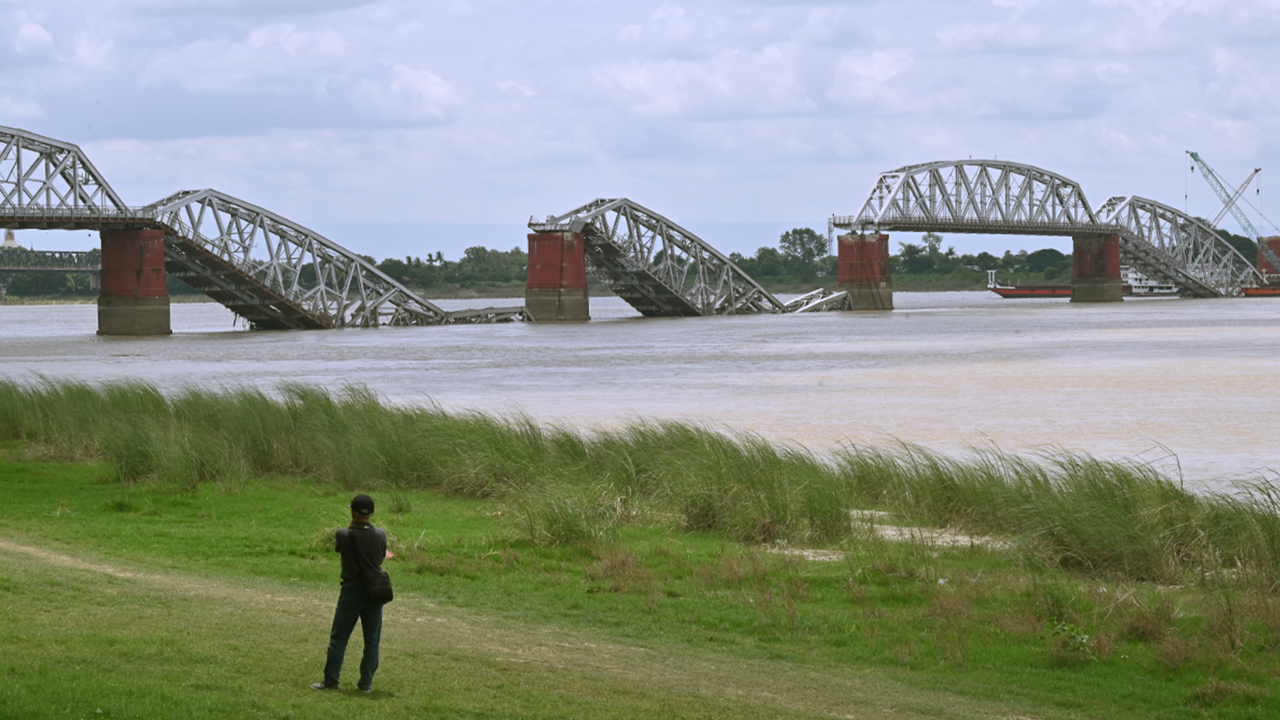
*Photo caption at top: A view of the Ava Bridge near Sagaing, Myanmar, which collapsed during the March 2025 7.7 magnitude earthquake. The bridge was built in 1934 and was the only bridge crossing the Irrawaddy River for more than 60 years after its construction. Photo by study co-author Wang Yu.
|
Sources 2/ https://news.unm.edu/news/satellite-data-helps-unm-researchers-map-massive-rupture-of-2025-myanmar-earthquake The mention sources can contact us to remove/changing this article |
What Are The Main Benefits Of Comparing Car Insurance Quotes Online
LOS ANGELES, CA / ACCESSWIRE / June 24, 2020, / Compare-autoinsurance.Org has launched a new blog post that presents the main benefits of comparing multiple car insurance quotes. For more info and free online quotes, please visit https://compare-autoinsurance.Org/the-advantages-of-comparing-prices-with-car-insurance-quotes-online/ The modern society has numerous technological advantages. One important advantage is the speed at which information is sent and received. With the help of the internet, the shopping habits of many persons have drastically changed. The car insurance industry hasn't remained untouched by these changes. On the internet, drivers can compare insurance prices and find out which sellers have the best offers. View photos The advantages of comparing online car insurance quotes are the following: Online quotes can be obtained from anywhere and at any time. Unlike physical insurance agencies, websites don't have a specific schedule and they are available at any time. Drivers that have busy working schedules, can compare quotes from anywhere and at any time, even at midnight. Multiple choices. Almost all insurance providers, no matter if they are well-known brands or just local insurers, have an online presence. Online quotes will allow policyholders the chance to discover multiple insurance companies and check their prices. Drivers are no longer required to get quotes from just a few known insurance companies. Also, local and regional insurers can provide lower insurance rates for the same services. Accurate insurance estimates. Online quotes can only be accurate if the customers provide accurate and real info about their car models and driving history. Lying about past driving incidents can make the price estimates to be lower, but when dealing with an insurance company lying to them is useless. Usually, insurance companies will do research about a potential customer before granting him coverage. Online quotes can be sorted easily. Although drivers are recommended to not choose a policy just based on its price, drivers can easily sort quotes by insurance price. Using brokerage websites will allow drivers to get quotes from multiple insurers, thus making the comparison faster and easier. For additional info, money-saving tips, and free car insurance quotes, visit https://compare-autoinsurance.Org/ Compare-autoinsurance.Org is an online provider of life, home, health, and auto insurance quotes. This website is unique because it does not simply stick to one kind of insurance provider, but brings the clients the best deals from many different online insurance carriers. In this way, clients have access to offers from multiple carriers all in one place: this website. On this site, customers have access to quotes for insurance plans from various agencies, such as local or nationwide agencies, brand names insurance companies, etc. "Online quotes can easily help drivers obtain better car insurance deals. All they have to do is to complete an online form with accurate and real info, then compare prices", said Russell Rabichev, Marketing Director of Internet Marketing Company. CONTACT: Company Name: Internet Marketing CompanyPerson for contact Name: Gurgu CPhone Number: (818) 359-3898Email: [email protected]: https://compare-autoinsurance.Org/ SOURCE: Compare-autoinsurance.Org View source version on accesswire.Com:https://www.Accesswire.Com/595055/What-Are-The-Main-Benefits-Of-Comparing-Car-Insurance-Quotes-Online View photos

 |
 |
 |