
Uncategorized
UN agencies welcome news of hunger relief in Gaza, but warn fragile gains could be reversed without increased and sustained support
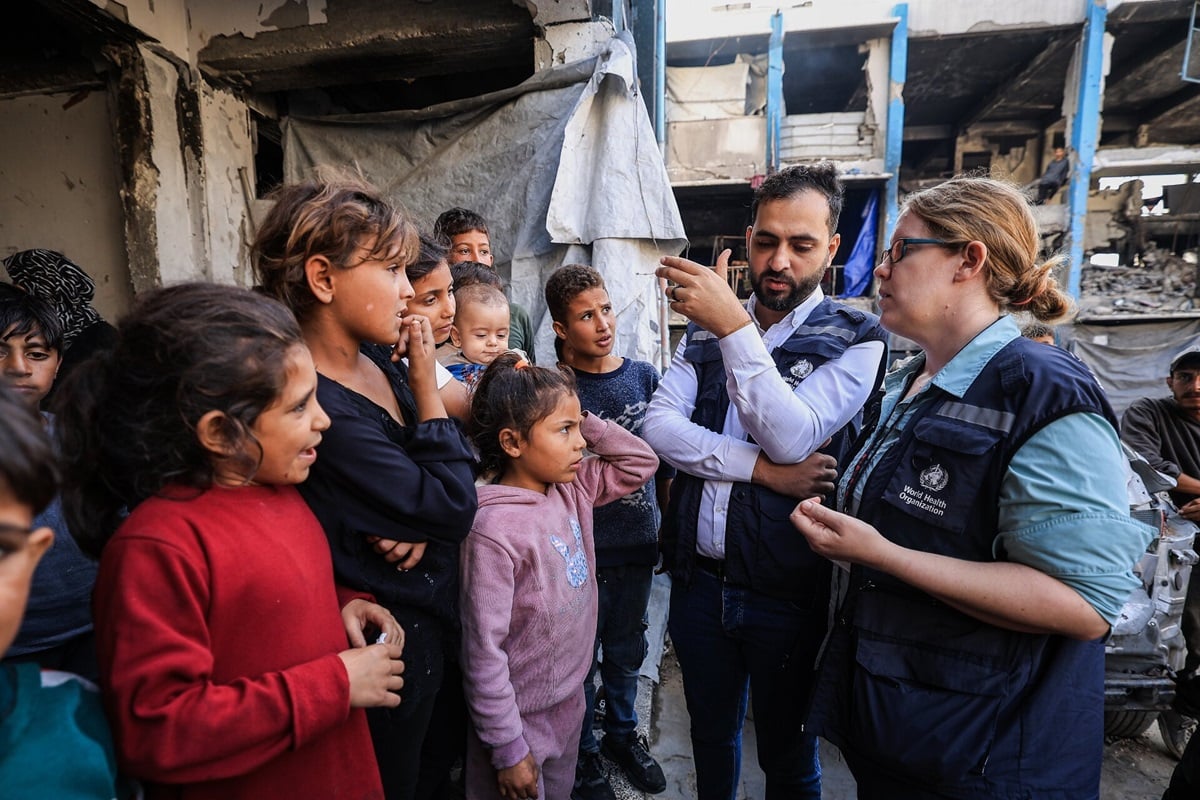
The latest Integrated Food Security Phase Classification (IPC) analysis for Gaza confirms that no area of the Strip is currently classified as hungry following the October ceasefire and improved humanitarian and commercial access. This welcome progress remains extremely fragile as the population continues to struggle with massive infrastructure destruction and collapsed livelihoods and local food production, given the constraints of humanitarian operations.
Without sustained, large-scale expansion of food, livelihoods, agriculture and health aid, along with increased commercial inflows, hundreds of thousands of people could quickly fall back into hunger, the Food and Agriculture Organization of the United Nations (FAO), UNICEF, the World Food Program (WFP) and the World Health Organization (WHO) warned today.
According to a new IPC report, at least 1.6 million people – or 77 percent of the population – still face high levels of acute food insecurity in the Gaza Strip, including more than 100,000 children and 37,000 pregnant and lactating women who are predicted to suffer from acute malnutrition by April next year. Four governorates (Northern Gaza, Gaza Governorate, Deir al-Balah and Khan Younis) are currently classified as emergency (IPC Phase 4) until April 2026, with Gaza Governorate downgraded from the previous famine classification. This stage still indicates severe food insecurity characterized by wide disparities in food consumption, high levels of acute malnutrition and increased risk of mortality.
Although the ceasefire has improved the delivery of food, fodder, basic necessities and basic commercial imports to Gaza, leading to improved access to food for some households, most families are still struggling with severe shortages. Since the ceasefire, more than 730,000 people have been displaced, many living in makeshift shelters and heavily dependent on humanitarian aid. In addition, limited access to basic water, sanitation and hygiene (WASH) services, health care and the widespread destruction of crops, livestock, fishing activities, roads and other critical infrastructure pose enormous challenges for people and for ongoing relief efforts.
Humanitarian needs remain staggering, and current aid only covers the most basic survival needs. Children under five, along with pregnant and breastfeeding women, remain among the most vulnerable, facing alarmingly high levels of malnutrition despite recent improvements.
Although markets are now better supplied with nutritious food following the improved flow of humanitarian and commercial deliveries, vulnerable families, especially those with children, cannot afford to buy it. Nutrient-rich food, especially protein, remains scarce and expensive, leaving 79 percent of households unable to buy food or access clean water. No child achieves the minimum dietary diversity, and two-thirds experience severe food poverty, consuming only one or two food groups.
The situation is exacerbated by overcrowded makeshift shelters, damaged sewage systems, unreliable water supplies and families burning wood or garbage to keep warm. Together, these conditions encourage disease outbreaks and accelerate the spread of respiratory infections, diarrhea and skin diseases, especially among children.
FAO, UNICEF, WFP and WHO are ready to further strengthen their responses. However, the strain caused by import restrictions, access restrictions and major funding gaps severely hampers their ability to operate at the required scale, especially for interventions supporting food security, nutrition, health, water, sanitation and hygiene, agriculture and livelihoods recovery.
“Farmers, herders and fishermen in Gaza are ready to restart food production, but they cannot do so without immediate access to essential supplies and financing,” said Rein Paulsen, director of FAO's Office of Emergencies and Resilience. “The ceasefire has opened a narrow window to allow life-sustaining agricultural supplies to reach vulnerable farmers. Only funding and expanded and sustainable access will allow local food production to continue and reduce dependence on foreign aid.”
“Children in Gaza are no longer facing deadly hunger, but they remain in grave danger. After more than two years of relentless conflict, children's developing bodies and brains bear deep, permanent scars,” said Lucia Elmi, UNICEF's Director of Emergency Operations. “Food is now in the markets, but many families simply cannot afford to buy it. Health facilities are barely functioning, clean water and sanitation services are scarce, and winter brings increasing suffering to displaced people huddled in makeshift shelters. These fragile gains could disappear overnight if the fighting continues. We need sustained humanitarian access, restored basic services and above all, lasting peace. The children of Gaza have suffered enough. The world cannot turn now.”
“Once again we have shown that we can fight hunger when we have access, security and funding to deliver food and vital support,” said Ross Smith, WFP's Director of Emergency Preparedness and Response. “Now is the time to double down on these gains and ensure that people can reliably access essential services. WFP is committed to supporting families in Gaza to move from aid dependency to self-sufficiency and a hunger-free future based on hope, stability and prosperity.”
“The ceasefire has created space for recovery, but it has not erased the damage of the two-year conflict. Only fifty percent of health facilities in Gaza are partially functional, and many were damaged during the conflict,” said Altaf Musani, WHO director of humanitarian assistance and disaster management. “Even functional health facilities face shortages of basic supplies and equipment subject to complex entry procedures and restrictions, many classified as potentially dual-use. Malnutrition remains high, particularly among children and women. WHO supports seven stabilization centers for severe acute malnutrition across the Gaza Strip. Much more is needed to address the enormous health needs. To scale up life-saving services and expand access to care, WHO is urgently calling for accelerated approval and entry of basic medical supplies, equipment and prefabricated hospital structures.”
A call to action
FAO, UNICEF, WFP and WHO call on all parties to:
- guarantee sustainable, safe, unhindered and timely humanitarian and commercial access to Gaza;
- lift restrictions on essential imports, including agricultural inputs, food products, nutrition and health supplies;
- rapidly increase funding for essential services, including food, nutrition, health, water and sanitation, agriculture and livelihood support to prevent further deterioration and enable rehabilitation and recovery; and
- reactivate local food production and value chains.
The agencies warn that without decisive action now, the gains made since the ceasefire could be quickly reversed. Only access, supplies and financing on a large scale can prevent the return of famine and help Gaza move from survival to recovery.
|
Sources 2/ https://www.who.int/news/item/19-12-2025-un-agencies-welcome-news-that-famine-has-been-pushed-back-in-the-gaza-strip-but-warn-fragile-gains-could-be-reversed-without-increased-and-sustained-support The mention sources can contact us to remove/changing this article |
What Are The Main Benefits Of Comparing Car Insurance Quotes Online
LOS ANGELES, CA / ACCESSWIRE / June 24, 2020, / Compare-autoinsurance.Org has launched a new blog post that presents the main benefits of comparing multiple car insurance quotes. For more info and free online quotes, please visit https://compare-autoinsurance.Org/the-advantages-of-comparing-prices-with-car-insurance-quotes-online/ The modern society has numerous technological advantages. One important advantage is the speed at which information is sent and received. With the help of the internet, the shopping habits of many persons have drastically changed. The car insurance industry hasn't remained untouched by these changes. On the internet, drivers can compare insurance prices and find out which sellers have the best offers. View photos The advantages of comparing online car insurance quotes are the following: Online quotes can be obtained from anywhere and at any time. Unlike physical insurance agencies, websites don't have a specific schedule and they are available at any time. Drivers that have busy working schedules, can compare quotes from anywhere and at any time, even at midnight. Multiple choices. Almost all insurance providers, no matter if they are well-known brands or just local insurers, have an online presence. Online quotes will allow policyholders the chance to discover multiple insurance companies and check their prices. Drivers are no longer required to get quotes from just a few known insurance companies. Also, local and regional insurers can provide lower insurance rates for the same services. Accurate insurance estimates. Online quotes can only be accurate if the customers provide accurate and real info about their car models and driving history. Lying about past driving incidents can make the price estimates to be lower, but when dealing with an insurance company lying to them is useless. Usually, insurance companies will do research about a potential customer before granting him coverage. Online quotes can be sorted easily. Although drivers are recommended to not choose a policy just based on its price, drivers can easily sort quotes by insurance price. Using brokerage websites will allow drivers to get quotes from multiple insurers, thus making the comparison faster and easier. For additional info, money-saving tips, and free car insurance quotes, visit https://compare-autoinsurance.Org/ Compare-autoinsurance.Org is an online provider of life, home, health, and auto insurance quotes. This website is unique because it does not simply stick to one kind of insurance provider, but brings the clients the best deals from many different online insurance carriers. In this way, clients have access to offers from multiple carriers all in one place: this website. On this site, customers have access to quotes for insurance plans from various agencies, such as local or nationwide agencies, brand names insurance companies, etc. "Online quotes can easily help drivers obtain better car insurance deals. All they have to do is to complete an online form with accurate and real info, then compare prices", said Russell Rabichev, Marketing Director of Internet Marketing Company. CONTACT: Company Name: Internet Marketing CompanyPerson for contact Name: Gurgu CPhone Number: (818) 359-3898Email: [email protected]: https://compare-autoinsurance.Org/ SOURCE: Compare-autoinsurance.Org View source version on accesswire.Com:https://www.Accesswire.Com/595055/What-Are-The-Main-Benefits-Of-Comparing-Car-Insurance-Quotes-Online View photos

 |
 |
 |