
Uncategorized
Chile becomes the first country in the Americas to be certified by the WHO to eliminate leprosy
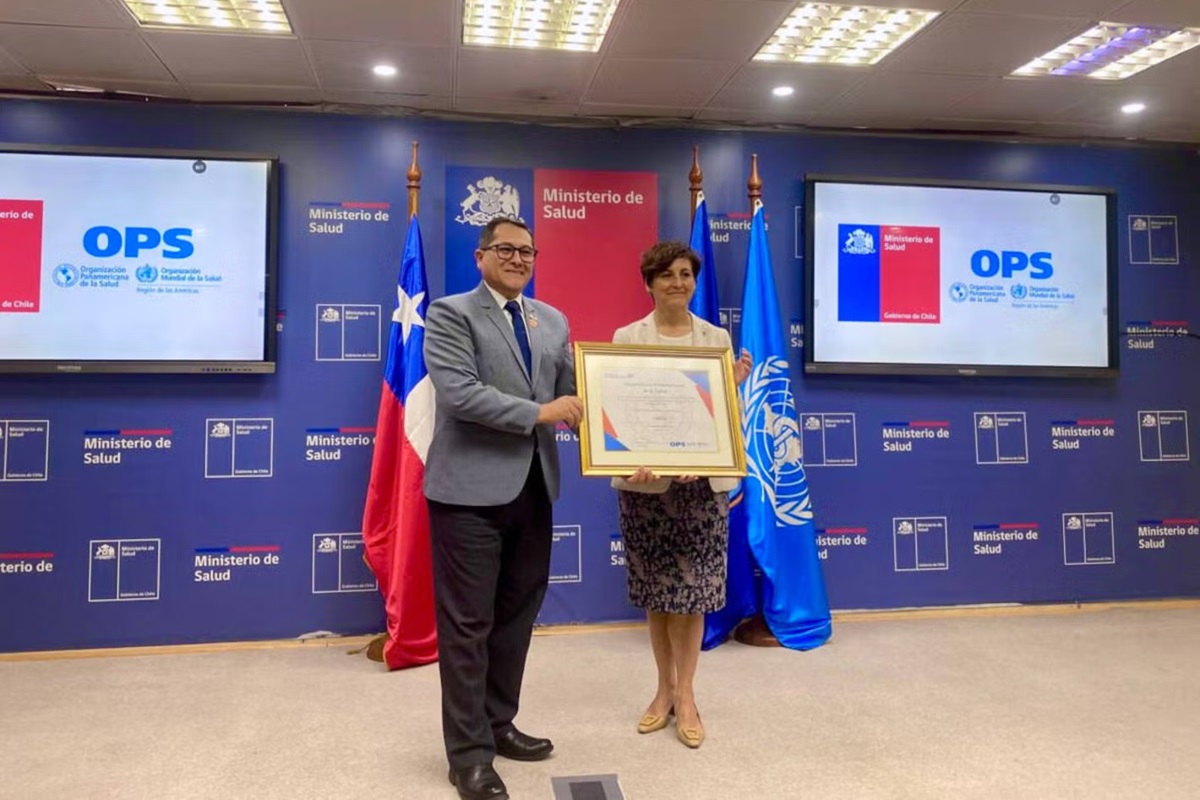
The World Health Organization (WHO), along with the Pan American Health Organization (PAHO), congratulates Chile on becoming the first country in the Americas – and the second in the world – to be officially certified as having eliminated leprosy.
Leprosy (Hansen’s disease) was historically recorded in Chile at the end of the 19th century on Rapa Nui (Easter Island). The disease was confined to mainland Chile, with sporadic introductions, containment measures of isolation and treatment on the Island, where the last secondary cases were cured by the late 1990s.
Since then, for more than 30 years, Chile has not reported a single locally acquired case of leprosy, with the last locally acquired case detected in 1993. However, the disease has never been removed from the country’s public health agenda; it remains a notifiable condition, monitored by mandatory reporting, integrated surveillance and continuous clinical preparedness throughout the health system.
“This landmark public health achievement is a powerful testament to what leadership, science and solidarity can achieve,” said Dr Tedros Adhanom Ghebreyesus, WHO Director-General. “Chile’s elimination of leprosy sends a clear message to the world: with sustained commitment, inclusive health services, integrated public health strategies, early detection and universal access to care, we can consign ancient diseases to history.”
The review recognizes more than three decades of sustained public health action, strong surveillance, long-term political commitment and a health system that has remained vigilant even in the absence of local transmission.
“Chile’s achievement shows that eliminating leprosy is possible and requires building strong systems that can detect, respond and provide comprehensive care for people affected by the disease, including those living with chronic disabilities,” said PAHO Director Dr. Jarbas Barbosa. “Being the first country in the Americas to be certified to have eliminated leprosy sends a strong message to the Region – that diseases closely associated with groups living in vulnerable conditions can be eliminated, helping to break the vicious cycle between disease and poverty.”
At the request of the Chilean Ministry of Health, PAHO and WHO convened an independent expert committee in 2025 to assess whether elimination had been achieved and could be sustained over time. The panel conducted a thorough assessment, reviewing epidemiological data, surveillance mechanisms, case management protocols and sustainability plans. Its findings confirmed the absence of local transmission and confirmed Chile’s ability to detect and respond to future cases occurring among the non-indigenous population.
“This is very good news and a source of great pride for our country. Chile has been certified to eliminate leprosy, becoming the first country in the Americas and the second in the world to achieve this recognition,” said Ximena Aguilera, Chile’s Minister of Health. “This milestone reflects decades of sustained public health efforts, including prevention strategies, early diagnosis, effective treatment, continuous monitoring and the commitment of health care teams across the country. It also affirms our responsibility to maintain active surveillance and ensure stigma-free care for all.”
Ongoing training, supervision and holistic care in a low incidence setting
Between 2012 and 2023, Chile reported 47 cases nationwide, none of which were locally acquired.
The Chilean integrated model ensures early detection and comprehensive care: primary care centers serve as the entry point for suspected cases, with timely referral to specialized dermatology services for diagnosis, treatment and follow-up. Clinicians undergo training aligned with the WHO Towards zero leprosy strategy. The system prioritizes early intervention, disability prevention and holistic care, including physiotherapy and rehabilitation services, ensuring that everyone with leprosy receives ongoing support for acute and long-term health needs to promote full recovery and social inclusion.
A turning point for the Americas region
Chile’s achievement paves the way for other nations, illustrating the impact of political will, cross-sectoral collaboration and adaptive planning in low-frequency environments.
Since 1995, PAHO, in coordination with WHO, has provided free multidrug therapy (MDT) to countries in the Americas, including Chile. This uninterrupted approach to treatment, combined with national supply systems, was critical to curing patients, preventing disability and stopping transmission.
PAHO also supported Chile in aligning surveillance with international standards, strengthening laboratory capacity and maintaining clinical expertise in a low-incidence context, where many health workers may never encounter a case during their careers.
Ensuring access and coverage for all
The elimination of leprosy in Chile was achieved within a broader legal and social framework that protects human rights, promotes inclusion and prevents discrimination. National legislation guarantees equal access to health care, social care and services for people with disabilities, ensuring that people with leprosy receive care without stigma or exclusion.
Chile’s mixed public-private healthcare system, with strong regulatory oversight, further strengthens equal access, including migrants and other vulnerable population groups.
Maintenance of elimination
Aligned with WHO’s Towards Zero Leprosy Strategy and PAHO’s Disease Elimination Initiative, Chile’s experience shows that elimination is not only defined by the absence of disease, but by a sustainable health system that is able to detect, respond and provide holistic care whenever a case arises.
By moving to the post-elimination phase, Chile is encouraged to continue reporting to WHO, maintain sensitive surveillance and ensure retention of clinical expertise for future sporadic cases, as well as any cases acquired outside the country. The review committee also recommended the formal designation of a referral center and the use of WHO Academy online training for health workers and staff, strengthening long-term capacity and preparedness.
Note to editors
Leprosy
Leprosy, also known as Hansen’s disease, is a chronic infectious disease caused by bacteria Mycobacterium leprae. It primarily affects the skin, peripheral nerves, upper respiratory tract mucosa and eyes. If left untreated, it can lead to permanent nerve damage, disability and social stigma. However, leprosy is completely curable with multi-drug therapy, and early detection prevents complications.
As a neglected tropical disease, leprosy persists in more than 120 countries, with more than 200,000 new cases per year worldwide.
PAHO’s Disease Elimination Initiative aims to eliminate leprosy, other infectious diseases, and related conditions in the Americas by 2030 through increased surveillance, access to treatment, and community engagement.
Neglected tropical diseases
Neglected tropical diseases are a diverse group of 21 conditions associated with devastating health, social and economic consequences. They affect one billion people worldwide and their burden is mostly spread among poor communities in tropical areas.
Public health targets for the control, elimination and eradication of these conditions are set in the Neglected Tropical Diseases Roadmap 2021 – 2030. In 2025 alone, WHO has validated, verified or certified 9 countries to achieve these targets. After successfully verifying the elimination of leprosy, Chile becomes the sixty-first country in the world and the sixth in the Americas to eliminate at least one neglected tropical disease, along with Brazil, Colombia, Ecuador, Guatemala and Mexico. Chile is the second country in the world after the Hashemite Kingdom of Jordan to achieve the elimination of leprosy.
|
Sources 2/ https://www.who.int/news/item/04-03-2026-chile-becomes-the-first-country-in-the-americas-to-be-verified-by-who-for-the-elimination-of-leprosy The mention sources can contact us to remove/changing this article |
What Are The Main Benefits Of Comparing Car Insurance Quotes Online
LOS ANGELES, CA / ACCESSWIRE / June 24, 2020, / Compare-autoinsurance.Org has launched a new blog post that presents the main benefits of comparing multiple car insurance quotes. For more info and free online quotes, please visit https://compare-autoinsurance.Org/the-advantages-of-comparing-prices-with-car-insurance-quotes-online/ The modern society has numerous technological advantages. One important advantage is the speed at which information is sent and received. With the help of the internet, the shopping habits of many persons have drastically changed. The car insurance industry hasn't remained untouched by these changes. On the internet, drivers can compare insurance prices and find out which sellers have the best offers. View photos The advantages of comparing online car insurance quotes are the following: Online quotes can be obtained from anywhere and at any time. Unlike physical insurance agencies, websites don't have a specific schedule and they are available at any time. Drivers that have busy working schedules, can compare quotes from anywhere and at any time, even at midnight. Multiple choices. Almost all insurance providers, no matter if they are well-known brands or just local insurers, have an online presence. Online quotes will allow policyholders the chance to discover multiple insurance companies and check their prices. Drivers are no longer required to get quotes from just a few known insurance companies. Also, local and regional insurers can provide lower insurance rates for the same services. Accurate insurance estimates. Online quotes can only be accurate if the customers provide accurate and real info about their car models and driving history. Lying about past driving incidents can make the price estimates to be lower, but when dealing with an insurance company lying to them is useless. Usually, insurance companies will do research about a potential customer before granting him coverage. Online quotes can be sorted easily. Although drivers are recommended to not choose a policy just based on its price, drivers can easily sort quotes by insurance price. Using brokerage websites will allow drivers to get quotes from multiple insurers, thus making the comparison faster and easier. For additional info, money-saving tips, and free car insurance quotes, visit https://compare-autoinsurance.Org/ Compare-autoinsurance.Org is an online provider of life, home, health, and auto insurance quotes. This website is unique because it does not simply stick to one kind of insurance provider, but brings the clients the best deals from many different online insurance carriers. In this way, clients have access to offers from multiple carriers all in one place: this website. On this site, customers have access to quotes for insurance plans from various agencies, such as local or nationwide agencies, brand names insurance companies, etc. "Online quotes can easily help drivers obtain better car insurance deals. All they have to do is to complete an online form with accurate and real info, then compare prices", said Russell Rabichev, Marketing Director of Internet Marketing Company. CONTACT: Company Name: Internet Marketing CompanyPerson for contact Name: Gurgu CPhone Number: (818) 359-3898Email: [email protected]: https://compare-autoinsurance.Org/ SOURCE: Compare-autoinsurance.Org View source version on accesswire.Com:https://www.Accesswire.Com/595055/What-Are-The-Main-Benefits-Of-Comparing-Car-Insurance-Quotes-Online View photos

 |
 |
 |