
Uncategorized
Are oil and gas behind earthquakes in north Louisiana? | environment
Federal regulators are asking Louisiana to strengthen oversight of oil and gas operations after a series of earthquakes in the northern half of the state, including one that rivals the largest in the state’s history.
In a letter last month, the EPA asked state regulators to closely monitor how oil and gas companies inject saltwater into the ground. Both regulators and scientists see these wastewater wells as the likely cause of the earthquakes.
The EPA told the Louisiana Department of Conservation and Energy that the 11 earthquakes recorded in the area over the past month warrant “careful examination to ensure the safety of underground sources of drinking water.”
Now, researchers are installing seismometers and aftershock monitors in northwest Louisiana, and the state Department of Conservation and Energy is investigating saltwater disposal wells to try to find the cause.
Earthquakes increased in 2022, and since then, 35 earthquakes of magnitude 2.5 or greater have struck northwest Louisiana. A 4.9 magnitude earthquake on March 5 in Red River Parish was the largest in state history, sending people scrambling out of bed as the ground shook beneath them. It was felt 150 miles away.
“Anyone who lives in a mobile home — and there are a lot of them — is bouncing with everything larger than about 2.5,” said Cynthia Eppinger, a professor at Tulane University who studies seismic activity.
While officials have not yet confirmed the cause, it seems increasingly likely that underground disposal of saltwater by oil and gas drillers is to blame for the rise in earthquakes in the region, according to regulators and scientists.
Many drillers in the Haynesville Shale use hydraulic fracturing, or hydraulic fracturing, when drilling for natural gas. As part of this process, they pump water into the rock formation.
Drillers also extract brine, which is highly salty and contains heavy metals and other toxic substances, as a byproduct of drilling. To get rid of all the rising water, they inject it deep into the ground, a process regulated by the state Department of Conservation and Energy. The EPA regulates wastewater wells in some other states.
This process has caused earthquakes in other oil and gas regions, including neighboring Texas and Oklahoma.
Dustin Davidson, head of the Department of Environmental Conservation and Energy, said the Haynesville Shale project in Louisiana has only recently seen a drilling boom similar to that seen in places like Oklahoma and Texas.
“What we are dealing with is an increase in production in general,” he said. “With the (oil) prices we’re seeing right now, and with the need for more energy nationally and globally, Texas and Louisiana are playing a big role in that.”
He added that the production happening now could be “causing a subsurface impact,” though he said state officials have not concluded that is the cause.
The biggest concern for regulators is making sure that disposal of salt water does not impact underground drinking water sources.
If the state finds that wastewater injection is the cause of the earthquakes, “we can decide that there should be no injection at that location,” Davidson said.
A spokesman for the Louisiana Oil and Gas Association did not respond to messages seeking comment. A spokesman for the Louisiana Mid-Continent Oil and Gas Association declined to comment. The two organizations are the largest representing the industry in the state.
Potential smoking gun
The main question that researchers ask is how deep the earthquakes occur.
If earthquakes are above where saltwater injection is occurring, operators may be pumping brine at too high a pressure, Ebinger said.
But if the quakes are below the so-called “injection horizon,” which seems more likely, there may be multiple factors at play. She said it’s possible the tank would gain weight due to the disposal of salt water, creating an “underground dam” of sorts. This can cause faults to slip, which has happened in other oil regions in North America.
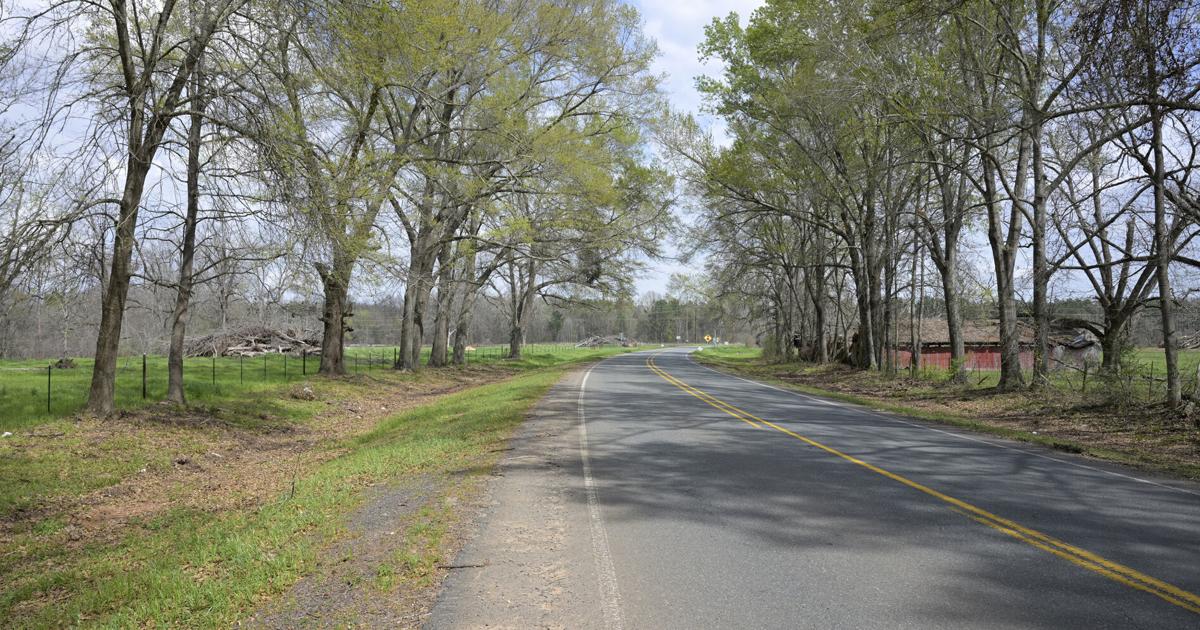
177 in Red River Parish, Louisiana, shown here on Saturday, March 7, 2026, near the location that, as of Saturday afternoon, was identified on the USGS website as the epicenter of the magnitude 4.9 earthquake that occurred on March 5.
Written by Jill Beckett | Staff photographer
She said that sewage injection was the cause of earthquakes in other oil-producing countries.
“This possibility is compelling evidence,” she said. “There’s still a possibility that something very strange happened in Louisiana that allowed this to happen. … (But) it seems less likely.”
Eppinger’s research found that earthquakes in north Louisiana have increased in number and magnitude over the past eight years. Last October, it received funding from the USGS to install equipment to better understand their cause.
They are seeking to find more earthquakes that have not already been detected and use this larger data set to understand how earthquakes evolve over time, said Justin Rubinstein, a seismologist with the USGS.
The researchers also intend to determine the relationship between oil and gas operations and earthquakes. Rubinstein said detailed scientific studies and more oil and gas exploration data are needed to make a definitive decision.
The EPA takes into account
Preliminary results show that the quakes occur deep in the Earth along a 70-million-year-old fault line, likely one to two miles deep.
Most of the earthquakes we felt this year occurred in early March. Six earthquakes occurred in one day on March 9, including magnitude 4.1 and 4.4 quakes that struck one minute apart near Coushatta and Edgefield, in rural northwest Louisiana.
The last one was on April 9.
Around the same time, the state Legislature held hearings on two bills that would ease regulations on saltwater injection wells. HB 496 by Rep. Danny McCormick, R-Oil City, would prevent the state from capping injection wells at certain pressures. HB 706 by Rep. Neil Rizer, R-Columbia, would essentially squeeze into state law.
The day before the committee hearing on Raiser’s bill, the EPA sent its letter. During his testimony before the House Natural Resources Committee, Davidson presented a letter from the Environmental Protection Agency, noting that the federal regulator had already noted earthquakes in the area, citing wastewater wells as the likely cause.
The committee rejected Raiser’s bill. McCormick’s bill is still pending.
In an interview last week, McCormick noted that surrounding states, such as Arkansas, allow greater injection pressures, which means more saltwater can be sent into the well more quickly and economically.
He suspected that the greater pressures sought by saltwater injection could contribute to earthquakes. He said that the saltwater wells that his bill would affect are about 5,000 feet deep, which is much higher than the depth of earthquakes, and that they are lower volume, non-commercial wells. It is also located a few parishes from the Red River, where the great earthquake occurred in March.
McCormick said he is talking with state regulators about his bill.
“We are discussing this issue,” he said.
Troy Hill, director of the EPA’s Region VI water division, wrote in the letter that disposing of salt water could cause underground formations to collapse and faults to slide. Although McCormick downplayed the potential impact of greater injection pressures, Hill asked state regulators to conduct a “comprehensive review” of the pressures at which operators inject wastewater.
“Stress management is vital,” Hill wrote, citing EPA’s previous experience dealing with induced earthquakes in EPA Region 6 states.
The state should implement “enhanced pressure and volume monitoring that includes a comprehensive review of fault maps and geological data such as formation fracture pressures, and a review of injection activities within several miles of recent earthquakes,” Hill wrote.
|
Sources 2/ https://www.nola.com/news/environment/earthquakes-north-louisiana-oil-fracking-haynesville-shale/article_d4b26560-23ef-4c66-865a-18b4a317aa39.html The mention sources can contact us to remove/changing this article |
What Are The Main Benefits Of Comparing Car Insurance Quotes Online
LOS ANGELES, CA / ACCESSWIRE / June 24, 2020, / Compare-autoinsurance.Org has launched a new blog post that presents the main benefits of comparing multiple car insurance quotes. For more info and free online quotes, please visit https://compare-autoinsurance.Org/the-advantages-of-comparing-prices-with-car-insurance-quotes-online/ The modern society has numerous technological advantages. One important advantage is the speed at which information is sent and received. With the help of the internet, the shopping habits of many persons have drastically changed. The car insurance industry hasn't remained untouched by these changes. On the internet, drivers can compare insurance prices and find out which sellers have the best offers. View photos The advantages of comparing online car insurance quotes are the following: Online quotes can be obtained from anywhere and at any time. Unlike physical insurance agencies, websites don't have a specific schedule and they are available at any time. Drivers that have busy working schedules, can compare quotes from anywhere and at any time, even at midnight. Multiple choices. Almost all insurance providers, no matter if they are well-known brands or just local insurers, have an online presence. Online quotes will allow policyholders the chance to discover multiple insurance companies and check their prices. Drivers are no longer required to get quotes from just a few known insurance companies. Also, local and regional insurers can provide lower insurance rates for the same services. Accurate insurance estimates. Online quotes can only be accurate if the customers provide accurate and real info about their car models and driving history. Lying about past driving incidents can make the price estimates to be lower, but when dealing with an insurance company lying to them is useless. Usually, insurance companies will do research about a potential customer before granting him coverage. Online quotes can be sorted easily. Although drivers are recommended to not choose a policy just based on its price, drivers can easily sort quotes by insurance price. Using brokerage websites will allow drivers to get quotes from multiple insurers, thus making the comparison faster and easier. For additional info, money-saving tips, and free car insurance quotes, visit https://compare-autoinsurance.Org/ Compare-autoinsurance.Org is an online provider of life, home, health, and auto insurance quotes. This website is unique because it does not simply stick to one kind of insurance provider, but brings the clients the best deals from many different online insurance carriers. In this way, clients have access to offers from multiple carriers all in one place: this website. On this site, customers have access to quotes for insurance plans from various agencies, such as local or nationwide agencies, brand names insurance companies, etc. "Online quotes can easily help drivers obtain better car insurance deals. All they have to do is to complete an online form with accurate and real info, then compare prices", said Russell Rabichev, Marketing Director of Internet Marketing Company. CONTACT: Company Name: Internet Marketing CompanyPerson for contact Name: Gurgu CPhone Number: (818) 359-3898Email: [email protected]: https://compare-autoinsurance.Org/ SOURCE: Compare-autoinsurance.Org View source version on accesswire.Com:https://www.Accesswire.Com/595055/What-Are-The-Main-Benefits-Of-Comparing-Car-Insurance-Quotes-Online View photos

 |
 |
 |