
Uncategorized
Advocacy groups join Venezuela earthquake relief efforts
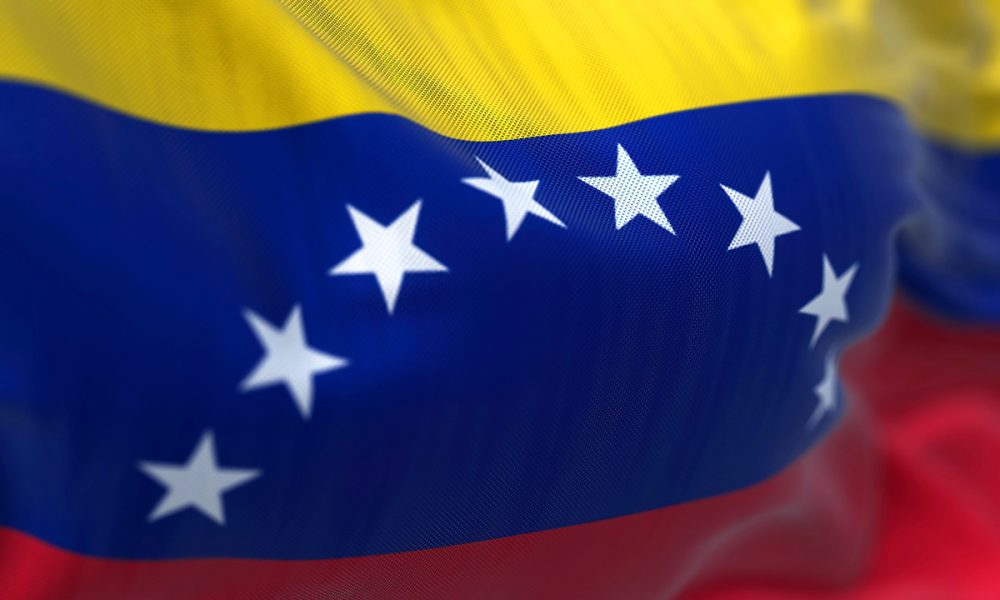
On June 24, 2026, two earthquakes shook Venezuela and changed the lives of thousands of people within seconds. For a large part of the world, it was the news that made headlines for a few days. For those of us who were born there, time seemed to have stopped. Before I thought about the size of the earthquake or the number of homes damaged, there was one question that replaced any other: Will my loved ones be okay?
Natural disasters don’t just transform land; It also changes the way we who live in exile relate to the place we still call home. Distance does not diminish the pain or anxiety for those who remain there. Every missed call, every photo and every message reminds us that there are connections that survive borders, time and migration itself.
The first thing I did was call my family in La Guaira. During those minutes I understood again that there are also earthquakes that we feel in exile. Uncertainty increases with every call that doesn’t come and every message that goes unanswered.
When she was finally able to communicate, she confirmed that relatives and close people had lost their homes, that different areas of La Guaira were facing serious damage and that communities such as Carayaca, El Junco and other sectors in the west of the state were also suffering from the consequences of the earthquakes. Although some of these areas recorded less extensive structural damage than the most devastated areas, their residents also saw their daily lives changed due to service disruptions, access difficulties, and the deep social, economic, and community interconnectedness that characterizes La Guaira.
Some members of my community also died. Among them were two gay men I knew. Their names reminded me that behind every character there are stories, emotions, and life projects. They also made me think about all those people whose lives and deaths barely make headlines, especially those who have lived for years on the margins, with little visibility and without full recognition of their dignity. They also reminded me that emergencies never affect everyone equally, and that those who were already facing greater vulnerability tended to bear a greater burden during recovery.
The country you leave never disappears
I was born and raised in La Guaira. A big part of my history, my family, my friends, and the community that is still a part of my identity remains there. Ten years ago, I had to leave Venezuela and seek asylum in the United States as a result of the persecution I faced as a gay man and human rights defender. Over time, I realized that exile is not just about changing countries. It also means learning to live with the certainty that a part of us will always remain in the place we had to leave.
Every family celebration, every crisis, every tragedy confirms that we still belong to that land. Refugees and migrants never stop facing emergencies in our countries of origin; We simply live it differently. While other people can travel to hug their families or participate directly in relief efforts, those of us who live far away try to accompany them out of uncertainty, unable to know that the heart remains where the body can no longer.
This is perhaps one of the less obvious dimensions of forced displacement. We experience our country’s tragedies from a distance, with fewer possibilities to act physically, but with the same pain and with a deep sense of responsibility for the people and places that remain part of our history.
When a house represents a complete life
After an emergency, a well-intentioned phrase is often repeated: “The important thing is that everyone survives; the materials are recovered.” Although it seeks to convey hope, it can also render invisible a profound human reality. In Venezuela, a house is rarely just a building. It is the result of years of work, shared sacrifices and family dreams. Its walls also contain memories, pictures, documents, and the memory of those who built it.
When an earthquake destroys a home, it also changes the family’s life plan. This is why it is not enough to rebuild buildings. It is necessary to create conditions for people to regain stability, security and the possibility of imagining the future again. As a social worker, I am convinced that the regions will not be able to get back on their feet with cement alone. They also need trust, organisation, mutual support and spaces where people can grieve and strengthen their support networks again.
This process does not occur under equal conditions for all people either. Disasters often deepen inequalities that already existed before the emergency. Older adults, children, people with disabilities, those with chronic diseases or HIV, and many people from the LGBTQ community, especially those facing poverty, discrimination, or limited support networks, often face greater barriers to accessing services, regaining their livelihoods, or feeling safe again. A true humanitarian response is not just about getting there first; It is about ensuring that no one is left behind when they begin the long road to rebuilding their lives.
When an emergency stops being news
The first hours after a disaster often wake up the best in a community. Neighbors organize rescue operations, volunteers distribute food, health teams work tirelessly, and thousands of citizens, inside and outside the country, are looking for ways to help. This spontaneous mobilization represents one of the most important resources in confronting any crisis, and shows that even in contexts of deep polarization, human life is still capable of meeting.
However, for those who survive, the real challenge only begins when the emergency stops making headlines. As the media turns their attention to other news and donations diminish, thousands of families continue to try to reclaim their homes, re-establish their livelihoods and reorganize their dramatically changed daily lives. The crisis is ending much sooner for public opinion than for those still facing its consequences.
A phenomenon known as “compassion fatigue” is often described in humanitarian work. In general, this term refers to the gradual decline in public interest and part of solidarity mobilization when the crisis ceases to occupy the center of the conversation. This does not mean that the desire to help disappears, but rather that new emergencies quickly replace previous ones. The danger is that the damaged areas will be left alone precisely when they face the more complex stage of getting back on their feet.
Major humanitarian organizations state that restoring buildings is only part of the process. It is also necessary to promote mental health, provide psychosocial support, restore the community fabric, and ensure that residents actively participate in decisions about their future. The house can be rebuilt within a few months. Regaining a sense of security, trust, or a sense of belonging usually takes longer.
This reality is especially important for those who already faced fragile conditions before the earthquake. Older adults, children, people with disabilities, people living with HIV, and many people from the LGBTQ community often face greater barriers to accessing services, maintaining their treatments, restoring their income, or rebuilding their support networks. Emergencies do not create these inequalities, but they often make them more pronounced and deeper. Therefore, true sustainable recovery is not just about returning to where we were before the disaster, but also about taking advantage of that process to reduce historical gaps and promote inclusion.
As a social worker, I prefer to talk about conscious resilience. It is not a resilience that requires lasting strength or invites us to hide pain under the idea that “we have to move on,” but rather a resilience that acknowledges losses, understands that grieving takes time, and accepts that asking for help is also part of the journey. No community should feel obligated to rebuild on its own, and no person should prove that they have overcome tragedy before they are ready to do so.
Survival is also a way to help
Exile prevented me from being physically present in La Guaira during the days following the earthquakes, but it did not prevent me from taking on the responsibility of accompaniment from where I am today. During those weeks, I used my platforms to verify information before sharing it, highlight areas that have historically received less attention – such as Carayaca, El Junco and other sectors in the west of the state – and promote messages focused on the needs of affected populations.
This commitment also gave rise to the documentary series La Guaira: Before and After, an attempt to document how different spaces change and help ensure that they do not disappear from collective memory when press coverage ends. Rather than recording devastation, the project seeks to remember that behind every photo there are families who will continue to need support long after the cameras are gone.
I firmly believe that communicating responsibly is also a form of humanitarian action. Verifying before publishing, avoiding misinformation, and keeping historically forgotten areas visible is a concrete way to accompany the recovery process and strengthen collective commitment from a distance.
Solidarity that decides to stay
The June 24, 2026 earthquakes will leave visible scars on buildings, roads and homes. Others will remain silent, accompanying families who must rebuild not only their homes, but also their sense of security, their life plans, and confidence in the future.
As a Venezuelan, a refugee, and a human rights defender, this experience reinforced my conviction that has guided much of my work: people must remain at the heart of any humanitarian response. No political, institutional or ideological difference should be more important than protecting life, alleviating suffering, and ensuring that those facing the greatest conditions of vulnerability have the support they need to start again with dignity.
Earthquakes stop being felt when the ground stops shaking. Forgetting begins when we stop looking. Between one thing and another there is a long road that requires memory, constant commitment and a collective decision not to abandon those who continue to try to rise while the rest of the world has already moved on. Because a society’s recovery is not complete when it rebuilds its buildings; This happens when all people have the opportunity to live again in security, hope and the certainty that no one will be left behind.
Yonatan Matthews (he/him/him) is a human rights advocate, social worker, and activist in the LGBTQ community. She works at the intersection of migration, social justice, and the HIV response.
This comment appeared on Yonatan’s website on July 6.
|
Sources 2/ https://www.washingtonblade.com/2026/07/15/advocacy-groups-join-venezuela-earthquake-relief-efforts/ The mention sources can contact us to remove/changing this article |
What Are The Main Benefits Of Comparing Car Insurance Quotes Online
LOS ANGELES, CA / ACCESSWIRE / June 24, 2020, / Compare-autoinsurance.Org has launched a new blog post that presents the main benefits of comparing multiple car insurance quotes. For more info and free online quotes, please visit https://compare-autoinsurance.Org/the-advantages-of-comparing-prices-with-car-insurance-quotes-online/ The modern society has numerous technological advantages. One important advantage is the speed at which information is sent and received. With the help of the internet, the shopping habits of many persons have drastically changed. The car insurance industry hasn't remained untouched by these changes. On the internet, drivers can compare insurance prices and find out which sellers have the best offers. View photos The advantages of comparing online car insurance quotes are the following: Online quotes can be obtained from anywhere and at any time. Unlike physical insurance agencies, websites don't have a specific schedule and they are available at any time. Drivers that have busy working schedules, can compare quotes from anywhere and at any time, even at midnight. Multiple choices. Almost all insurance providers, no matter if they are well-known brands or just local insurers, have an online presence. Online quotes will allow policyholders the chance to discover multiple insurance companies and check their prices. Drivers are no longer required to get quotes from just a few known insurance companies. Also, local and regional insurers can provide lower insurance rates for the same services. Accurate insurance estimates. Online quotes can only be accurate if the customers provide accurate and real info about their car models and driving history. Lying about past driving incidents can make the price estimates to be lower, but when dealing with an insurance company lying to them is useless. Usually, insurance companies will do research about a potential customer before granting him coverage. Online quotes can be sorted easily. Although drivers are recommended to not choose a policy just based on its price, drivers can easily sort quotes by insurance price. Using brokerage websites will allow drivers to get quotes from multiple insurers, thus making the comparison faster and easier. For additional info, money-saving tips, and free car insurance quotes, visit https://compare-autoinsurance.Org/ Compare-autoinsurance.Org is an online provider of life, home, health, and auto insurance quotes. This website is unique because it does not simply stick to one kind of insurance provider, but brings the clients the best deals from many different online insurance carriers. In this way, clients have access to offers from multiple carriers all in one place: this website. On this site, customers have access to quotes for insurance plans from various agencies, such as local or nationwide agencies, brand names insurance companies, etc. "Online quotes can easily help drivers obtain better car insurance deals. All they have to do is to complete an online form with accurate and real info, then compare prices", said Russell Rabichev, Marketing Director of Internet Marketing Company. CONTACT: Company Name: Internet Marketing CompanyPerson for contact Name: Gurgu CPhone Number: (818) 359-3898Email: [email protected]: https://compare-autoinsurance.Org/ SOURCE: Compare-autoinsurance.Org View source version on accesswire.Com:https://www.Accesswire.Com/595055/What-Are-The-Main-Benefits-Of-Comparing-Car-Insurance-Quotes-Online View photos

 |
 |
 |