
Uncategorized
Floating e-waste affects the health of millions of children, warns the WHO
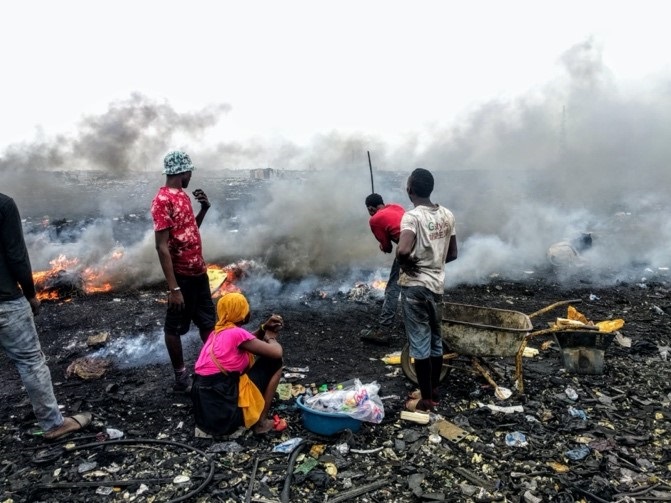
Effective and binding action is urgently needed to protect the millions of children, adolescents and expectant mothers around the world whose health is threatened by the informal treatment of discarded electrical or electronic devices, according to a new groundbreaking report by the World Health Organization: Children and digital dumps.
“With growing volumes of production and disposal, the world is facing what one recent international forum described as a growing ‘e-waste tsunami,’ endangering lives and health.” said Dr. Tedros Adhanom Ghebreyesus, WHO Director-General. “In the same way that the world has come together to protect seas and their ecosystems from plastic and microplastic pollution, we must come together to protect our most precious resource – our children’s health – from the growing threat of e-waste.”
As many as 12.9 million women work in the informal waste sector, potentially exposing them to toxic e-waste and exposing them and their unborn children.
Meanwhile, more than 18 million children and adolescents, some under the age of 5, are actively involved in the informal industrial sector, whose subsector is waste processing. Parents or caregivers often engage children in e-waste recycling because their little hands are smarter than the hands of adults. Other children live, go to school and play near e-waste recycling centers where high levels of toxic chemicals, mostly lead and mercury, can impair their intellectual abilities
Children exposed to e-waste are particularly sensitive to the toxic chemicals they contain due to their smaller size, less developed organs, and rapid growth and development rates. They absorb more pollutants relative to their size and are less able to metabolize or eradicate toxic substances from their bodies.
The impact of e-waste on human health
Workers, who want to recover valuable materials such as copper and gold, are at risk of exposure to over 1,000 harmful substances, including lead, mercury, nickel, brominated flame retardants and polycyclic aromatic hydrocarbons (PAHs).
Expectant mothers exposure to toxic e-waste can affect the health and development of her unborn child for the rest of their lives. Potential adverse health effects include negative birth outcomes, such as stillbirths and premature births, as well as low birth weight and length. Lead exposure from e-waste recycling activities is associated with significantly reduced results of neurological assessment of neonatal behavior, increased attention deficit / hyperactivity disorder (ADHD) rates, behavioral problems, changes in a child’s temperament, sensory integration difficulties, and decreased cognitive and language skills. .
Other adverse health impacts associated with e-waste include changes in lung function, respiratory and respiratory effects, DNA damage, thyroid dysfunction, and an increased risk of some chronic diseases later in life, such as cancer and cardiovascular disease.
“A child who eats just one chicken egg from Agbogbloshie, a landfill in Ghana, will absorb 220 times the daily food safety limit of the European Food Safety Authority for chlorine dioxin intake,” said Marie-Noel Brune Drisse, the WHO’s lead author in the report. . “The cause is improper e-waste management. This is a growing issue that many countries do not yet recognize as a health problem. If they do not work now, their effects will have a disastrous health effect on children and will place a heavy burden on the health sector in the coming years. “
A rapidly escalating problem
The amount of e-waste is growing globally. According to the Global Partnership for e-Waste Statistics (GESP), they grew by 21% in the five years to 2019, when 53.6 million metric tons of e-waste were generated. From a perspective, last year’s e-waste weighed as many as 350 cruisers set up from end to end, forming a 125km-long line. This growth is projected to continue as the use of computers, mobile phones and other electronics continues to expand, along with their rapid obsolescence.
Only 17.4% of e-waste generated in 2019 reached formal management or recycling facilities, according to the latest GESP estimates, the rest was dumped illegally, mostly in low- and middle-income countries, where it is recycled by informal workers.
Proper collection and recycling of e-waste is key to protecting the environment and reducing climate emissions. In 2019, GESP found that 17.4% of e-waste collected and properly recycled prevented the release of as much as 15 million tons of carbon dioxide equivalent into the environment.
Call to action
Children and digital dumps calls for effective and binding action by exporters, importers and governments to ensure the environmentally sound disposal of e-waste and the health and safety of workers, their families and communities; monitor e-waste exposure and health outcomes; to facilitate the reuse of materials; and encourage the production of more durable electronic and electrical equipment.
It also calls on the health community to take measures to reduce the harmful effects of e-waste on health, by building the capacity of the health sector to diagnose, monitor and prevent exposure to toxic substances in children and women, raising awareness of the potential benefits of more responsible recycling, working with affected communities and advocating for better data and health research on the health risks faced by informal e-waste workers.
“Children and adolescents have the right to grow and learn in a healthy environment, and exposure to electrical and electronic waste and many toxic components undoubtedly affects that right,” said Dr. Maria Neira, Director, Department of Environment, Climate Change and Health, at WHO. . “The health sector can play a role by providing leadership and advocacy, conducting research, influencing policy makers, engaging communities, and addressing other sectors seeking to make health issues central to e-waste policies.”
Note to editors:
A significant proportion of e-waste generated each year is exported from high-income countries to low- and middle-income countries, where regulations may be lacking or where regulations exist, may be poorly implemented. Here, e-waste is dismantled, recycled and recovered in environments where infrastructure, training and environmental and health protection measures may be non-existent or poorly respected. This puts e-waste workers, their families and communities at greater risk of adverse effects on e-waste recycling.
The WHO e-Waste and Children’s Health Initiative, launched in 2013, aims to increase access to evidence, knowledge and awareness of the health impacts of e-waste; improve the health sector’s ability to manage and prevent risk, monitor progress and promote e-waste policies that better protect the health of the child; and improve the monitoring of e-waste exposure and facilitate interventions that protect public health.
The report was prepared with the contribution and support of the Coalition for e-waste,
a group of 10 UN agencies and international organizations, including the WHO, that came together to increase cooperation, build partnerships and more effectively support member states in tackling the challenge of e-waste.
What Are The Main Benefits Of Comparing Car Insurance Quotes Online
LOS ANGELES, CA / ACCESSWIRE / June 24, 2020, / Compare-autoinsurance.Org has launched a new blog post that presents the main benefits of comparing multiple car insurance quotes. For more info and free online quotes, please visit https://compare-autoinsurance.Org/the-advantages-of-comparing-prices-with-car-insurance-quotes-online/ The modern society has numerous technological advantages. One important advantage is the speed at which information is sent and received. With the help of the internet, the shopping habits of many persons have drastically changed. The car insurance industry hasn't remained untouched by these changes. On the internet, drivers can compare insurance prices and find out which sellers have the best offers. View photos The advantages of comparing online car insurance quotes are the following: Online quotes can be obtained from anywhere and at any time. Unlike physical insurance agencies, websites don't have a specific schedule and they are available at any time. Drivers that have busy working schedules, can compare quotes from anywhere and at any time, even at midnight. Multiple choices. Almost all insurance providers, no matter if they are well-known brands or just local insurers, have an online presence. Online quotes will allow policyholders the chance to discover multiple insurance companies and check their prices. Drivers are no longer required to get quotes from just a few known insurance companies. Also, local and regional insurers can provide lower insurance rates for the same services. Accurate insurance estimates. Online quotes can only be accurate if the customers provide accurate and real info about their car models and driving history. Lying about past driving incidents can make the price estimates to be lower, but when dealing with an insurance company lying to them is useless. Usually, insurance companies will do research about a potential customer before granting him coverage. Online quotes can be sorted easily. Although drivers are recommended to not choose a policy just based on its price, drivers can easily sort quotes by insurance price. Using brokerage websites will allow drivers to get quotes from multiple insurers, thus making the comparison faster and easier. For additional info, money-saving tips, and free car insurance quotes, visit https://compare-autoinsurance.Org/ Compare-autoinsurance.Org is an online provider of life, home, health, and auto insurance quotes. This website is unique because it does not simply stick to one kind of insurance provider, but brings the clients the best deals from many different online insurance carriers. In this way, clients have access to offers from multiple carriers all in one place: this website. On this site, customers have access to quotes for insurance plans from various agencies, such as local or nationwide agencies, brand names insurance companies, etc. "Online quotes can easily help drivers obtain better car insurance deals. All they have to do is to complete an online form with accurate and real info, then compare prices", said Russell Rabichev, Marketing Director of Internet Marketing Company. CONTACT: Company Name: Internet Marketing CompanyPerson for contact Name: Gurgu CPhone Number: (818) 359-3898Email: [email protected]: https://compare-autoinsurance.Org/ SOURCE: Compare-autoinsurance.Org View source version on accesswire.Com:https://www.Accesswire.Com/595055/What-Are-The-Main-Benefits-Of-Comparing-Car-Insurance-Quotes-Online View photos
Thanks WHO For Help!

 |
 |
 |