
Uncategorized
Volcano monitoring: What caused the major tremor that occurred on May 22 on the Big Island? :The big island now
“Volcano Watch” is a weekly article and activity update written by scientists from the USGS, Hawaiian Volcano Observatory and their affiliates.
More than 7,000 people from all over the Hawaiian Islands submitted a “Did You Feel It?” Reports to the USGS after a 6.0 magnitude earthquake struck at 9:46 pm Friday, May 22 in the South Kona area on the west side of the Big Island.
What caused this earthquake and how did responding agencies send messages about it?
The quake occurred 14 miles below sea level south of Hōnaunau-Nāpōʻopoʻo. It appears that the epicenter of the earthquake was on the Mauna Loa volcano, when looking at the map.
However, the base of Mauna Loa on top of ancient oceanic crust is only 6 miles below sea level. The quake occurred deeper than the volcano, and even deeper than the base of the ocean crust, which is bent downward by the weight of the Hawaiian island chain.
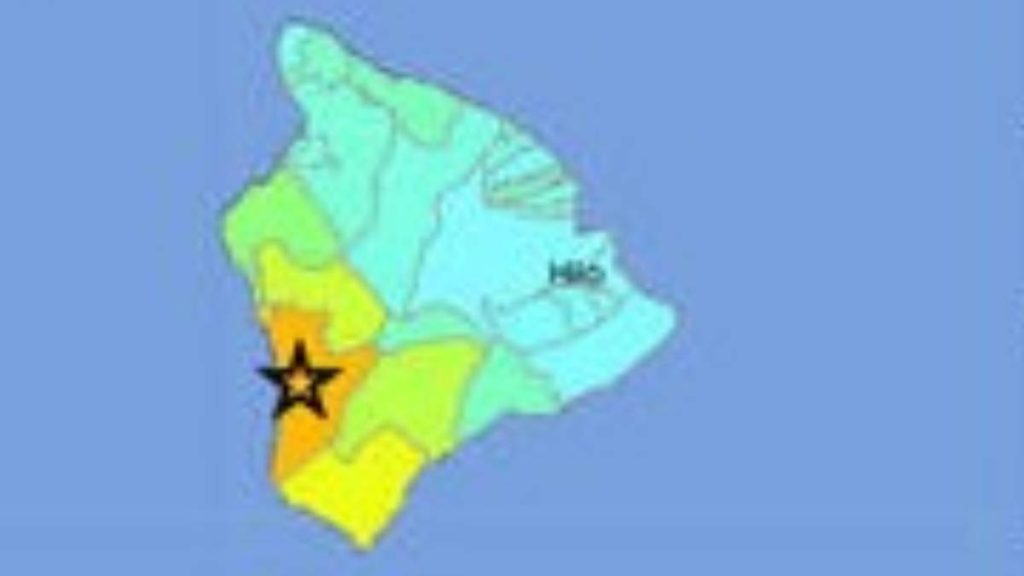
This map from the USGS shows the shaking intensity of the 6.0 magnitude earthquake that struck just before 10 p.m. on Friday, May 22, 2026, below the island of Hawaii, extracted from “Did you feel it?” From community members. A strong to very strong tremor was reported near the epicenter on the west side of Hawaii Island, notifying responding agencies of the possibility of light to moderate damage.
Plate bending earthquakes, or flexure of the lithosphere, occur within the upper mantle of the lithosphere within the Pacific Plate and are not directly related to volcanic activity.
The Pacific plate is constantly readjusting to the weight of the islands through countless small earthquakes that are never felt.
Plate bending causes larger, widely felt and often devastating earthquakes that can occur from the island of Hawaii to Molokai. These larger earthquakes are felt more widely because they are deep — 12 to 30 miles — and the mantle transmits earthquake waves efficiently.
Before the May 22 earthquake, the most recent larger earthquakes were also caused by adjustments of the Pacific plate: the magnitude 6.2 in 2021 south of the Big Island with about 3,500 felt reports, and the devastating magnitude 6.7 Kiholo Bay earthquake in 2006 which had about 3,000 felt reports.
Last week’s 6.0 magnitude earthquake set a new record for the state, receiving the highest number of “felt reports” and even including a report from Niʻihau.
This “Did you feel it?” The responses are used to create maps showing the intensity of shaking, and are useful for emergency management agencies — such as the Hawaii County Civil Defense Agency — that respond to damage reports.
A few seconds after the May 22 earthquake began shaking the western side of the island, some Android phone users reported receiving alert notifications on their mobile devices: People near the epicenter were alerted that an earthquake was occurring near them; Those far away may have been alerted to a nearby earthquake and expected tremors.
These messages are based on the accelerometer and location of the mobile phone, as well as the accelerometers and locations of other Android phones; Adjusting your phone settings can enable you to turn these notifications on or off.
The Android Earthquake Alerts System is a special feature developed by Google that is active throughout the United States for earthquakes of magnitude 4.5 or greater, different from the US Geological Survey’s earthquake early warning system ShakeAlert which is only available in California, Oregon and Washington states.
While messages arrive quickly because they rely on the vibration detected by thousands of Android users, official messages sent by the USGS and Pacific Tsunami Warning Center can take minutes or longer because they rely on devices across the landscape.
People need to verify the accuracy of the earthquake location and magnitude in some cases to ensure accurate earthquake and tsunami information before sending the message.
Regional seismic networks calculate the time and location of any given earthquake – to avoid confusion, only one set of earthquake information can be considered official.
The official regional seismic network for Hawaii is the Hawaiian Volcano Observatory. NOAA’s Pacific Tsunami Warning Center is the official agency for tsunami information and guidance.
The Hawaii Volcano Observatory crew began analyzing data from the May 22 earthquake even before the shaking stopped, as the quake rippled across the southern and eastern sides of the island. The observatory’s automated software system quickly sent preliminary estimates of the time, location and magnitude of the earthquake.
Staff also immediately posted on the Hawaiian Volcano Observatory website and USGS Volcanoes’ social media accounts, acknowledging the earthquake and that staff were analyzing the data.
An initial earthquake message was sent to subscribers of the earthquake notification service using the initial and automatically determined earthquake magnitude, location, and depth. Shortly after, the Pacific Tsunami Warning Center issued a statement saying no tsunami had been generated.
The Hawaii Volcano Observatory released the revised earthquake timing, size, location and depth within a few minutes after the quake.
The quake’s magnitude was initially estimated at 5.9 at a depth of 10 miles, and these statistics later increased when analysts determined the quake was larger and deeper.
The observatory subsequently issued a media release containing accurate information, explaining that the earthquake was related to the flexure of the Pacific plate and not to the movement of magma within Mauna Loa.
The May 22 earthquake is a reminder that Hawaii is one of the most seismically active locations in the United States.
A home was damaged by a large 6.0 magnitude earthquake that occurred just before 10 p.m. on Friday, May 22, 2026, in South Kona on the Big Island. (Photo courtesy: County of Hawaii Facebook page)
Earthquakes can affect large areas and occur without warning. Don’t forget to say “Drop, Dive, Hold” during any earthquake. If you are near the coast, move immediately inland in case of a tsunami.
Volcano activity updates
amazing
Volcano Alert Level: Advisory
Kīlauea volcano has been accidentally erupting since December 23, 2024, within its summit caldera within Hawaii Volcanoes National Park. The 47th episode of the lava fountain summit occurred over a period of 9 hours from May 14 to 15. No unusual activity was observed along the east rift or southwest rift zones on Kīlauea.
What’s Next: The swelling of the summit area since the end of Episode 47 indicates the possibility of another spring episode. Models indicate that Episode 48 will likely start between May 28 and 30.
Long mountain
Volcano Alert Level: Normal
Mauna Loa does not erupt. Read the latest information statement about the volcano’s status on the Mauna Loa web page on the Hawaiian Volcano Observatory website.
The Hawaiian Volcano Observatory continues to closely monitor Kīlauea and Mauna Loa.
Earthquakes
There were 10 earthquakes reported that were felt over the past week around the Big Island:
It had a magnitude of 3.2 at 7:25 a.m. on May 23 and was located southeast of Holualoa at a depth of 23 miles. It had a magnitude of -2.9 at 2:41 a.m. on May 23, and was located 4 miles south of Hōnaunau-Nāpōʻopoʻo at a depth of 8 miles. It had a magnitude of 4.0 at 12:56 a.m. on May 23, and was located 7 miles south of Hōnaunau-Nāpōʻopoʻo at a depth of 14 miles. Magnitude -2.4 at 12:02 a.m. May 23, located 6 miles southeast of Hōnaunau-Nāpōʻopoʻo at a depth of 13 miles. Magnitude -2.6 at 10:50 PM on May 22, located 6 miles south of Hōnaunau-Nāpōʻopoʻo at a depth of 10 miles. Magnitude -2.1 at 10:22 PM on May 22, located 9 miles south of Hōnaunau-Nāpōʻopoʻo at a depth of 13 miles. Magnitude -2.3 at 10:01 PM on May 22, located 8 miles southeast of Hōnaunau-Nāpōʻopoʻo at a depth of 2 miles. Magnitude -3.2 at 9:52 PM on May 22, located 6 miles south of Hōnaunau-Nāpōʻopoʻo at a depth of 13 miles. Magnitude -6.0 at 9:46 PM on May 22, located 8 miles south of Hōnaunau-Nāpōʻopoʻo and at a depth of 14 miles. Magnitude -1.8 at 1:49 PM on May 22, located 7 miles northeast of Pahala at a depth of 19 miles.
Visit the Hawaii Volcano Observatory website for previous Volcano Watch articles, Kīlauea and Mauna Loa updates, volcano photos, maps, recent earthquake information, and more. Email questions to [email protected].
|
Sources 2/ https://bigislandnow.com/2026/05/29/volcano-watch-what-caused-the-major-shake-up-may-22-on-the-big-island/ The mention sources can contact us to remove/changing this article |
What Are The Main Benefits Of Comparing Car Insurance Quotes Online
LOS ANGELES, CA / ACCESSWIRE / June 24, 2020, / Compare-autoinsurance.Org has launched a new blog post that presents the main benefits of comparing multiple car insurance quotes. For more info and free online quotes, please visit https://compare-autoinsurance.Org/the-advantages-of-comparing-prices-with-car-insurance-quotes-online/ The modern society has numerous technological advantages. One important advantage is the speed at which information is sent and received. With the help of the internet, the shopping habits of many persons have drastically changed. The car insurance industry hasn't remained untouched by these changes. On the internet, drivers can compare insurance prices and find out which sellers have the best offers. View photos The advantages of comparing online car insurance quotes are the following: Online quotes can be obtained from anywhere and at any time. Unlike physical insurance agencies, websites don't have a specific schedule and they are available at any time. Drivers that have busy working schedules, can compare quotes from anywhere and at any time, even at midnight. Multiple choices. Almost all insurance providers, no matter if they are well-known brands or just local insurers, have an online presence. Online quotes will allow policyholders the chance to discover multiple insurance companies and check their prices. Drivers are no longer required to get quotes from just a few known insurance companies. Also, local and regional insurers can provide lower insurance rates for the same services. Accurate insurance estimates. Online quotes can only be accurate if the customers provide accurate and real info about their car models and driving history. Lying about past driving incidents can make the price estimates to be lower, but when dealing with an insurance company lying to them is useless. Usually, insurance companies will do research about a potential customer before granting him coverage. Online quotes can be sorted easily. Although drivers are recommended to not choose a policy just based on its price, drivers can easily sort quotes by insurance price. Using brokerage websites will allow drivers to get quotes from multiple insurers, thus making the comparison faster and easier. For additional info, money-saving tips, and free car insurance quotes, visit https://compare-autoinsurance.Org/ Compare-autoinsurance.Org is an online provider of life, home, health, and auto insurance quotes. This website is unique because it does not simply stick to one kind of insurance provider, but brings the clients the best deals from many different online insurance carriers. In this way, clients have access to offers from multiple carriers all in one place: this website. On this site, customers have access to quotes for insurance plans from various agencies, such as local or nationwide agencies, brand names insurance companies, etc. "Online quotes can easily help drivers obtain better car insurance deals. All they have to do is to complete an online form with accurate and real info, then compare prices", said Russell Rabichev, Marketing Director of Internet Marketing Company. CONTACT: Company Name: Internet Marketing CompanyPerson for contact Name: Gurgu CPhone Number: (818) 359-3898Email: [email protected]: https://compare-autoinsurance.Org/ SOURCE: Compare-autoinsurance.Org View source version on accesswire.Com:https://www.Accesswire.Com/595055/What-Are-The-Main-Benefits-Of-Comparing-Car-Insurance-Quotes-Online View photos

 |
 |
 |