
Politics
Made in Europe: alarm bells ring for Turkish industrial sector

For nearly three decades, Turkey’s industrial strategy was based on one assumption: Turkish manufacturers were part of the European industrial system.
This assumption has shaped the investment dynamics in Türkiye. Initially, this helped the automotive supplier ecosystem flourish around Gebze in the early 2000s, and then the wind turbine supplier ecosystem emerged around İzmir in the 2010s.
At the same time, machinery, white goods, textiles and other industrial sectors have seen growth. These clusters exist because they were built as part of a shared European supply chain.
“Made in Europe” is now putting this hypothesis under pressure. The customs union has for decades allowed industrial products to circulate between Turkey and the EU without customs duties, within the framework of a common external tariff.
But this does not necessarily make a component manufactured in Türkiye a product originating in the EU. A spare part produced in Bursa can circulate freely within the customs territory of the EU. Its origin is always Turkey and not the Union.
For 30 years, this distinction was less important because the main issue was market access. Today, industrial policy is back. Public support and public procurement are becoming central drivers of demand, particularly in Europe.
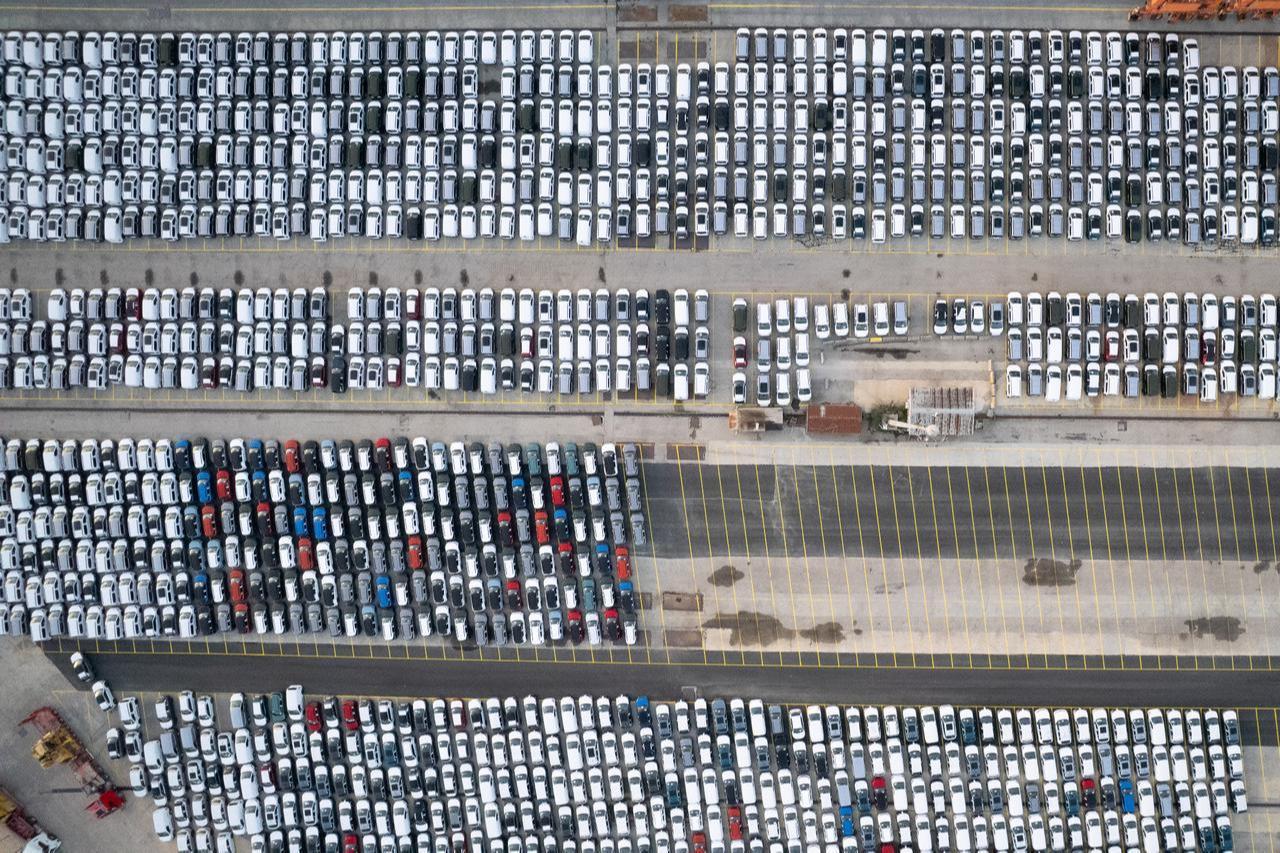

The photo shows a top-down aerial view of hundreds of new cars parked at Haydarpasa Port in Istanbul, Turkey, accessed November 1, 2025. (Adobe Stock Photo)
Ambiguity of the law on the industrial accelerator
Electric vehicles, batteries, wind power, hydrogen, steel and clean manufacturing are increasingly influenced by public procurement, renewable energy auctions, subsidy programs, fleet rules and state-backed investment incentives.
When the draft Industrial Acceleration Law (IAA) was published, many Turkish business and political circles rejoiced. Turkey was not explicitly excluded.
In the draft, members of the customs union or countries with free trade agreements (FTAs) with the EU are treated equally when it comes to the origin of products. This sounds reassuring, but not exactly.
The project distinguishes between strict “EU origin” and “third country equivalence”. Strict EU origin means EU-27. This does not automatically include countries that are part of the EU customs union. Turkey’s status as a member of the customs union is economically important but legally sui generis (other countries that have a customs union with the EU are Andorra and San Marino).
For example, in the case of public support programs, the project seems to include both members of the Customs Union and countries that have concluded FTAs with the EU. Turkey is therefore included, but so is India!
On the other hand, there is a narrower definition of public procurement. Here, equivalence depends on whether or not the relevant agreement contains public procurement obligations for the Union. The Turkish customs union does not yet cover public procurement in the same way.
This is why the first relief regarding AAI is premature. The project is broad because the political questions have not been resolved. A broad initial scope prepares the ground for the next fight: which countries, sectors or components will then be restricted by technical criteria or security of supply arguments?
In Brussels, industrial policy often takes shape through technical language. This means that Turkey cannot be excluded under the main law, but it can be excluded later by a comma, an annex or an implementing decision.
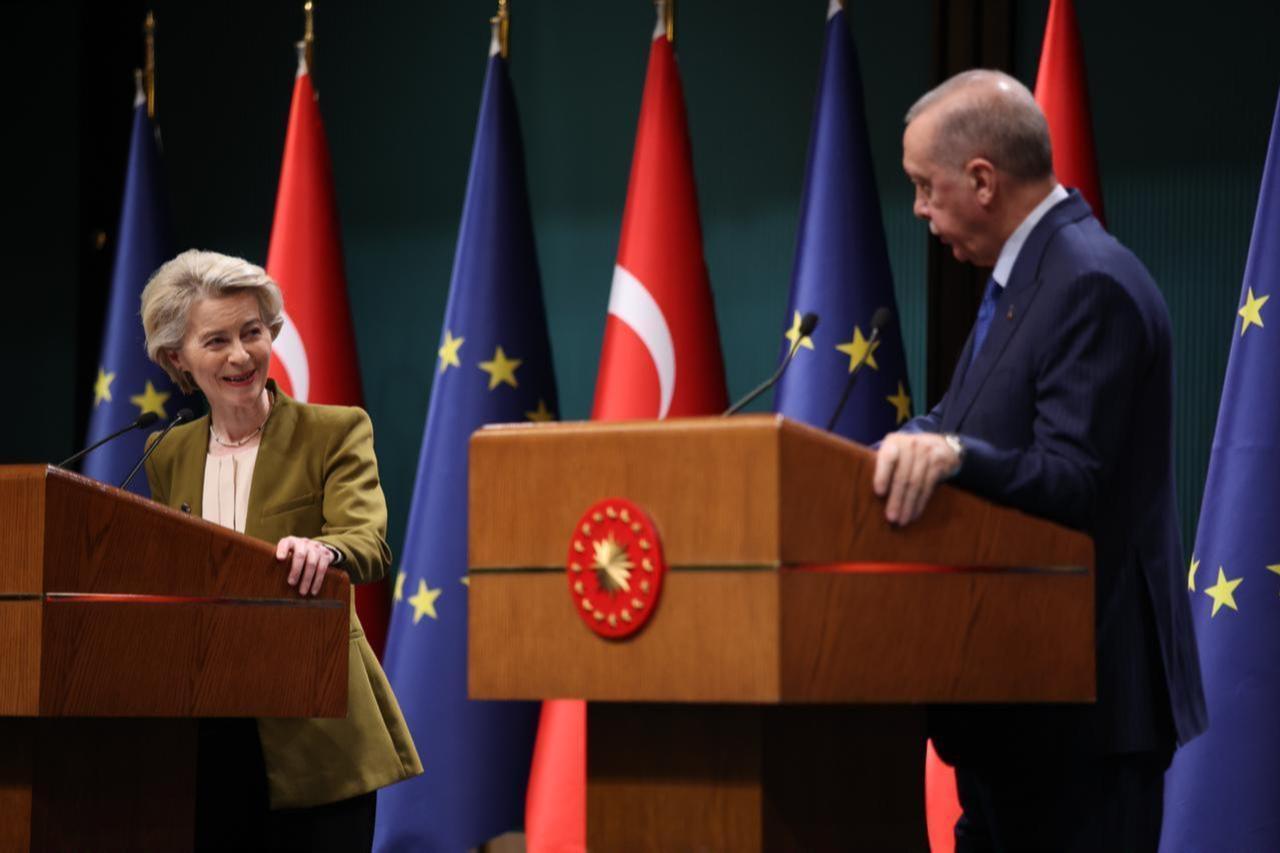
President Recep Tayyip Erdogan (R) and European Commission President Ursula von der Leyen (L) speak during a joint press conference in Ankara, Turkey, December 17, 2024. (Photo via (European Commission)
Sectoral impacts on automotive and wind energy
The automotive industry is one of the main cases to watch. The future of the industry is electric, and demand for electric vehicles in Europe is increasingly determined by public support programs. This is important because Turkish manufacturers are not only involved in assembly; they serve as a supplier base supporting European production.
If the “Made in Europe” regulatory framework stipulates that final assembly must take place in the Union or establishes strict thresholds for the proportion of components originating from the Union in the final product, Turkish suppliers could retain their value but become less eligible.
In this sense, the fight will be about the calculation formulas: whether batteries are included, how the value of the components is measured, which partners count and whether the final assembly becomes a hard door. This is already visible in Europe.
Some industrial players want “Made in Europe” to refer only to the 27 EU member states. Others know that such a narrow definition would increase costs and weaken competitiveness. The debate is therefore not between Europe and Turkey. It’s also Europe against Europe.
Likewise, the wind energy industry constitutes the strategic version of the above debate. Turkey is already a production base for wind towers, blades, generators and other components used in Europe’s energy transition.
If Turkish components remain equivalent to those of third countries, Turkey will help Europe build renewable capacities more quickly and at lower cost. If Turkish capabilities are squeezed out, Europe will not become more resilient. This makes its own energy transition more costly and more fragile.
The World Bank has identified Turkey as one of the most capable emerging markets, after China, to meet future demand for climate technology products. It’s not because Turkey has trendy climate startups. This is because Turkey already has manufacturing capabilities close to the products the world will need more of.
Turkey is not asking to be treated like another third party that has a free trade deal with the EU. Its claim has been different for thirty years: European rules have helped Turkey’s industrial capacity to grow enormously, and now this capacity serves Europe itself.
Europe wants to reduce its excessive dependence on China. He wants manufacturing based on clean technologies, resilient supply chains and local production without sacrificing competitiveness.
Turkey already provides part of this response: proximity, industrial depth, integration into the customs union, supplier networks and logistical access to Europe’s wider neighborhood. But Brussels does not always convert industrial reality into political recognition.
For some EU players, the expansion of Made in Europe beyond the Union dilutes the political message. For others, excluding integrated partners like Turkey weakens competitiveness.
This is why the debate will not be resolved by legal logic alone. It will be political, sectoral and interest-driven.
Türkiye’s lobbying strategy cannot be about asking Brussels to be fair. For Europe, it is a question of strategic autonomy. But it is up to Turkey to make this understood to Europeans.
Equity is not the operational logic of industrial policy. The interest is.

June 1, 2026 10:41 a.m. GMT+03:00
|
Sources 2/ https://www.turkiyetoday.com/opinion/made-in-europe-alarm-bells-ring-for-turkiyes-industrial-sector-3221033 The mention sources can contact us to remove/changing this article |
What Are The Main Benefits Of Comparing Car Insurance Quotes Online
LOS ANGELES, CA / ACCESSWIRE / June 24, 2020, / Compare-autoinsurance.Org has launched a new blog post that presents the main benefits of comparing multiple car insurance quotes. For more info and free online quotes, please visit https://compare-autoinsurance.Org/the-advantages-of-comparing-prices-with-car-insurance-quotes-online/ The modern society has numerous technological advantages. One important advantage is the speed at which information is sent and received. With the help of the internet, the shopping habits of many persons have drastically changed. The car insurance industry hasn't remained untouched by these changes. On the internet, drivers can compare insurance prices and find out which sellers have the best offers. View photos The advantages of comparing online car insurance quotes are the following: Online quotes can be obtained from anywhere and at any time. Unlike physical insurance agencies, websites don't have a specific schedule and they are available at any time. Drivers that have busy working schedules, can compare quotes from anywhere and at any time, even at midnight. Multiple choices. Almost all insurance providers, no matter if they are well-known brands or just local insurers, have an online presence. Online quotes will allow policyholders the chance to discover multiple insurance companies and check their prices. Drivers are no longer required to get quotes from just a few known insurance companies. Also, local and regional insurers can provide lower insurance rates for the same services. Accurate insurance estimates. Online quotes can only be accurate if the customers provide accurate and real info about their car models and driving history. Lying about past driving incidents can make the price estimates to be lower, but when dealing with an insurance company lying to them is useless. Usually, insurance companies will do research about a potential customer before granting him coverage. Online quotes can be sorted easily. Although drivers are recommended to not choose a policy just based on its price, drivers can easily sort quotes by insurance price. Using brokerage websites will allow drivers to get quotes from multiple insurers, thus making the comparison faster and easier. For additional info, money-saving tips, and free car insurance quotes, visit https://compare-autoinsurance.Org/ Compare-autoinsurance.Org is an online provider of life, home, health, and auto insurance quotes. This website is unique because it does not simply stick to one kind of insurance provider, but brings the clients the best deals from many different online insurance carriers. In this way, clients have access to offers from multiple carriers all in one place: this website. On this site, customers have access to quotes for insurance plans from various agencies, such as local or nationwide agencies, brand names insurance companies, etc. "Online quotes can easily help drivers obtain better car insurance deals. All they have to do is to complete an online form with accurate and real info, then compare prices", said Russell Rabichev, Marketing Director of Internet Marketing Company. CONTACT: Company Name: Internet Marketing CompanyPerson for contact Name: Gurgu CPhone Number: (818) 359-3898Email: [email protected]: https://compare-autoinsurance.Org/ SOURCE: Compare-autoinsurance.Org View source version on accesswire.Com:https://www.Accesswire.Com/595055/What-Are-The-Main-Benefits-Of-Comparing-Car-Insurance-Quotes-Online View photos

 |
 |
 |