
Politics
How transactional diplomacy endangers the Indo-Pacific
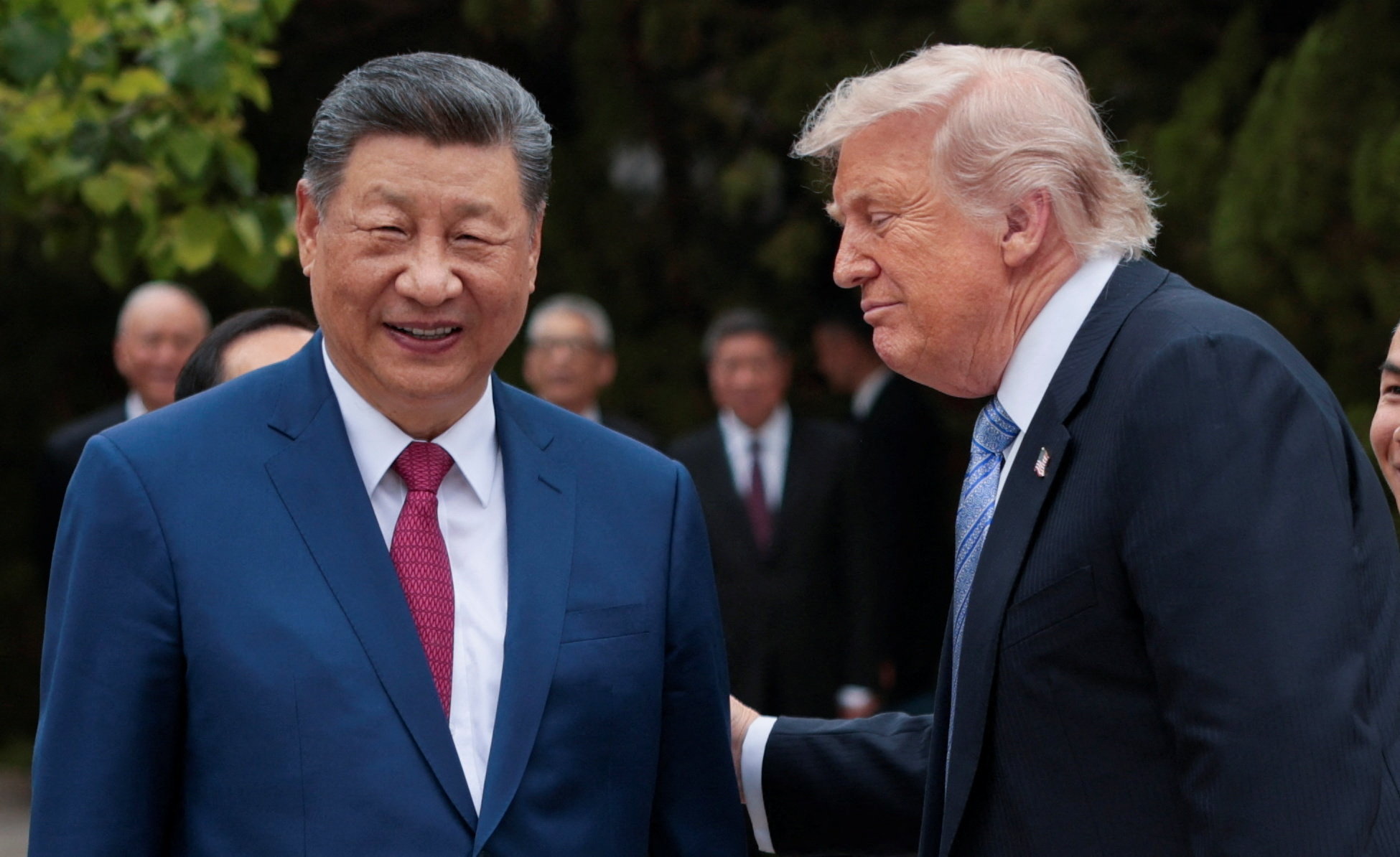
The recent summit between Donald Trump and Xi Jinping in Beijing has triggered a wave of strategic anxiety throughout the first island chain. In the Philippines, President Ferdinand Marcos Jr. has expressed concerns that any conflict over Taiwan would inevitably involve the Philippines due to its geographic proximity to Taiwan and the presence of more than 200,000 Filipinos working there. In Japan, although the government has remained characteristically reserved, the Japanese press has been much more vocal. Headlines such as “Silence on Taiwan speaks volumes” reflect a growing fear that Washington’s security guarantees are no longer as reliable as they once were.
In this context, Professor Andrew J. Nathan’s exercise in reading Xi Jinping’s mind is both timely and sobering. Nathan seeks to draw the attention of policymakers to the danger that President Trump’s apparent lack of understanding of the seriousness of the Taiwan issue could make the U.S. commitment to deter Xi Jinping’s military aggression less credible. Such a shift would not only erode the trust of key regional allies, but also risk encouraging dangerous miscalculations by Beijing regarding Washington’s true strategic interests.
Generally speaking, I agree with most of Professor Nathan’s observations. After Trump left Beijing, Xi must have felt deeply satisfied that events unfolded almost exactly as China’s leaders had planned: Trump’s visit, sandwiched between those of the Iranian foreign minister and Vladimir Putin, made China appear as the true center of world power. Xi humiliated the United States by invoking the “Thucydides Trap” directly in Trump’s presence. For the first time, a US president appeared to accept the G2 framework that previous administrations had rejected for years. More importantly, China successfully shifted the US president’s position on Taiwan from strategic clarity to strategic ambiguity. It even appeared that Trump no longer dared to openly express this position to Xi Jinping.
But how did this happen? Have not the war in Iran and the decapitation strike in Venezuela demonstrated the overwhelming superiority of American military power and technological capabilities over any other country in the world? So why does the world suddenly seem to be tilting in China’s favor? I would argue that the answer lies in the fact that President Trump no longer cares about liberal values and has effectively abandoned one of the three pillars – military, technological and ideological – of strategic competition built by President Biden. As a result, the logic of competition between superpowers is increasingly tilted in favor of authoritarian regimes.
The Dictator’s Advantage: The Erosion of Liberal Values
Over the past decade, competition between the United States and China has unfolded along three dimensions: military, technological and ideological. The Biden administration developed a competitive strategy that drew on America’s advantages as a democracy – its alliances with like-minded partners and its legitimacy in defending the liberal international order – to supplant China. This approach effectively institutionalized competition by isolating sensitive sectors while maintaining cooperation in non-essential areas to avoid escalation.
However, during President Trump’s second term, the return of a more isolationist and transactional foreign policy fundamentally changed this dynamic. By viewing international relations through a purely mercantilist lens, the United States risks dismantling the rules-based order it helped build after World War II. In its place, a system of “militarized interdependence” has gradually emerged, where power is measured by control of critical points in global supply chains and geostrategic networks.
It’s a game Beijing has been preparing for for more than two decades. Unlike a democracy, which must remain responsive to a public sensitive to economic disruption, an autocracy can absorb significant domestic pain in the pursuit of strategic goals. We have witnessed this in previous tariff escalations: although the United States possessed greater economic leverage, the administration’s sensitivity to market fluctuations and approval rates often led to hesitation. Xi Jinping, on the other hand, has repeatedly demonstrated his willingness to tolerate severe internal economic contraction in order to preserve China’s geopolitical position.
The ideological dimension – once America’s “ace of spades” – now risks being completely sidelined. Without the moral authority that comes from leading a democratic alliance, American hegemony rests increasingly on hard power and the personal whims of political leaders. In a “game of chicken” against a dictator who controls national discourse and suppresses dissent, a democracy that must constantly respond to public opinion is at a structural disadvantage.
The Beijing summit: a masterclass in narrative control
The timing of the Beijing summit was highly significant. Delayed from late March to mid-May due to the war in Iran, the meeting was described by the Chinese Communist Party as a historic turning point. Due to the Supreme Court ruling and the prolongation of the Iranian conflict, President Trump arrived in Beijing with a weaker negotiating position than the one he had held the previous year in Busan. China has sought to seize this rare opportunity to advance three major strategic objectives:
First, Beijing has sought to make the Taiwan issue the central issue in current U.S.-China relations. If managed effectively, relationships could stabilize; if mismanaged, the two countries could face a collision or even conflict, pushing their entire relationship into a dangerous state. As Xi Jinping himself said at the summit, “’Taiwan independence’ and peace across the Taiwan Strait are irreconcilable. Maintaining peace across the Taiwan Strait is the greatest common ground in U.S.-China relations. This amounted to an attempt to steer both sides toward a framework of “US-China co-management of Taiwan.”
Second, Xi first raised the concept of the “Thucydides Trap” at a leaders’ summit. Xi told Trump that the world was now experiencing “…a century of change…at a crossroads.” Whether China and the United States can overcome the “Thucydides Trap” and forge a new model of great power relations is a historical question that must be addressed collaboratively. » This framework implied a broader narrative of “the rise of the East and the decline of the West”, suggesting that the United States should adapt to this historical trend and cede strategic control of the Western Pacific to China in order to avoid conflict.
Third, Xi proposed a “constructive strategic stability relationship between China and the United States,” one that would be “primarily cooperative, with measured competition, controllable differences, and achievable peace.” According to Beijing, such a framework “would provide strategic direction for U.S.-China relations for the next three years and beyond.” This proposal not only offered concrete mechanisms to stabilize relations if the Taiwan issue was “handled properly” – thus satisfying Washington’s desire for détente – but also sought to solidify the G2 framework that China has been advocating for years, thereby elevating US-China relations to a position of equality on the international stage.
Back in the United States, Trump seemed to believe that his personal relationship with Xi Jinping had secured temporary détente and stability in bilateral relations, as well as China’s commitment to buying the “3Bs” – Boeing, beef and beans. Yet, judging by the highly critical editorials in major media outlets, statements by members of Congress from both parties, and subsequent clarifications issued by Trump administration officials, it has become clear that the results of the Beijing summit were not well received domestically. Faced with the war in Iran and the looming midterm elections upon his return home, Trump will likely turn his attention to another goal where he can once again present himself as a winner.
The Taiwan question: the risk of an apparent accommodation with Beijing
The biggest danger emerging from the summit is the perception that U.S. commitments to Taiwan’s security are now negotiable. In deterrence, what your allies believe you will do is just as important as what you actually do. Reports that the administration may delay a $14 billion arms sale to Taiwan as a “goodwill gesture” have raised serious concerns. Such a move would be widely seen as a break with the “Six Assurances” established in 1982, which stipulated that the United States would not consult Beijing on arms sales to Taiwan or set a date to end them.
Four days after Trump left office, Xi Jinping hosted Vladimir Putin for his 26th state visit to Beijing. The two leaders issued a joint statement advocating a multipolar world and a new type of international relations. If partners such as Japan, South Korea, and the Philippines begin to doubt the credibility of America’s security engagement in the region, they may gradually feel compelled to move toward forms of neutrality favorable to China. Such a development would effectively mark the end of the era of American leadership in the Pacific. The multipolar world imagined by Xi and Putin would then become reality.
Conclusion: the need for consistent leadership
In conclusion, while a transactional approach to diplomacy can produce immediate results – such as large-scale purchasing agreements and temporary pauses in trade wars – it also carries significant long-term risks to America’s credibility. The enduring strength of the United States has traditionally rested on its ability to lead coalitions of like-minded countries to maintain the liberal international order.
To preserve its position in the Pacific, Washington must ensure that its pursuit of the “deal” does not come at the expense of the trust it has cultivated with its allies over the past eighty years. President Trump should formally submit the planned $14 billion arms package to Congress as soon as possible to restore U.S. credibility. True leadership in the Indo-Pacific region requires a balance: ensuring equitable economic outcomes for Americans while maintaining a strong, unwavering commitment to the security of the premier island chain. Without such a balance, the United States risks losing not only its commercial competition, but also the hegemonic position it has held since the end of World War II.
|
Sources 2/ https://www.thinkingtaiwan.net/content/100364/en The mention sources can contact us to remove/changing this article |
What Are The Main Benefits Of Comparing Car Insurance Quotes Online
LOS ANGELES, CA / ACCESSWIRE / June 24, 2020, / Compare-autoinsurance.Org has launched a new blog post that presents the main benefits of comparing multiple car insurance quotes. For more info and free online quotes, please visit https://compare-autoinsurance.Org/the-advantages-of-comparing-prices-with-car-insurance-quotes-online/ The modern society has numerous technological advantages. One important advantage is the speed at which information is sent and received. With the help of the internet, the shopping habits of many persons have drastically changed. The car insurance industry hasn't remained untouched by these changes. On the internet, drivers can compare insurance prices and find out which sellers have the best offers. View photos The advantages of comparing online car insurance quotes are the following: Online quotes can be obtained from anywhere and at any time. Unlike physical insurance agencies, websites don't have a specific schedule and they are available at any time. Drivers that have busy working schedules, can compare quotes from anywhere and at any time, even at midnight. Multiple choices. Almost all insurance providers, no matter if they are well-known brands or just local insurers, have an online presence. Online quotes will allow policyholders the chance to discover multiple insurance companies and check their prices. Drivers are no longer required to get quotes from just a few known insurance companies. Also, local and regional insurers can provide lower insurance rates for the same services. Accurate insurance estimates. Online quotes can only be accurate if the customers provide accurate and real info about their car models and driving history. Lying about past driving incidents can make the price estimates to be lower, but when dealing with an insurance company lying to them is useless. Usually, insurance companies will do research about a potential customer before granting him coverage. Online quotes can be sorted easily. Although drivers are recommended to not choose a policy just based on its price, drivers can easily sort quotes by insurance price. Using brokerage websites will allow drivers to get quotes from multiple insurers, thus making the comparison faster and easier. For additional info, money-saving tips, and free car insurance quotes, visit https://compare-autoinsurance.Org/ Compare-autoinsurance.Org is an online provider of life, home, health, and auto insurance quotes. This website is unique because it does not simply stick to one kind of insurance provider, but brings the clients the best deals from many different online insurance carriers. In this way, clients have access to offers from multiple carriers all in one place: this website. On this site, customers have access to quotes for insurance plans from various agencies, such as local or nationwide agencies, brand names insurance companies, etc. "Online quotes can easily help drivers obtain better car insurance deals. All they have to do is to complete an online form with accurate and real info, then compare prices", said Russell Rabichev, Marketing Director of Internet Marketing Company. CONTACT: Company Name: Internet Marketing CompanyPerson for contact Name: Gurgu CPhone Number: (818) 359-3898Email: [email protected]: https://compare-autoinsurance.Org/ SOURCE: Compare-autoinsurance.Org View source version on accesswire.Com:https://www.Accesswire.Com/595055/What-Are-The-Main-Benefits-Of-Comparing-Car-Insurance-Quotes-Online View photos

 |
 |
 |