
Politics
The flaws at the heart of Donald Trump’s ceasefire deal with Iran
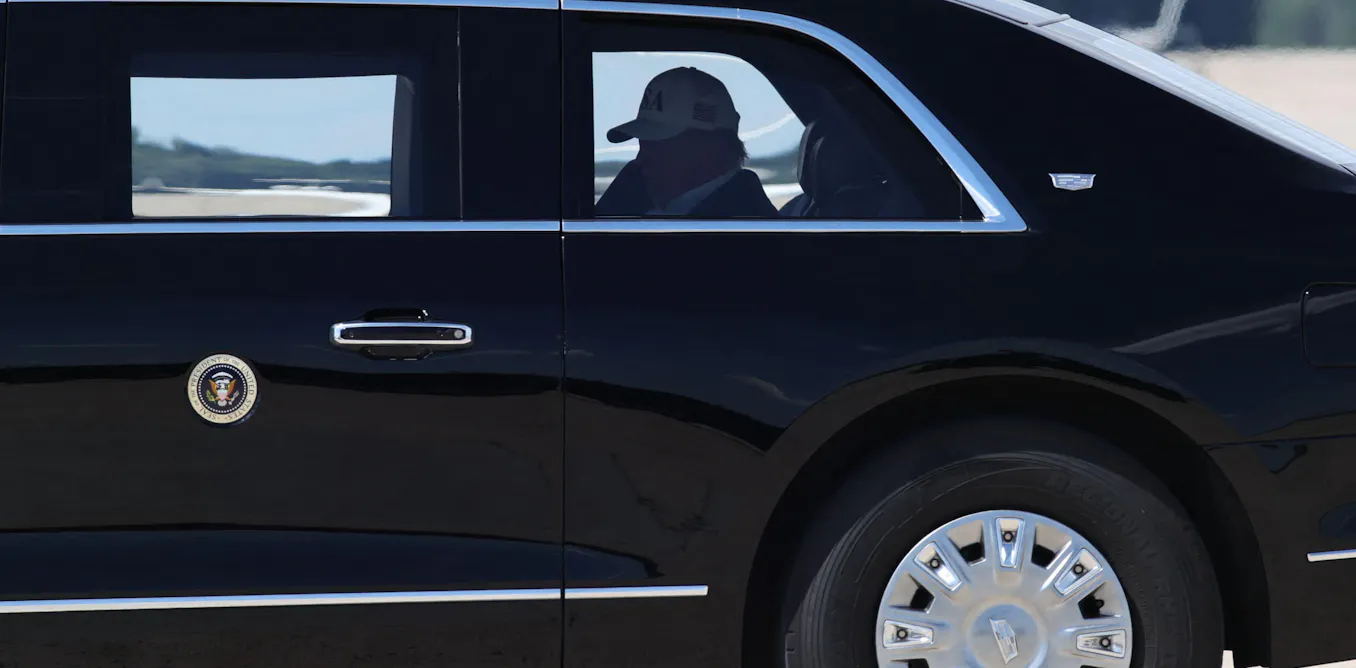
The world breathed a sigh of relief when Donald Trump agreed on June 17 to a memorandum of understanding to definitively end the conflict with Iran. But there is now a palpable sense that hostilities are far from over. The agreement between Washington and Tehran, signed in Versailles on June 18, is best understood as a deferred crisis, the contradictions of which are already visible.
Iran’s closure of the waterway since February has caused one of the biggest supply disruptions in the history of global energy markets, driving inflation across the Western world and annoying American motorists at the gas station. It was this economic control that brought Trump to the negotiating table.
The consequences for the United States are unclear. As former US President Barack Obama recently stated, it is “doubtful whether any resulting deal will be materially different from, or represent a significant improvement over, the deal” that Obama himself oversaw in 2015.
Iran’s closure of the strait gave it the opportunity to extract concessions from Trump – potentially surpassing the Obama-era nuclear deal – without offering more on the nuclear issue than it presented in Geneva days before the war began in February. Even senior Republicans, such as Senator Bill Cassidy, have deplored the deal because of the financial incentives it provides to the Iranian regime.
Within 72 hours of signing the memorandum of understanding, the Iranian military command claimed to have closed the Strait of Hormuz again. It wasn’t a surprise. This speaks to an emboldened Iran wielding its influence – leverage that the Trump deal inadvertently produced.
Iran suffered enormous punishment, survived, and now dictates the terms of the ceasefire by waving the constant threat of economic misery in Trump’s face. This is not a basis for a stable settlement. In fact, this means a serious loss of control, both for the United States and for Israel.
Iran’s justification – Israeli strikes against Hezbollah – for wreaking economic havoc and holding global energy markets hostage illustrates the structural flaw at the heart of Trump’s approach to deal-making. Iranian officials explicitly stated that the “most important item” on their agenda was to prevent further Israeli strikes in Lebanon.
Iran’s strategic logic is unambiguous. Every time Israel retaliates against Hezbollah, which it has both the legal right and political obligation to do, Iran holds the world economy hostage through the Strait of Hormuz.
Iranian Parliament Speaker Mohammad Bagher Ghalibaf, Foreign Minister Abbas Araghchi and members of the Iranian negotiating team arrive for talks in Zurich, Switzerland, June 21. Sipa US/Alamy Live News
This puts Israel in an impossible position. It cannot permanently suspend its right of self-defense as a condition of an American diplomatic agreement. It is difficult to imagine Israel’s security cabinet accepting a framework in which Iranian-backed forces in Lebanon could attack their territory with impunity, as the consequences of retaliation lead to increased pressure on global oil markets and U.S. inflation figures.
As Israeli National Security Minister Itamar Ben-Gvir said: “Israel is not subject to the United States and we are an independent and sovereign nation. »
This is not a viable and lasting deterrence strategy. This is brazen-necked coercion disguised as diplomacy.
For Trump, the national arithmetic is just as unstable. While insisting that his deal produced all the expected results, he also said, by his own admission, at the recent G7 summit in France that he “did not want to see an economic catastrophe.” It certainly wouldn’t improve his party’s prospects in the upcoming midterm elections in November.
High gasoline prices in the United States made the war in Iran very unpopular. Abaca Press/Alamy Live News
It is a frank acknowledgment that his decision-making was driven by the perception that continued military pressure was producing diminishing results. The decision to stop the fighting is no longer a strategic choice. It was the result of an American president who no longer believed he could act with complete control.
The problem is that the agreement does not restore this agency in any meaningful way. Iran has now demonstrated to itself, its regional partners and the world that it can act belligerently while negotiating from a position of strength.
Vicious circle
What is happening now can best be described as a cycle: Israeli military action in Lebanon, Iranian threats to close the strait, American pressure on Israel to withdraw, and Israeli resistance to doing so. Each iteration of this cycle will intensify the narrative that restraint is no longer a viable course of action – for Israel, for Trump’s domestic base, and for the Gulf states that have borne the brunt of Iranian drone attacks.
Despite the destruction of most of Iran’s military capabilities, infrastructure and political leadership, Iran remains determined to change the order of things in its region. His foreign policy behavior is driven by a combination of revolutionary ideology, a deep distrust of the United States, and a religiously guided identity as the self-appointed protector of the Shiite Islamic world.
Nothing in the past four months has given Tehran any reason to revise this worldview. Quite the contrary.
Lebanon has become the fault line on which this deal will stand or fail. Israel understood this from the beginning. Trump is catching up. His threat to “blow their faces off” if Iran does not comply suggests a president whose patience with his own deal is already wearing thin.
The memorandum of understanding is a ceasefire with a built-in detonator. When political actors come to believe that restraint no longer allows them to act meaningfully – as Trump and Israel increasingly do – escalation ceases to be a choice. This may be the only logic available.
|
Sources 2/ https://theconversation.com/the-flaws-at-the-heart-of-donald-trumps-iran-ceasefire-deal-286185 The mention sources can contact us to remove/changing this article |
What Are The Main Benefits Of Comparing Car Insurance Quotes Online
LOS ANGELES, CA / ACCESSWIRE / June 24, 2020, / Compare-autoinsurance.Org has launched a new blog post that presents the main benefits of comparing multiple car insurance quotes. For more info and free online quotes, please visit https://compare-autoinsurance.Org/the-advantages-of-comparing-prices-with-car-insurance-quotes-online/ The modern society has numerous technological advantages. One important advantage is the speed at which information is sent and received. With the help of the internet, the shopping habits of many persons have drastically changed. The car insurance industry hasn't remained untouched by these changes. On the internet, drivers can compare insurance prices and find out which sellers have the best offers. View photos The advantages of comparing online car insurance quotes are the following: Online quotes can be obtained from anywhere and at any time. Unlike physical insurance agencies, websites don't have a specific schedule and they are available at any time. Drivers that have busy working schedules, can compare quotes from anywhere and at any time, even at midnight. Multiple choices. Almost all insurance providers, no matter if they are well-known brands or just local insurers, have an online presence. Online quotes will allow policyholders the chance to discover multiple insurance companies and check their prices. Drivers are no longer required to get quotes from just a few known insurance companies. Also, local and regional insurers can provide lower insurance rates for the same services. Accurate insurance estimates. Online quotes can only be accurate if the customers provide accurate and real info about their car models and driving history. Lying about past driving incidents can make the price estimates to be lower, but when dealing with an insurance company lying to them is useless. Usually, insurance companies will do research about a potential customer before granting him coverage. Online quotes can be sorted easily. Although drivers are recommended to not choose a policy just based on its price, drivers can easily sort quotes by insurance price. Using brokerage websites will allow drivers to get quotes from multiple insurers, thus making the comparison faster and easier. For additional info, money-saving tips, and free car insurance quotes, visit https://compare-autoinsurance.Org/ Compare-autoinsurance.Org is an online provider of life, home, health, and auto insurance quotes. This website is unique because it does not simply stick to one kind of insurance provider, but brings the clients the best deals from many different online insurance carriers. In this way, clients have access to offers from multiple carriers all in one place: this website. On this site, customers have access to quotes for insurance plans from various agencies, such as local or nationwide agencies, brand names insurance companies, etc. "Online quotes can easily help drivers obtain better car insurance deals. All they have to do is to complete an online form with accurate and real info, then compare prices", said Russell Rabichev, Marketing Director of Internet Marketing Company. CONTACT: Company Name: Internet Marketing CompanyPerson for contact Name: Gurgu CPhone Number: (818) 359-3898Email: [email protected]: https://compare-autoinsurance.Org/ SOURCE: Compare-autoinsurance.Org View source version on accesswire.Com:https://www.Accesswire.Com/595055/What-Are-The-Main-Benefits-Of-Comparing-Car-Insurance-Quotes-Online View photos

 |
 |
 |