
Uncategorized
Egypt becomes the seventh country in the Eastern Mediterranean region to eliminate trachoma as a public health problem
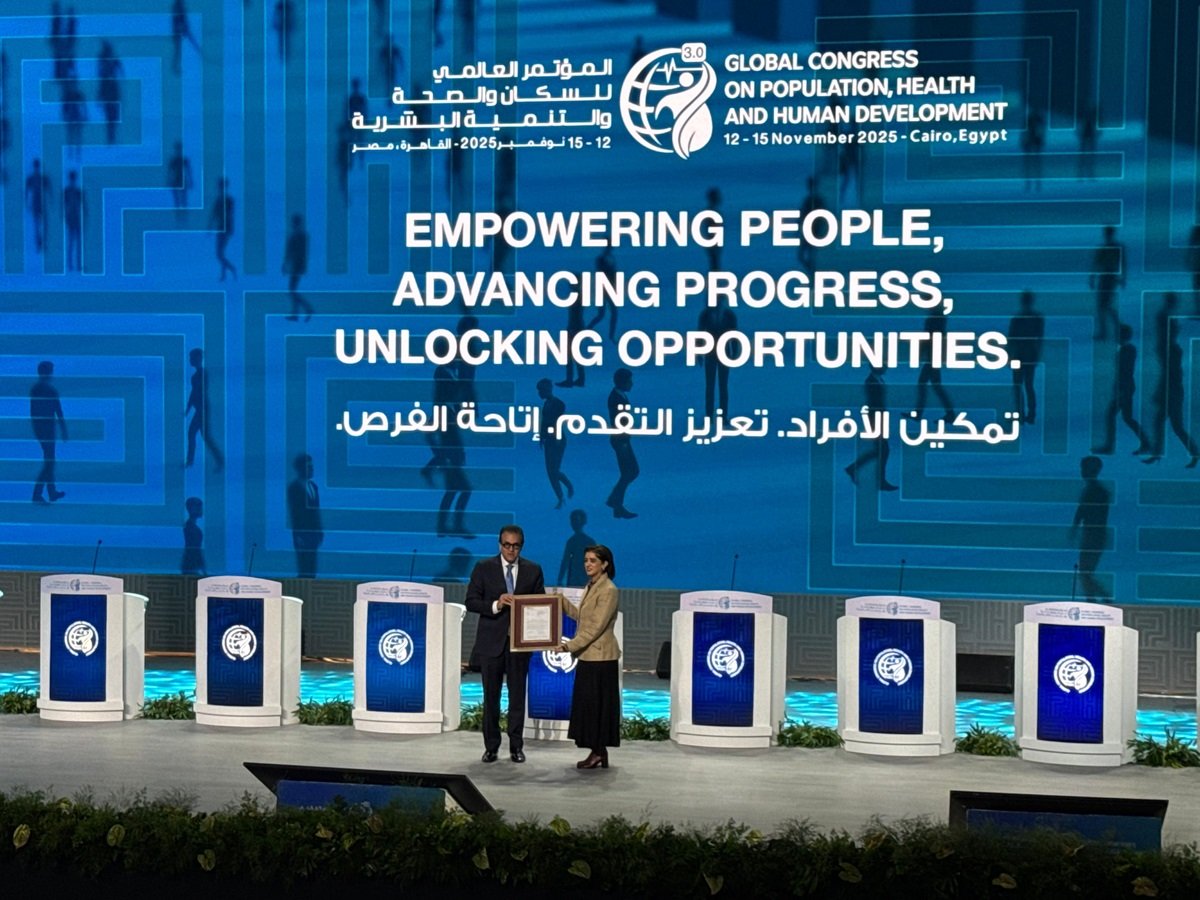
The World Health Organization (WHO) announced today that Egypt has successfully eliminated trachoma as a public health problem, marking a historic public health milestone for the country and the WHO Eastern Mediterranean Region (WHO EMR). It is the seventh country in the WHO EMR to achieve this milestone. Acknowledging Egypt's achievement brings the total number of countries that have eliminated trachoma as a public health problem worldwide to 27.
“I congratulate Egypt for achieving this milestone and freeing its people from trachoma,” said Dr. Tedros Adhanom Ghebreyesus, WHO Director-General. “This demonstrates the effectiveness of sustained national leadership, strong surveillance and community engagement in ending a disease that has plagued humanity since ancient times.”
After Egypt's success, trachoma remains a public health problem in 30 countries and is responsible for the blindness or visual impairment of about 1.9 million people. Trachoma blindness is difficult to reverse. Based on data from April 2025, 103 million people live in trachoma endemic areas and are at risk of trachoma blindness.
A century-long journey against trachoma
Trachoma has been documented in Egypt for over 3,000 years. Public health efforts to address its burden began in the early 20th century, when pioneer ophthalmologist Arthur Ferguson MacCallan established the first mobile and permanent eye hospitals in Egypt and laid the foundations for organized trachoma control on a global scale. Yet by the 1980s it still blinded many adults and affected more than half of all children in some communities in the Nile Delta.
Since 2002, the Ministry of Health and Population of Egypt, in partnership with the World Health Organization (WHO) and other national and international stakeholders, has been implementing the elimination of trachoma through the WHO-approved SAFE strategy, which includes trichiasis surgery, antibiotics to eliminate the pathogen, facial cleanliness and environmental improvement.
Between 2015 and 2025, extensive mapping and surveillance in all 27 Egyptian governorates showed a steady decrease in the proportion of children aged 1 to 9 years affected by active (inflammatory) trachoma, and no significant burden of blinding trachoma complications in adults. Both indicators are now below WHO elimination prevalence thresholds across the country. In 2024, Egypt integrated trachoma surveillance into its national electronic disease reporting system, which should facilitate a rapid response to any future cases.
“Egypt's elimination of trachoma as a public health problem highlights the nation's continued commitment to equitable healthcare delivery and the transformative impact of initiatives such as Haya Karima, which have expanded access to safe water, sanitation and primary health care services in rural communities,” said Professor Dr. Khaled Abdel Ghaffar, Deputy Prime Minister and Minister of Health and Population. “This achievement is a collective triumph for Egypt's health workers, communities and partners who have worked together to eradicate this ancient disease.”
Trachoma is the second neglected tropical disease (NTD) eliminated in Egypt, as in 2018 the WHO confirmed that the country had eliminated lymphatic filariasis as a public health problem. A total of 58 countries have eliminated at least one NTD globally, nine of which are in the Eastern Mediterranean region of the World Health Organization.
“This milestone adds to Egypt's strong track record in eliminating infectious diseases, including polio, measles, rubella and most recently malaria. It shows what can be achieved when political commitment, strong partnerships and years of sustained public health efforts, led by the Ministry of Health and Population, come together towards a common vision,” said Dr Nima Abid, WHO Representative in Egypt. “Egypt's achievement serves as an inspiring example for other countries in the region and beyond.”
Successful cooperation and partnership
The elimination of trachoma in Egypt was the result of strong national leadership, coordinated action and broad cross-sectoral collaboration. WHO worked closely with the Ministry of Health and Population to provide technical guidance, monitoring and validation support during the elimination process. The achievement was made possible by the technical and financial contributions of many partners including the Hay Karim Foundation, the Eastern Mediterranean Region Trachoma Alliance, the Nourseen Charitable Foundation, the International Trachoma Initiative, the Global Trachoma Mapping Project, Sightsavers, CBM, Kilimanjaro Center for Community Ophthalmology, the Magrabi Foundation and the Tropical Data Global Initiative.
“I congratulate Egypt on this historic achievement in eliminating trachoma as a public health problem,” said Dr. Hanan Balkhy, WHO Regional Director for the Eastern Mediterranean. “Together we have proven that with cooperation and persistence, elimination is possible. This success reflects years of dedication and tireless efforts by communities, health workers and partners who stood firm in the belief that everyone deserves to live free from preventable diseases. Today, Egypt is an example of what determination can achieve.”
Note to the editor
About trachoma and neglected tropical diseases
Trachoma, caused by bacteria Chlamydia trachomatisit is transmitted by contact with infected eye discharge via hands, clothing, hard surfaces and flies. Repeated infections can lead to scarring of the inner eyelid, turning the eyelashes inward to scratch the cornea: a painful condition known as trachomatous trichiasis that can lead to blindness.
Globally, the disease remains endemic in many vulnerable communities where access to clean water and sanitation is limited. In 1998, WHO launched the WHO Alliance for the Global Elimination of Trachoma by 2020 (GET2020), with the support of a network of governments, non-governmental organizations and academic institutions. WHO continues to support endemic countries to accelerate progress towards the global goal of eliminating trachoma as a public health problem worldwide.
|
Sources 2/ https://www.who.int/news/item/12-11-2025-egypt-becomes-the-seventh-country-in-the-eastern-mediterranean-region-to-eliminate-trachoma-as-a-public-health-problem The mention sources can contact us to remove/changing this article |
What Are The Main Benefits Of Comparing Car Insurance Quotes Online
LOS ANGELES, CA / ACCESSWIRE / June 24, 2020, / Compare-autoinsurance.Org has launched a new blog post that presents the main benefits of comparing multiple car insurance quotes. For more info and free online quotes, please visit https://compare-autoinsurance.Org/the-advantages-of-comparing-prices-with-car-insurance-quotes-online/ The modern society has numerous technological advantages. One important advantage is the speed at which information is sent and received. With the help of the internet, the shopping habits of many persons have drastically changed. The car insurance industry hasn't remained untouched by these changes. On the internet, drivers can compare insurance prices and find out which sellers have the best offers. View photos The advantages of comparing online car insurance quotes are the following: Online quotes can be obtained from anywhere and at any time. Unlike physical insurance agencies, websites don't have a specific schedule and they are available at any time. Drivers that have busy working schedules, can compare quotes from anywhere and at any time, even at midnight. Multiple choices. Almost all insurance providers, no matter if they are well-known brands or just local insurers, have an online presence. Online quotes will allow policyholders the chance to discover multiple insurance companies and check their prices. Drivers are no longer required to get quotes from just a few known insurance companies. Also, local and regional insurers can provide lower insurance rates for the same services. Accurate insurance estimates. Online quotes can only be accurate if the customers provide accurate and real info about their car models and driving history. Lying about past driving incidents can make the price estimates to be lower, but when dealing with an insurance company lying to them is useless. Usually, insurance companies will do research about a potential customer before granting him coverage. Online quotes can be sorted easily. Although drivers are recommended to not choose a policy just based on its price, drivers can easily sort quotes by insurance price. Using brokerage websites will allow drivers to get quotes from multiple insurers, thus making the comparison faster and easier. For additional info, money-saving tips, and free car insurance quotes, visit https://compare-autoinsurance.Org/ Compare-autoinsurance.Org is an online provider of life, home, health, and auto insurance quotes. This website is unique because it does not simply stick to one kind of insurance provider, but brings the clients the best deals from many different online insurance carriers. In this way, clients have access to offers from multiple carriers all in one place: this website. On this site, customers have access to quotes for insurance plans from various agencies, such as local or nationwide agencies, brand names insurance companies, etc. "Online quotes can easily help drivers obtain better car insurance deals. All they have to do is to complete an online form with accurate and real info, then compare prices", said Russell Rabichev, Marketing Director of Internet Marketing Company. CONTACT: Company Name: Internet Marketing CompanyPerson for contact Name: Gurgu CPhone Number: (818) 359-3898Email: [email protected]: https://compare-autoinsurance.Org/ SOURCE: Compare-autoinsurance.Org View source version on accesswire.Com:https://www.Accesswire.Com/595055/What-Are-The-Main-Benefits-Of-Comparing-Car-Insurance-Quotes-Online View photos

 |
 |
 |