
Uncategorized
Study reveals how Yellowstone earthquakes gave life to Earth
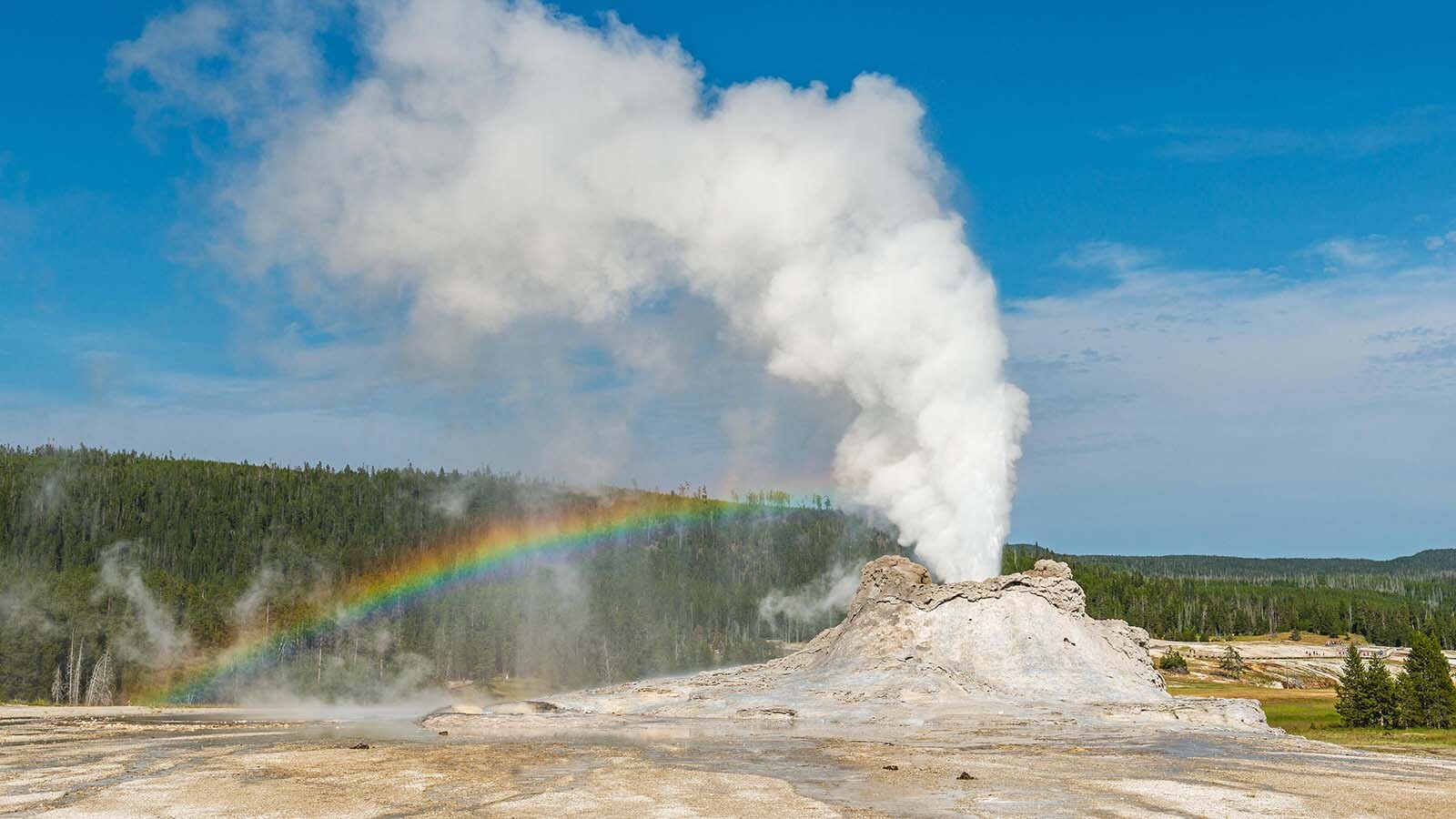
Yellowstone National Park is often described as a pristine landscape, which is part of its charm. Thermal pools located throughout the park provide a glimpse into what the world was like billions of years ago and offer insight into how life on Earth evolved into what it is today.
But how did it all happen?
That's the question that Eric Boyd, a professor of microbiology at Montana State University — and a variety of microbiologists, chemists and geologists — sought to answer at Yellowstone.
Their recently published research found a link between earthquake swarms and the biodiversity of subsurface microbial systems. It's an insight into the origins of life on Earth, provided through several ongoing experiments in Yellowstone's natural laboratory.
“We got a glimpse into how earthquake swarms change the microbial microbiome,” Boyd told Cowboy State Daily. “It reminds us of the world as it was when the earliest forms of life emerged, which would be difficult to see and sample anywhere else. This is one of the keys to Yellowstone.”
New research in Yellowstone National Park has found a link between earthquake swarms and the chemical reactions needed to maintain subsurface microbial systems. It's an insight into the possible origins of life on Earth. (Getty Images) Life Underground
There is “life on earth” and “life on earth.” The difference may seem subtle, but any microbiologist would say that these are vastly different worlds.
“There is life as we know it that lives on the surface of the Earth, powered by the sun,” Boyd said. “A large portion of the biomass on Earth is underground, living in the cracks and pore spaces of rocks, which is different from life on the surface.”
The subsurface biosphere is maintained by chemical energy rather than photosynthesis. Hydrogen, carbon, and other essential elements are introduced into these biomes and keep bacteria and other organisms living in pockets of water trapped beneath the surface.
The problem Boyd and his colleagues wanted to explore was how these essential elements were introduced into these isolated biospheres, especially over long periods of geological time. How to live and thrive underground?
“When these minerals interact with water, they are consumed,” he said. “It goes from being fertile to being essentially sterile. To maintain these biospheres, you need a continuous source of minerals, but how can that be? Something is not adding anything.”
Their hypothesis was that earthquake swarms could generate kinetic energy to introduce minerals into subsurface biospheres. In a volcanically active region, such as Yellowstone, it can be continuous enough to keep the biosphere thriving.
“If earthquake swarms are a solution to this problem, we should be able to see them,” Boyd said. “If we were lucky enough to observe earthquakes occurring in real time, we might be lucky enough to sample subsurface microbial communities during that time period. And that's exactly what we did.”
View map of transmitted Yellowstone earthquakes recorded during 2008-2022, colored by time, at left. The white line gives the outline of the Yellowstone caldera. The AA cross section across Yellowstone Lake is shown on the right and shows how seismic swarms that vary over time relate to each other. (US Geological Survey) Subsurface Sampling
In 2021, Boyd's team received permission to drill a well south of the West Thumb Geyser Basin. The well was over 500 feet deep and tapped into an aquifer where two species of chemotrophic bacteria live.
“We used a bladder pump to collect water samples,” Boyd said. “You lower the bladder pump into the well and use compressed gas to push the samples to the surface, where we collect them.”
The samples were collected over a period of seven months, during which a series of earthquake swarms were detected in Yellowstone. This is not unusual for the park, which typically experiences between 1,500 and 2,000 earthquakes each year.
Earthquake swarms were important, because they were the core of the hypothesis. Isolated earthquakes may not be frequent enough to provide a continuous source of minerals for the biosphere.
Once collected, Boyd's team analyzed the chemical composition of the aquifer's water while extracting and sequencing the DNA of the bacteria that live in it. According to Boyd, they discovered that the geochemical and microbial composition of the aquifer's biosphere changed over the sampling period.
“We started sampling before the earthquake hit, and we sampled through it as it dissipated,” he said. “During that time, we observed the chemistry and microbiology of this change in the aquifer. You wouldn't expect that to happen in an isolated subsurface community during these types of time periods.”
After ruling out other possible explanations, such as aquifer recharge from rainfall, Boyd's team concluded that the “driving factor” in the biosphere changes was the kinetic energy of the earthquake swarm.
“We were lucky enough to capture it in real time,” he said.
New research in Yellowstone National Park has found a link between earthquake swarms and the chemical reactions needed to maintain subsurface microbial systems. It's an insight into the possible origins of life on Earth. (Getty Images) Life there and elsewhere
The overall finding of the study was that “seismic-induced generation of chemical imbalance can support the persistence of complex subsurface microbes.”
What this means is that earthquake swarms could provide the energy needed to introduce life-sustaining minerals into subsurface biospheres. The implications are dramatic.
For one thing, Boyd noted that further studies at Yellowstone could provide more information about the origins of life on Earth. They contain environments, both on the surface and below, that remind us of the world as it was when life first appeared.
“Yellowstone is primitive in the sense that it is an active volcanic area,” he said. “Once you get out of the geothermal areas, it's not a primitive landscape, but it's reminiscent of the kind of volcanic terrain that many people believe was involved in creating and supporting the oldest forms of life.”
Boyd also noted that the work at Yellowstone provides an opportunity to study biospheres that have not been affected by oxygen. Photosynthesis by surface plants generated oxygen in Earth's atmosphere, but that was a byproduct of life on the surface which was nowhere near as abundant when life arose.
“One of the great things about these aquifer fluids is that they're deep enough that there doesn't have to be a lot of oxygen,” he said. “Going deeper is a good way to increase the resemblance to that primitive environment, because it is removed from the process of photosynthesis.”
Scientists are fairly confident that life exists on Earth, but is the same true of Mars and other celestial bodies? Boyd's research provides clues about where life could flourish elsewhere in the universe and where it might be found.
“Seismic activity is not limited to Yellowstone,” he said. “These processes are relevant all over the world.”
Map of seismic stations in the Yellowstone region, with the number of channels indicated by number and sensor type by color. Inverted triangles indicate stations operated by the University of Utah Seismological Stations (UUSS), and squares indicate stations operated by other agencies. (US Geological Survey) Interesting idea
Mike Poland, the scientist in charge of the Yellowstone Volcano Observatory, already knew that Yellowstone is a famous natural laboratory for studying microbial life. It has been the site of intense scientific scrutiny for decades.
“There are many aspects of Yellowstone that resemble conditions that may have existed when life actually began,” he said. “Hot springs remind us of deep-sea thermal vents, where we know there is life, except you don't have to go to the bottom of the sea to look at it. It's right there in front of you.”
Poland had seen an earlier version of Boyd's research, so he could not comment on the full scope of the new paper. From what he saw and heard, the hypothesis that earthquake swarms provide the minerals needed to sustain subsurface biospheres makes little sense from a geological perspective alone.
“Earthquakes always cause rocks to crack, and this can crack material or gas reservoirs or anything that was previously impermeable,” he said. “It could then make its way to the surface or support some microbial community. It's an interesting idea.”
New research in Yellowstone National Park has found a link between earthquake swarms and the chemical reactions needed to maintain subsurface microbial systems. It's an insight into the possible origins of life on Earth. (Getty Images) The best backyard lab
Once again, Yellowstone proved to be an ideal natural laboratory for another team of scientists. It's still a four-hour drive from Bozeman, Montana, to Yellowstone, but Boyd finds it an easy and worthwhile trip for his ongoing research.
“It would be difficult for most other researchers around the United States or the world to do something like this, unless they are located near a volcanically active area,” Boyd told the Cowboy State Daily. “In Yellowstone, you're sitting on top of an active volcano that's emitting gases and pressure in the form of earthquake swarms, and you can sample it in real time.”
Many scientists praise Yellowstone Park as a dynamic living laboratory. Recent studies have yielded everything from a life-saving enzyme that can treat genetic diseases to a patent for retaining moisture on a hydrophobic surface, uncovered while studying a unique heat-adapted beetle.
In the future, Boyd would like to conduct studies using more frequent samples. This could be achieved through automatic sampling by a seismic sensor, rather than relying solely on a trip taken by a graduate student once a month.
“We really want to understand the nature and timelines and how the aquifer responds to earthquake swarms,” he said. “We got a glimpse of that response in this current study, but I think there needs to be a much higher effort to get better answers to this question.”
Fortunately, Yellowstone isn't going anywhere and will remain as dynamic as ever. Keys to understanding Earth's past and visions about humanity's future emerge from the everyday activities that have made Yellowstone National Park one of the most popular places on Earth, for ordinary people and scientists alike.
Andrew Rossi can be reached at [email protected].
|
Sources 2/ https://cowboystatedaily.com/2025/12/21/yellowstone-study-reveals-how-earthquake-swarms-might-have-given-earth-life/ The mention sources can contact us to remove/changing this article |
What Are The Main Benefits Of Comparing Car Insurance Quotes Online
LOS ANGELES, CA / ACCESSWIRE / June 24, 2020, / Compare-autoinsurance.Org has launched a new blog post that presents the main benefits of comparing multiple car insurance quotes. For more info and free online quotes, please visit https://compare-autoinsurance.Org/the-advantages-of-comparing-prices-with-car-insurance-quotes-online/ The modern society has numerous technological advantages. One important advantage is the speed at which information is sent and received. With the help of the internet, the shopping habits of many persons have drastically changed. The car insurance industry hasn't remained untouched by these changes. On the internet, drivers can compare insurance prices and find out which sellers have the best offers. View photos The advantages of comparing online car insurance quotes are the following: Online quotes can be obtained from anywhere and at any time. Unlike physical insurance agencies, websites don't have a specific schedule and they are available at any time. Drivers that have busy working schedules, can compare quotes from anywhere and at any time, even at midnight. Multiple choices. Almost all insurance providers, no matter if they are well-known brands or just local insurers, have an online presence. Online quotes will allow policyholders the chance to discover multiple insurance companies and check their prices. Drivers are no longer required to get quotes from just a few known insurance companies. Also, local and regional insurers can provide lower insurance rates for the same services. Accurate insurance estimates. Online quotes can only be accurate if the customers provide accurate and real info about their car models and driving history. Lying about past driving incidents can make the price estimates to be lower, but when dealing with an insurance company lying to them is useless. Usually, insurance companies will do research about a potential customer before granting him coverage. Online quotes can be sorted easily. Although drivers are recommended to not choose a policy just based on its price, drivers can easily sort quotes by insurance price. Using brokerage websites will allow drivers to get quotes from multiple insurers, thus making the comparison faster and easier. For additional info, money-saving tips, and free car insurance quotes, visit https://compare-autoinsurance.Org/ Compare-autoinsurance.Org is an online provider of life, home, health, and auto insurance quotes. This website is unique because it does not simply stick to one kind of insurance provider, but brings the clients the best deals from many different online insurance carriers. In this way, clients have access to offers from multiple carriers all in one place: this website. On this site, customers have access to quotes for insurance plans from various agencies, such as local or nationwide agencies, brand names insurance companies, etc. "Online quotes can easily help drivers obtain better car insurance deals. All they have to do is to complete an online form with accurate and real info, then compare prices", said Russell Rabichev, Marketing Director of Internet Marketing Company. CONTACT: Company Name: Internet Marketing CompanyPerson for contact Name: Gurgu CPhone Number: (818) 359-3898Email: [email protected]: https://compare-autoinsurance.Org/ SOURCE: Compare-autoinsurance.Org View source version on accesswire.Com:https://www.Accesswire.Com/595055/What-Are-The-Main-Benefits-Of-Comparing-Car-Insurance-Quotes-Online View photos

 |
 |
 |