
Uncategorized
Is Israel prepared to confront the anti-Semitic repercussions of the war between the United States and Iran?
Earthquakes rarely cause the greatest amount of destruction. The devastation usually comes next – when tsunami waves hit unprepared shores.
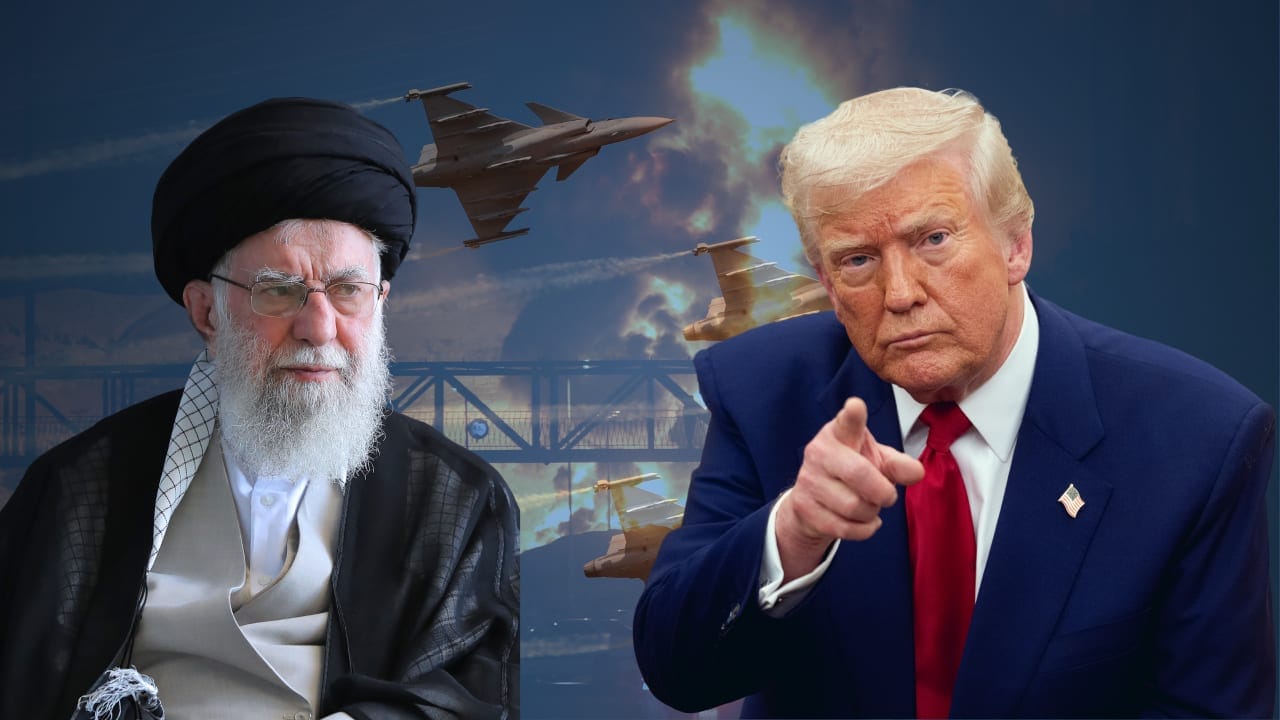
As tensions rise between the United States and Iran, leaders are focusing on what happens during a standoff. Far fewer wonder what will happen the next day – especially if, God forbid, there are American casualties. Because the backlash may not go where policymakers expect.
Because at that moment, a geopolitical earthquake abroad could trigger a social and political anti-Semitic tsunami at home. The first place this wave will hit will not be Israel, but American Jews.
Why is America confronting Iran – and why does it matter?
A harsh truth must be acknowledged: from Washington’s perspective, confronting Iran is not primarily about Israel. It is about American strategic interests.
The Monroe Doctrine once warned that threats in the Western Hemisphere threaten the United States itself. Today, geography is much less important. Missiles, cyberwarfare, drones, and nuclear proliferation mean that hostile actors do not need to sit on America’s borders to threaten American interests.
An Iranian military ship takes part in an annual exercise in the coastal area of the Gulf of Oman and near the Strait of Hormuz, Iran, in this photo obtained on December 31, 2022 (Source: IRANIAN ARMY/WANA (WEST ASIA NEWS AGENCY)/Handout via Reuters)
A nuclear Iran would destabilize the Middle East, threaten energy markets, embolden armed proxies, and would likely push neighboring countries toward building nuclear capabilities of their own. This instability affects the global economic systems on which the United States depends.
There is also the Chinese dimension. Beijing’s economic and strategic ties with Tehran – including dependence on Iranian energy supplies – give China influence across the region. Weakening Iran’s ability to expand regionally would weaken China’s foothold in a region that is already a key center of competition for global powers.
In addition, efforts to build a new Middle East architecture – sometimes described as a regional peace council, which manages and links economic normalization and security cooperation – depend on reducing Iran’s destabilizing role. A prosperous and integrated Middle East cannot coexist with an expansionist Iran armed with nuclear capabilities and proxy militias.
From Washington’s point of view, this is the American interest first. But even policies rooted in the national interest have consequences beyond the battlefield. These consequences rarely unfold where policymakers expect them.
A public not ready for war
There remains another uncomfortable truth: most Americans do not want another war in the Middle East. Opinion polls consistently show strong support for preventing Iran from acquiring nuclear weapons, but they also show deep reluctance toward direct military conflict.
At the same time, influential media voices such as Tucker Carlson and Candace Owens increasingly portray US involvement in Middle East conflicts as serving foreign rather than American interests. Such rhetoric, often directed toward Israel and Jewish influence, threatens to shift blame even before the conflict escalates. Now imagine the scenario.
Iranian escalation leads to American casualties – through proxy attacks, missile strikes, or incidents involving US forces already stationed in the region. The shock did not occur in political circles, but rather in American living rooms.
Someone inevitably asks: Why were we there? In moments of national trauma, blame seeks targets.
The field is already dry
The danger is compounded by another fact: anti-Semitism in the United States has already risen dramatically in recent years.
In 2023, anti-Semitic incidents exceeded 8,800 nationwide — more than double the previous year. In 2024, incidents rose again, exceeding 9,300. After the Hamas attack on October 7 and Israel’s subsequent war on Gaza, anti-Semitic incidents in the United States rose by more than 300% in the months that followed.
Jews represent approximately 2% of the US population, yet they account for nearly 70% of hate crimes based on religion.
Synagogues now routinely use armed security. Jewish students face harassment on campus. Violent incidents occurred in major cities.
The ground is already dry. It won’t take much to ignite it.
Tsunami scenario
In disaster science, tsunamis often cause greater damage than the earthquake that causes them. If American soldiers are killed in a confrontation with Iran, the first wave of violent reactions will likely not hit Tel Aviv. It will hit New York, Los Angeles, Chicago, Miami and other cities with large Jewish populations.
Communities already under pressure may face escalating attacks on temples, institutions, companies and individuals. Online hostility can turn into physical violence, as we have seen not just in the United States but across Western societies and even as far away as Australia.
The second wave will be felt by global Jewish communities. Israel will face the third option – renewed diplomatic pressure, intensified protests, and new attempts to delegitimize its actions or existence. Much of this backlash will be disconnected from the realities of politics. But in moments of crisis, perception often trumps facts.
Be careful what you wish for
There is another uncomfortable irony. Some leaders – both in Israel and within parts of the American Jewish community – quietly hope that decisive American action will weaken or even overthrow the Iranian regime. Such an outcome could reduce long-term threats. But there is an age-old warning: Be careful what you wish for.
Are those who support stronger action willing to bear the consequences if American lives are lost? Are Jewish communities prepared for potential backlash?
History shows that military operations rarely go as planned. Unexpected injuries occur even in carefully performed tasks.
Hope is not a preparedness strategy.
The Hasbara problem.
This leads to a deeper challenge: preparedness in the information domain and the societal domain.
For many years, Israel and Jewish organizations have relied on traditional hasbara — explaining facts, correcting narratives, and defending policy after the fact. But war is not an academic discussion. He is emotional, fast-moving, and often irrational.
Preparedness requires anticipating consequences before they happen. It requires coordination between Israeli leadership and American Jewish leadership while recognizing that local American dynamics must be addressed by American actors.
Israel must avoid appearing to dictate US policy. American Jewish leadership must lead at the local level. However, coordination on messaging, community safety, and crisis response must occur long before the next shock. At present, this coordination appears insufficient.
Who thinks about the next day?
Governments plan for earthquakes. Coastal cities determine evacuation routes. Citizens practicing emergency drills
But who is preparing for the societal equivalent?
Which institutions manipulate scenarios in which American losses lead to a violent domestic backlash? Who enhances community security? Who prepares message frames? Who coordinates Jewish organizations, law enforcement, and policy makers?
Who thinks about the second-order consequences that a tsunami of anti-Semitism might have? October 7 taught Israel the price of ignoring warning signs. The question now is whether similar blind spots exist elsewhere.
Prepare before shock
None of this argues against American policy choices. States must act in their own interests. But responsible leadership requires preparing for consequences, not just victory scenarios. If the confrontation with Iran escalates – whether intentionally or by miscalculation – the United States, Jewish communities, and Israel must be prepared for what comes next.
Preparedness means security planning, community coordination, narrative preparedness, and crisis response systems already in place before events occur.
It means recognizing that modern battlefields extend to communities, universities, social media, and neighborhoods.
It means understanding that anti-Semitism does not require logic, but merely motivation. The tsunami threat is real.
The earthquake may or may not come. But the conditions for a tsunami already exist.
The author is a global strategist with experience in the public and private sectors. [email protected]
|
Sources 2/ https://www.jpost.com/opinion/article-885702 The mention sources can contact us to remove/changing this article |
What Are The Main Benefits Of Comparing Car Insurance Quotes Online
LOS ANGELES, CA / ACCESSWIRE / June 24, 2020, / Compare-autoinsurance.Org has launched a new blog post that presents the main benefits of comparing multiple car insurance quotes. For more info and free online quotes, please visit https://compare-autoinsurance.Org/the-advantages-of-comparing-prices-with-car-insurance-quotes-online/ The modern society has numerous technological advantages. One important advantage is the speed at which information is sent and received. With the help of the internet, the shopping habits of many persons have drastically changed. The car insurance industry hasn't remained untouched by these changes. On the internet, drivers can compare insurance prices and find out which sellers have the best offers. View photos The advantages of comparing online car insurance quotes are the following: Online quotes can be obtained from anywhere and at any time. Unlike physical insurance agencies, websites don't have a specific schedule and they are available at any time. Drivers that have busy working schedules, can compare quotes from anywhere and at any time, even at midnight. Multiple choices. Almost all insurance providers, no matter if they are well-known brands or just local insurers, have an online presence. Online quotes will allow policyholders the chance to discover multiple insurance companies and check their prices. Drivers are no longer required to get quotes from just a few known insurance companies. Also, local and regional insurers can provide lower insurance rates for the same services. Accurate insurance estimates. Online quotes can only be accurate if the customers provide accurate and real info about their car models and driving history. Lying about past driving incidents can make the price estimates to be lower, but when dealing with an insurance company lying to them is useless. Usually, insurance companies will do research about a potential customer before granting him coverage. Online quotes can be sorted easily. Although drivers are recommended to not choose a policy just based on its price, drivers can easily sort quotes by insurance price. Using brokerage websites will allow drivers to get quotes from multiple insurers, thus making the comparison faster and easier. For additional info, money-saving tips, and free car insurance quotes, visit https://compare-autoinsurance.Org/ Compare-autoinsurance.Org is an online provider of life, home, health, and auto insurance quotes. This website is unique because it does not simply stick to one kind of insurance provider, but brings the clients the best deals from many different online insurance carriers. In this way, clients have access to offers from multiple carriers all in one place: this website. On this site, customers have access to quotes for insurance plans from various agencies, such as local or nationwide agencies, brand names insurance companies, etc. "Online quotes can easily help drivers obtain better car insurance deals. All they have to do is to complete an online form with accurate and real info, then compare prices", said Russell Rabichev, Marketing Director of Internet Marketing Company. CONTACT: Company Name: Internet Marketing CompanyPerson for contact Name: Gurgu CPhone Number: (818) 359-3898Email: [email protected]: https://compare-autoinsurance.Org/ SOURCE: Compare-autoinsurance.Org View source version on accesswire.Com:https://www.Accesswire.Com/595055/What-Are-The-Main-Benefits-Of-Comparing-Car-Insurance-Quotes-Online View photos

 |
 |
 |