
Politics
Turkish intelligence report calls for war readiness while keeping channels open with Israel
Levent Kenez/Stockholm
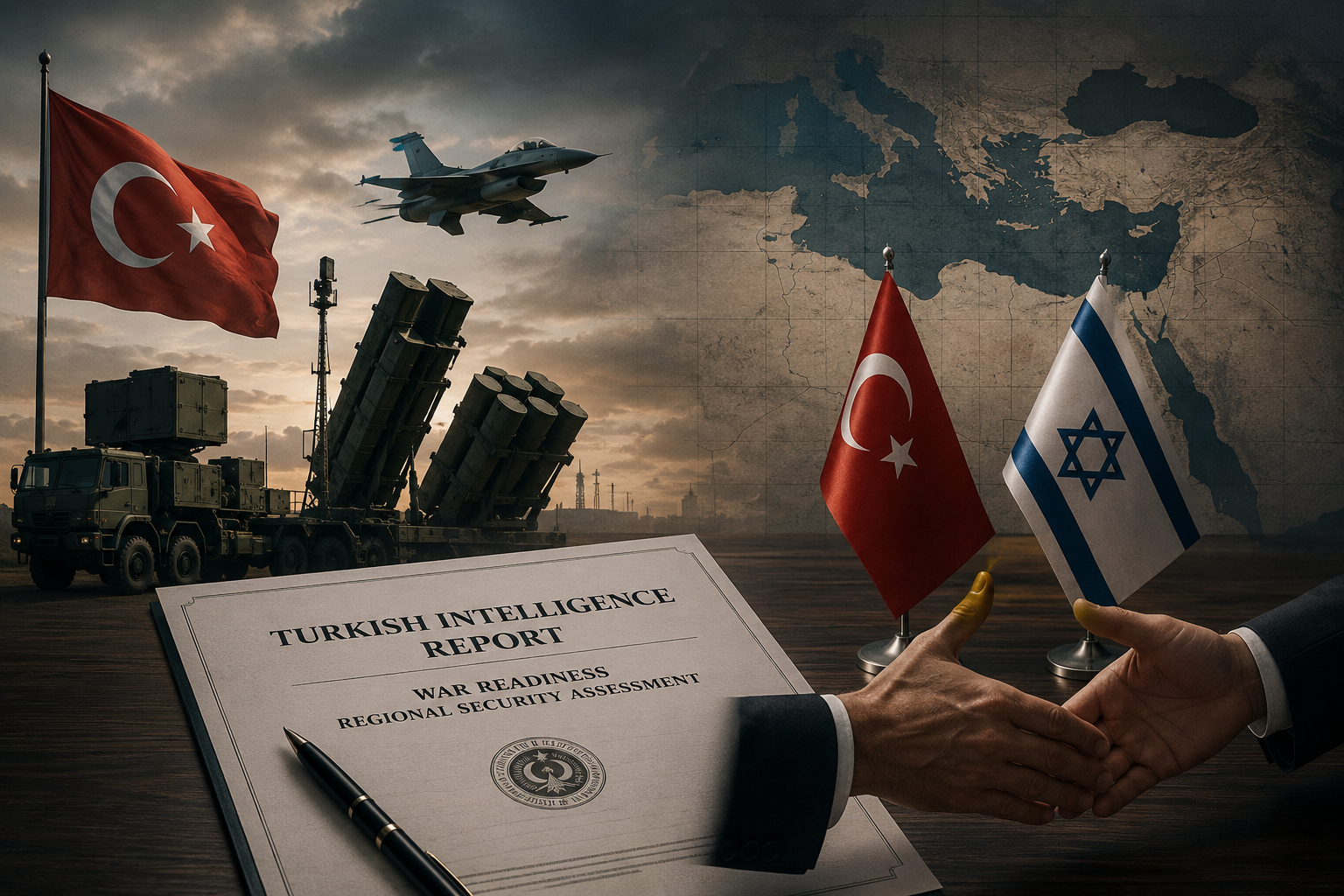
A Turkish intelligence report says the 40-day war involving the United States, Israel and Iran has fundamentally reshaped regional security calculations, sparking calls for a major overhaul of Turkey’s defense posture while urging Ankara to preserve communication channels with Israel despite growing strategic competition.
Prepared by the National Intelligence Academy and released on May 20, 2026, the report analyzes the conflict that began on February 28, 2026 and its implications for modern warfare, evolving regional balances and Turkey’s long-term strategic priorities. Its main recommendations include strengthened air and missile defenses, protection of critical infrastructure, enhanced security for senior officials and continued dialogue with Israel amid escalating geopolitical tensions.
The document presents the war as proof that future conflicts will be defined not only by military hardware but also by production capacity, data networks, artificial intelligence, infrastructure resilience and the ability of states to sustain operations under prolonged pressure.
One of its main conclusions is that Turkey should strengthen its sustainable defense industrial production, expand its air and missile defense architecture, strengthen the security of its strategic infrastructure, improve its resilience to information warfare, and increase society’s preparedness for crisis situations.
The report states that recent conflicts have demonstrated the vulnerability of centralized military structures and fixed installations. It recommends greater emphasis on distributed command and control systems, redundant networks, and flexible operational structures that can operate even when parts of the system are degraded or targeted.
A major recurring theme in the document is the changing nature of military deterrence. The report states that modern conflicts increasingly target not only military forces but also the infrastructure that enables military operations. Energy facilities, communications networks, logistics centers, radar systems and data centers became primary targets during the war, according to the study.
For Turkey, this means that defense planning can no longer focus exclusively on conventional military means. The report calls for a comprehensive approach to security that integrates military, cyber, electronic, intelligence and psychological dimensions.
One of the most striking sections concerns the safety of people in positions of authority. The report says modern warfare has evolved into a system designed not only to destroy physical assets, but also to disrupt decision-making capacity. It notes that senior military officers, political leaders, technical specialists and bureaucrats were directly targeted during the conflict, while advances in artificial intelligence, open source intelligence and surveillance technologies have increased the visibility and vulnerability of key personnel.
Text of the National Intelligence Academy report:
As a result, the academy argues that the issue of personal security should be reassessed in the new war environment.
The report states that personal security can no longer be seen solely as a matter of physical protection. Instead, it recommends integrating data security, communications security, movement management, digital visibility controls and counterintelligence measures into a unified framework.
He warns that facial recognition technologies, tracking systems, artificial intelligence-assisted targeting tools and the increasing availability of publicly available data are blurring the traditional distinction between physical and digital security.
The document also highlights the need to protect the continuity of state functions during crises. Distributed systems, backup capabilities, and alternative operating models are described as essential to maintaining operational effectiveness if command structures or critical installations are attacked.
The report’s assessment of Israel is one of the most viewed sections. He argues that Israel’s military and political behavior after the war could create new areas of competition with Turkey, notably in Syria, the Eastern Mediterranean and broader regional security arrangements. This suggests that Israel may seek to expand its operational footprint in Syria and Lebanon while continuing its efforts to shape regional security dynamics in its favor.
The study indicates that Israeli political and military discourse increasingly presents Turkey as a strategic challenge. He warns that relations between the two countries could be characterized by controlled competition and periods of increased tension.
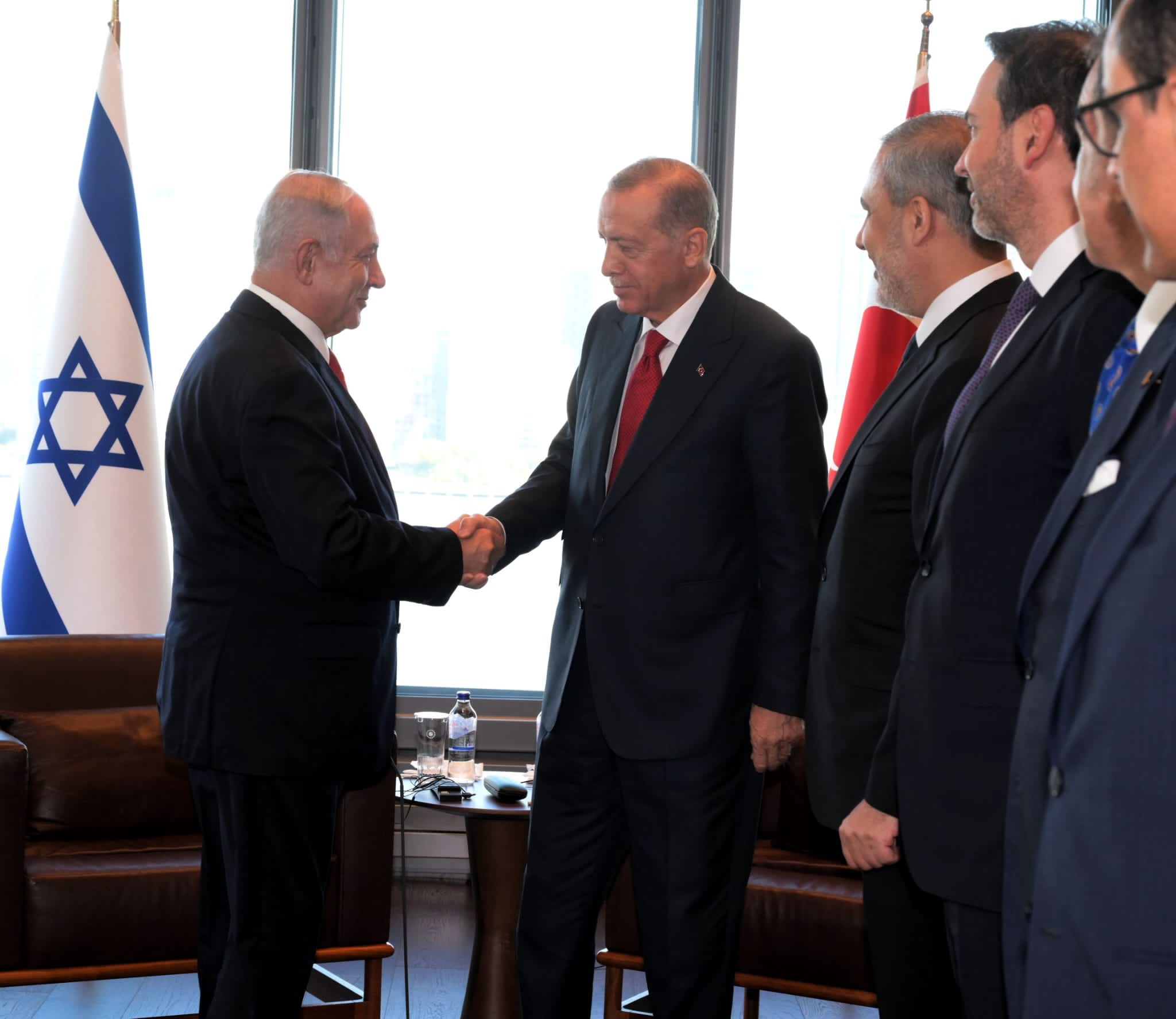
Yet despite these concerns, the academy explicitly advises against severing communications with Israel. Instead, he recommends what he describes as a multi-layered strategy combining diplomacy and deterrence.
Rather than adopting an approach that cuts off communication channels with Israel, Turkey should preserve a rational basis for dialogue while maintaining its capacity for military deterrence and regional coordination at the highest level, the report said.
This recommendation emerges as one of the clearest policy prescriptions in the document. He suggests that Ankara should simultaneously preserve diplomatic contacts, strengthen its military preparedness and deepen cooperation with regional partners.
The report also identifies regional balance as a key objective for Turkey. It argues that Turkey’s military capabilities, defense industrial base, diplomatic flexibility and regional reach position it to play a stabilizing role in a rapidly changing security environment.
At the same time, he warns that military power alone will not be enough. The study repeatedly highlights the importance of production capacity and sustainability. It introduces what it calls a “deep three-dimensional” approach to defense industry planning, combining cutting-edge technology, large-scale production capacity and long-term security of supply.
The report says recent wars have demonstrated that inventories, production capacity and security of supply chains can be as important as technological sophistication. It notes that protracted conflicts place extraordinary pressure on munitions production, logistics systems and industrial infrastructure.
Another recommendation concerns strengthening air and missile defense systems. The report concludes that no defensive shield is impenetrable and argues that future security architectures must incorporate offensive capabilities, cyber tools, electronic warfare systems and artificial intelligence-driven decision-making.
It also calls for stronger protection of energy infrastructure, communications systems and transportation networks, warning that future adversaries will likely target these assets at the start of any conflict.
Beyond military issues, the document links national security to economic resilience and connectivity projects. He argues that disruptions in the Strait of Hormuz, the Red Sea, and regional energy routes have increased the strategic importance of alternative trade and transportation corridors.
The report highlights Turkey’s position in strategic regional initiatives such as the Iraq-Turkey Development Road project, which connects the Persian Gulf to Europe, and the East-West-Middle Trans-Caspian Corridor, describing them as strategic assets that could strengthen the country’s role in regional logistics, energy and trade networks.
The overall conclusion is that the war between the United States, Israel, and Iran reflects a broader shift in which military, economic, technological, and societal factors are increasingly intertwined. For Turkey, the conclusions are clear: increase defense production, strengthen air and missile defense, protect critical infrastructure and key personnel, strengthen societal resilience, and maintain diplomatic flexibility while keeping channels open with Israel.
|
Sources 2/ https://nordicmonitor.com/2026/06/turkish-intelligence-report-calls-for-war-readiness-while-keeping-channels-open-with-israel/ The mention sources can contact us to remove/changing this article |
What Are The Main Benefits Of Comparing Car Insurance Quotes Online
LOS ANGELES, CA / ACCESSWIRE / June 24, 2020, / Compare-autoinsurance.Org has launched a new blog post that presents the main benefits of comparing multiple car insurance quotes. For more info and free online quotes, please visit https://compare-autoinsurance.Org/the-advantages-of-comparing-prices-with-car-insurance-quotes-online/ The modern society has numerous technological advantages. One important advantage is the speed at which information is sent and received. With the help of the internet, the shopping habits of many persons have drastically changed. The car insurance industry hasn't remained untouched by these changes. On the internet, drivers can compare insurance prices and find out which sellers have the best offers. View photos The advantages of comparing online car insurance quotes are the following: Online quotes can be obtained from anywhere and at any time. Unlike physical insurance agencies, websites don't have a specific schedule and they are available at any time. Drivers that have busy working schedules, can compare quotes from anywhere and at any time, even at midnight. Multiple choices. Almost all insurance providers, no matter if they are well-known brands or just local insurers, have an online presence. Online quotes will allow policyholders the chance to discover multiple insurance companies and check their prices. Drivers are no longer required to get quotes from just a few known insurance companies. Also, local and regional insurers can provide lower insurance rates for the same services. Accurate insurance estimates. Online quotes can only be accurate if the customers provide accurate and real info about their car models and driving history. Lying about past driving incidents can make the price estimates to be lower, but when dealing with an insurance company lying to them is useless. Usually, insurance companies will do research about a potential customer before granting him coverage. Online quotes can be sorted easily. Although drivers are recommended to not choose a policy just based on its price, drivers can easily sort quotes by insurance price. Using brokerage websites will allow drivers to get quotes from multiple insurers, thus making the comparison faster and easier. For additional info, money-saving tips, and free car insurance quotes, visit https://compare-autoinsurance.Org/ Compare-autoinsurance.Org is an online provider of life, home, health, and auto insurance quotes. This website is unique because it does not simply stick to one kind of insurance provider, but brings the clients the best deals from many different online insurance carriers. In this way, clients have access to offers from multiple carriers all in one place: this website. On this site, customers have access to quotes for insurance plans from various agencies, such as local or nationwide agencies, brand names insurance companies, etc. "Online quotes can easily help drivers obtain better car insurance deals. All they have to do is to complete an online form with accurate and real info, then compare prices", said Russell Rabichev, Marketing Director of Internet Marketing Company. CONTACT: Company Name: Internet Marketing CompanyPerson for contact Name: Gurgu CPhone Number: (818) 359-3898Email: [email protected]: https://compare-autoinsurance.Org/ SOURCE: Compare-autoinsurance.Org View source version on accesswire.Com:https://www.Accesswire.Com/595055/What-Are-The-Main-Benefits-Of-Comparing-Car-Insurance-Quotes-Online View photos

 |
 |
 |