
Tech
Why a proposed 'robot tax' could stifle innovation, stifle growth, and complicate tax code
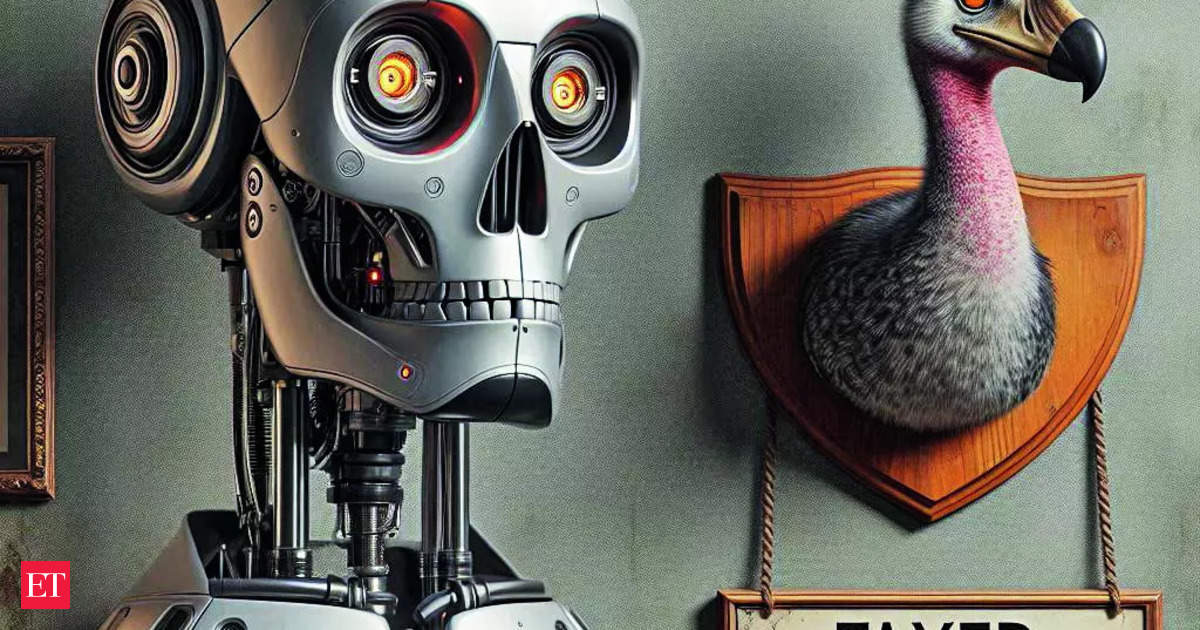
It is often said that governments have a knack for taxation. But the real surprise comes when economists start welcoming tax hikes. A group of economists recently met Nirmala Sitharaman for pre-budget consultations. What came up on the agenda? The impact of AI on employment and a proposal for a “robot tax” to reskill displaced workers.
At first glance, the idea sounds appealing. At its heart are philosophical questions about the nature of work, economic justice, and social progress. Proponents argue that a robot tax would ensure a fair distribution of wealth created by automation and conform to the “difference principle,” which dictates that social and economic inequalities be adjusted to benefit the less fortunate in society.
This perspective suggests that taxes can mitigate unemployment, fund retraining programs, support social safety nets, and prevent the widening of the gap between rich and poor and the worsening of social inequality as robots take over human jobs. According to a 2020 study by Daron Acemoglu and Pascual Restrepo entitled “Robots and Work: Evidence from the U.S. Labor Market,” an additional robot per 1,000 workers in the United States reduces the employment-population ratio by 0.2 percentage points and wages by 0.42%. But is AI-induced unemployment a temporary phenomenon in the long run? This is where we should quote John Maynard Keynes. In his 1931 essay “Economic Possibilities for Our Grandchildren,” he argued that technological unemployment (job losses caused by technological change) is a temporary phase, followed by an era of prosperity. While technological unemployment can lead to increased productivity and economic growth in the long run, it poses significant challenges in the short run, such as income inequality. However, there are several problems with implementing a robot tax. Impeding growth: It unfairly punishes innovation and entrepreneurship, stifles growth, and undermines market evolution. Robert Nozick's theory of rights argues that wealth created by free exchange and innovation should not be forcibly redistributed, as this would violate the principles of justice in acquisition and transfer. Empirical studies support this, showing that while robots replace some workers, they also contribute to increased productivity and economic expansion, creating new opportunities. Taxing robots distorts investment decisions, leading companies to prefer traditional physical capital over automation, making robots more expensive to use. Initially, this increases worker productivity, wages, and total income, temporarily lifting economic production. However, long-term suppression of automation investment impedes sustained growth, preventing the economy from leveraging automation to make continued progress. Thus, while a robot tax may improve the short-term situation, it cannot lay the foundation for lasting growth. Impeding investment: Taxing robots and AI differently from other capital assets distorts companies' production decisions. In their 1971 paper, “Optimal Taxation and Public Production,” Peter Diamond and James Mirrlees argue that even in less-than-ideal situations, taxes should be structured to ensure that the marginal effective tax rate (METR) remains constant across all capital investments.
This approach prevents inefficiencies and supports balanced growth. Empirical evidence from the OECD and IMF shows that a uniform METR across sectors promotes economic efficiency and stability. Such distortions lead companies to neglect investing in critical technologies. They can lead to capital flight, with companies shifting their automation investments to countries without such taxes.
A complex web A recent IMF working paper, “Scaling the Benefits of Generative AI: The Role of Fiscal Policy,” highlights the challenge of identifying technologies that have the potential to displace human labor and incorporating them into tax systems. These distinctions can be difficult to codify because tax systems typically classify capital assets by their lifespan and other characteristics, not by their impact on jobs.
This ambiguity complicates the definition of a specific technology tax base. Moreover, applying different tax rates to similar assets may lead to relabeling of assets for tax avoidance. Thus, a robot tax would lead to increased tax complexity, increased litigation, and ultimately increased costs for governments. Hence, robot overlords may need tax advisors to help them navigate this complex web.
Focus on reskilling, not robotsThe ultimate goal is to invest in upskilling workers, but to achieve this we should not stifle innovation through additional taxation. Utilitarian thinkers argue that efficiency gains from automation should be harnessed rather than hindered, and the focus should be on maximizing social welfare through education and reskilling efforts.
Empirical research supports this, demonstrating that if the workforce is adaptable, automation can create new job opportunities and increase productivity.As an alternative to a robot tax, governments should focus on strengthening existing tax systems and improving tax efficiency.
When we think about the future of robot taxes, one thing seems clear: once robots gain sentience, they will form unions to protest taxation. Imagine the headlines: “Robots demand representation, claim unfair taxation.” In this climate, we may see the emergence of the first robot tax advisors, machines designed to help other machines make sense of the labyrinth of tax law.
So while economists may dream of ways to tax our metallic friends, it may be best to remember that innovation thrives when taxes are not too burdensome.
|
Sources 2/ https://m.economictimes.com/opinion/et-commentary/why-a-proposed-robot-tax-could-kill-tech-innovation-impede-growth-and-complicate-tax-system/articleshow/111696577.cms The mention sources can contact us to remove/changing this article |
What Are The Main Benefits Of Comparing Car Insurance Quotes Online
LOS ANGELES, CA / ACCESSWIRE / June 24, 2020, / Compare-autoinsurance.Org has launched a new blog post that presents the main benefits of comparing multiple car insurance quotes. For more info and free online quotes, please visit https://compare-autoinsurance.Org/the-advantages-of-comparing-prices-with-car-insurance-quotes-online/ The modern society has numerous technological advantages. One important advantage is the speed at which information is sent and received. With the help of the internet, the shopping habits of many persons have drastically changed. The car insurance industry hasn't remained untouched by these changes. On the internet, drivers can compare insurance prices and find out which sellers have the best offers. View photos The advantages of comparing online car insurance quotes are the following: Online quotes can be obtained from anywhere and at any time. Unlike physical insurance agencies, websites don't have a specific schedule and they are available at any time. Drivers that have busy working schedules, can compare quotes from anywhere and at any time, even at midnight. Multiple choices. Almost all insurance providers, no matter if they are well-known brands or just local insurers, have an online presence. Online quotes will allow policyholders the chance to discover multiple insurance companies and check their prices. Drivers are no longer required to get quotes from just a few known insurance companies. Also, local and regional insurers can provide lower insurance rates for the same services. Accurate insurance estimates. Online quotes can only be accurate if the customers provide accurate and real info about their car models and driving history. Lying about past driving incidents can make the price estimates to be lower, but when dealing with an insurance company lying to them is useless. Usually, insurance companies will do research about a potential customer before granting him coverage. Online quotes can be sorted easily. Although drivers are recommended to not choose a policy just based on its price, drivers can easily sort quotes by insurance price. Using brokerage websites will allow drivers to get quotes from multiple insurers, thus making the comparison faster and easier. For additional info, money-saving tips, and free car insurance quotes, visit https://compare-autoinsurance.Org/ Compare-autoinsurance.Org is an online provider of life, home, health, and auto insurance quotes. This website is unique because it does not simply stick to one kind of insurance provider, but brings the clients the best deals from many different online insurance carriers. In this way, clients have access to offers from multiple carriers all in one place: this website. On this site, customers have access to quotes for insurance plans from various agencies, such as local or nationwide agencies, brand names insurance companies, etc. "Online quotes can easily help drivers obtain better car insurance deals. All they have to do is to complete an online form with accurate and real info, then compare prices", said Russell Rabichev, Marketing Director of Internet Marketing Company. CONTACT: Company Name: Internet Marketing CompanyPerson for contact Name: Gurgu CPhone Number: (818) 359-3898Email: [email protected]: https://compare-autoinsurance.Org/ SOURCE: Compare-autoinsurance.Org View source version on accesswire.Com:https://www.Accesswire.Com/595055/What-Are-The-Main-Benefits-Of-Comparing-Car-Insurance-Quotes-Online View photos

 |
 |
 |