
Uncategorized
These Labs Prepared For A Major Earthquake – Will It Be Enough?
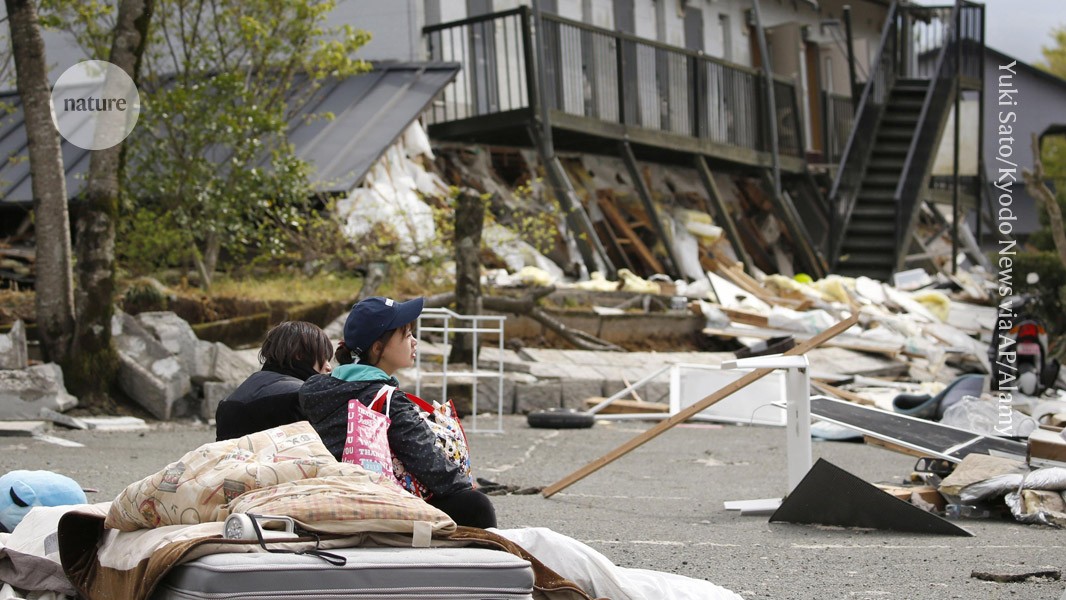
Earlier this month, the Japan Meteorological Agency issued its first-ever warning of a “super-tectonic earthquake,” saying the risk of a major quake along the Pacific coast was higher than usual. The warning came after a 7.1-magnitude quake struck on Aug. 8.
A week later, the agency lifted the warning, after no significant change in seismic activity was detected. But the alert was another reminder to scientists living in Japan and other seismic regions of the constant threat that a quake could disrupt—or even destroy—their research. So how do they protect their labs? Nature spoke to seven researchers about their preparations and whether they are adequate.
Equipment insurance
When the Tohoku earthquake and tsunami struck in March 2011, Masahiro Terada, an organic chemist at Tohoku University in Sendai, found broken glass scattered throughout his lab, 400-kilogram fume hoods meters away from their usual location, and water pouring from broken pipes. The lab smelled of organic solvents, and a fire broke out in the reagent storage room. Terada lost 10 years’ worth of synthesized compounds.
These days, Terada installs large furniture and equipment directly on the concrete wall and stores reagents in lined mesh containers.
Every year, biochemist Hideki Tatsukawa secures more and more equipment from his lab at Nagoya University, under the auspices of the institute. The university is located in an area where the chance of a major earthquake is more than 70 percent in the next 30 years, according to the Japanese government. Tatsukawa secures any equipment taller than one meter, such as refrigerators, with vertical straps to the floor to prevent them from tipping over or bouncing during a quake.
Connecting equipment is crucial to saving lives and preventing secondary disasters, such as broken gas pipes or exposed electrical wires that could start a fire, says Koji Fukuoka, a risk management researcher who previously worked at Kyushu University in Fukuoka, Japan. Fires take only about two minutes to reach the roof in most Japanese buildings, so “eliminating potential causes of fire should be one of the top priorities in a laboratory environment,” he says. Fukuoka recommends that labs have two evacuation routes in case one is compromised.
Damage to equipment during earthquakes can also result in significant financial losses. During the 2011 earthquake, damage to research equipment cost Tohoku University 26.9 billion yen (US$180 million). In the wake of that earthquake, the university established a Disaster Management Strengthening Office, which issues technical guidelines on how to secure equipment depending on which floor of the building it is located on. For example, nuclear magnetic resonance (NMR) spectroscopy equipment must be installed on the ground floor and above a base isolation rack, which isolates the equipment from the ground so that it moves independently of the shaking ground. NMR spectroscopy equipment can explode because the helium liquid they contain turns to gas when the equipment breaks, which can deplete the oxygen in the rooms.
But as far as we know, these lessons have not been systematically shared between universities, says Takeshi Sato, a disaster prevention scientist at Tohoku University. Fukuoka also points out that without specialized advice and knowledge dissemination, the precautions taken by each lab may not be sufficient in the event of very strong shaking.
Sample backup
One of the main concerns facing Kentaro Noma, a neuroscientist at Nagoya University, is the loss of the more than 600 unique strains of the nematode Caenorhabditis elegans that he has produced over his career to study the relationship between genes and neuronal aging. “The loss of strains not only jeopardizes my work, but also threatens the reproducibility of the research to the broader scientific community,” he says.
In addition to the stockpiles Noma currently uses for his research, he keeps two backup sets: one in a freezer cooled to -80 degrees Celsius in his lab and another stored in liquid nitrogen, also in the lab. The freezer is powered by a gasoline-powered backup generator; the liquid nitrogen set serves as an extra layer of protection in the event of a major disaster, when there is no access to fuel. “It’s not ideal,” he says, “but the liquid nitrogen freezer gives us an extra week or two to put longer-term measures in place.”
Tatsukawa, who studies the functions of proteins in model organisms, preserves genetically modified strains of mice and medaka fish by extracting sperm, mixing the samples with a preservation solution, and freezing them in liquid nitrogen. The cryopreserved samples can be thawed, and female animals can be artificially inseminated to restart the strain.
Scientists at the University of California, San Francisco Bay Area, which sits directly above the Hayward Fault, are taking similar precautions. There is a greater than 30 percent chance of a magnitude 6.7 or greater earthquake hitting the fault by 2043.
Dirk Hokemeier, a cell biologist at the University of California, Berkeley, also cryopreserves stem cell lines in liquid nitrogen, a standard procedure in his field. He has more than 25,000 vials of cell lines produced by 50 researchers who have worked in his lab over the past 10 years. As a precaution, Hokemeier keeps duplicates of valuable cell lines in liquid nitrogen in different buildings in case one collapses.
Research animals
For scientists who work with animals, there are several factors to consider in preparing for an earthquake. In Japan, facilities that house primates typically have two-layer walls so that if one layer is destroyed, the other layer keeps the animals trapped, says Ikoma Adachi, a primatologist at Kyoto University in Inuyama. Kyoto University’s Center for Research on Modeling Human Evolution houses 11 chimpanzees (Pan troglodytes) and 800 macaques (Macaca sp.). “Primates are very sensitive to changes in the environment and will become anxious during disasters,” he says. Providing water for them to drink and maintaining healthy living conditions for the animals is crucial, Adachi says.
“The best thing we can do is set up measures and protocols in advance so you can guide your decision-making during emotionally difficult times,” he says.
|
Sources 2/ https://www.nature.com/articles/d41586-024-02622-z The mention sources can contact us to remove/changing this article |
What Are The Main Benefits Of Comparing Car Insurance Quotes Online
LOS ANGELES, CA / ACCESSWIRE / June 24, 2020, / Compare-autoinsurance.Org has launched a new blog post that presents the main benefits of comparing multiple car insurance quotes. For more info and free online quotes, please visit https://compare-autoinsurance.Org/the-advantages-of-comparing-prices-with-car-insurance-quotes-online/ The modern society has numerous technological advantages. One important advantage is the speed at which information is sent and received. With the help of the internet, the shopping habits of many persons have drastically changed. The car insurance industry hasn't remained untouched by these changes. On the internet, drivers can compare insurance prices and find out which sellers have the best offers. View photos The advantages of comparing online car insurance quotes are the following: Online quotes can be obtained from anywhere and at any time. Unlike physical insurance agencies, websites don't have a specific schedule and they are available at any time. Drivers that have busy working schedules, can compare quotes from anywhere and at any time, even at midnight. Multiple choices. Almost all insurance providers, no matter if they are well-known brands or just local insurers, have an online presence. Online quotes will allow policyholders the chance to discover multiple insurance companies and check their prices. Drivers are no longer required to get quotes from just a few known insurance companies. Also, local and regional insurers can provide lower insurance rates for the same services. Accurate insurance estimates. Online quotes can only be accurate if the customers provide accurate and real info about their car models and driving history. Lying about past driving incidents can make the price estimates to be lower, but when dealing with an insurance company lying to them is useless. Usually, insurance companies will do research about a potential customer before granting him coverage. Online quotes can be sorted easily. Although drivers are recommended to not choose a policy just based on its price, drivers can easily sort quotes by insurance price. Using brokerage websites will allow drivers to get quotes from multiple insurers, thus making the comparison faster and easier. For additional info, money-saving tips, and free car insurance quotes, visit https://compare-autoinsurance.Org/ Compare-autoinsurance.Org is an online provider of life, home, health, and auto insurance quotes. This website is unique because it does not simply stick to one kind of insurance provider, but brings the clients the best deals from many different online insurance carriers. In this way, clients have access to offers from multiple carriers all in one place: this website. On this site, customers have access to quotes for insurance plans from various agencies, such as local or nationwide agencies, brand names insurance companies, etc. "Online quotes can easily help drivers obtain better car insurance deals. All they have to do is to complete an online form with accurate and real info, then compare prices", said Russell Rabichev, Marketing Director of Internet Marketing Company. CONTACT: Company Name: Internet Marketing CompanyPerson for contact Name: Gurgu CPhone Number: (818) 359-3898Email: [email protected]: https://compare-autoinsurance.Org/ SOURCE: Compare-autoinsurance.Org View source version on accesswire.Com:https://www.Accesswire.Com/595055/What-Are-The-Main-Benefits-Of-Comparing-Car-Insurance-Quotes-Online View photos

 |
 |
 |