
Uncategorized
Lessons from the Gorkha earthquake
April 25, 2015 was the day Nepal was hit by one of the worst earthquakes ever. The 7.8 magnitude Gorkha earthquake caused massive destruction and shook the country violently. It killed nearly 9,000 people and injured more than 22,000 others. Hundreds of thousands of homes were destroyed, displacing millions of people. This disaster has highlighted the need for improved preparedness and coordination in disaster management.
The earthquake struck the central part of Nepal, and its epicenter was in the Gorkha region, 181 kilometers northwest of Kathmandu. The tremors were felt in India, Bangladesh and China. The devastation was massive, with 14 districts including the Kathmandu Valley severely affected. Thousands of buildings collapsed, including schools, hospitals and cultural heritage sites. The earthquake was followed by several aftershocks, which worsened the situation and left millions in desperate need of assistance. On May 12, another aftershock with a magnitude of 7.3 struck, increasing the number of casualties.
In a quick response, the government and international organizations began search and rescue operations. Nepalese security forces worked day and night to save lives, but faced many challenges, equipment shortages, damaged roads, and poor communications. Foreign aid poured in from all over the world. More than 130 foreign medical teams arrived to support relief work.
Nepal's health sector also responded quickly. Within hours of the disaster, the Ministry of Health activated its Health Emergency Operations Centre. Central hospitals were established in Kathmandu and other areas to receive the wounded. International medical teams along with local health workers provided critical care to the wounded, including surgeries and trauma services. Sorting points were set up at airports to receive those flown in from remote areas.
Despite the chaos, the health sector performed well. No major outbreaks have been reported due to good surveillance and early action. Vaccination campaigns against measles and cholera were launched in the affected areas. However, services were disrupted in some rural areas, especially maternal and newborn care.
The earthquake taught us many lessons about disaster preparedness. One of the biggest challenges was the lack of coordination between the government and international organizations. Aid arrived quickly but distribution was slow, leaving many remote areas without necessities for days. Poor road infrastructure and landslides make access to these areas difficult.
Another big problem is the lack of earthquake-resistant buildings. Most of the buildings that collapsed were old and not built according to standards. Many modern buildings have also failed due to poor construction. Experts say we need to strictly enforce building codes to prevent such destruction in the future.
The earthquake also revealed weaknesses in Nepal's disaster management systems. Although the immediate response was commendable, the long-term recovery was gradual. Many people affected by the earthquake are still in need of permanent housing. The National Reconstruction Authority was established to oversee the rebuilding process, but progress has been hampered by many factors, including political instability.
As Nepal looks to the future, it is abundantly clear that better preparation is crucial to minimizing the impact of such events in the future. Nepal is particularly vulnerable to earthquakes due to its location along the tectonic boundary between the Indian and Eurasian plates. Experts warn of the possibility of major earthquakes occurring at any time.
To minimize the impacts if such a catastrophic event occurs, we must implement building codes to create earthquake-resistant buildings. Public awareness campaigns on disaster preparedness are also crucial, as is the need for planning and coordination between various stakeholders, such as government, international companies and proximate groups.
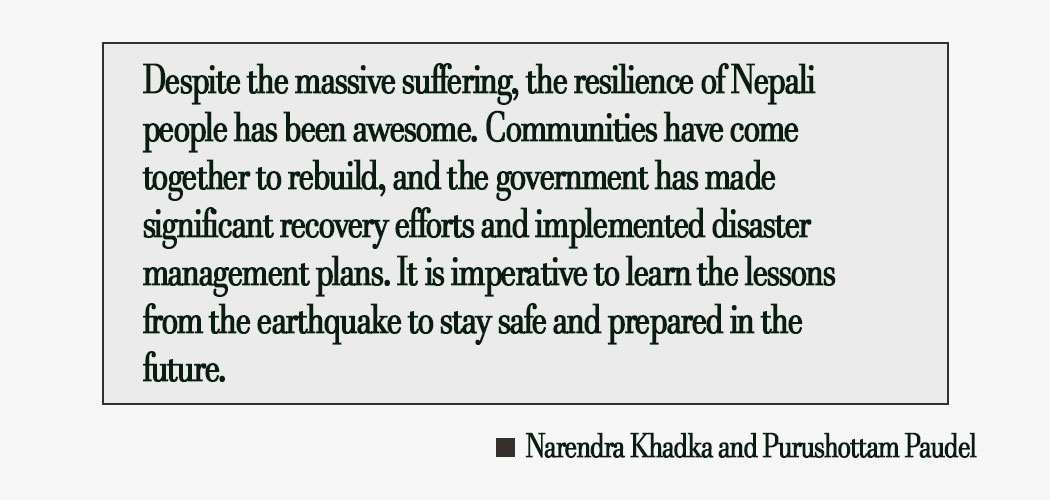
Despite the immense suffering, the resilience of the Nepalese people has been remarkable. Communities have come together to rebuild, and the government has made significant recovery efforts and implemented disaster management plans. It is essential to learn lessons from the earthquake to stay safe and prepared in the future.
How do you feel after reading this news?
|
Sources 2/ https://risingnepaldaily.com/news/50956 The mention sources can contact us to remove/changing this article |
What Are The Main Benefits Of Comparing Car Insurance Quotes Online
LOS ANGELES, CA / ACCESSWIRE / June 24, 2020, / Compare-autoinsurance.Org has launched a new blog post that presents the main benefits of comparing multiple car insurance quotes. For more info and free online quotes, please visit https://compare-autoinsurance.Org/the-advantages-of-comparing-prices-with-car-insurance-quotes-online/ The modern society has numerous technological advantages. One important advantage is the speed at which information is sent and received. With the help of the internet, the shopping habits of many persons have drastically changed. The car insurance industry hasn't remained untouched by these changes. On the internet, drivers can compare insurance prices and find out which sellers have the best offers. View photos The advantages of comparing online car insurance quotes are the following: Online quotes can be obtained from anywhere and at any time. Unlike physical insurance agencies, websites don't have a specific schedule and they are available at any time. Drivers that have busy working schedules, can compare quotes from anywhere and at any time, even at midnight. Multiple choices. Almost all insurance providers, no matter if they are well-known brands or just local insurers, have an online presence. Online quotes will allow policyholders the chance to discover multiple insurance companies and check their prices. Drivers are no longer required to get quotes from just a few known insurance companies. Also, local and regional insurers can provide lower insurance rates for the same services. Accurate insurance estimates. Online quotes can only be accurate if the customers provide accurate and real info about their car models and driving history. Lying about past driving incidents can make the price estimates to be lower, but when dealing with an insurance company lying to them is useless. Usually, insurance companies will do research about a potential customer before granting him coverage. Online quotes can be sorted easily. Although drivers are recommended to not choose a policy just based on its price, drivers can easily sort quotes by insurance price. Using brokerage websites will allow drivers to get quotes from multiple insurers, thus making the comparison faster and easier. For additional info, money-saving tips, and free car insurance quotes, visit https://compare-autoinsurance.Org/ Compare-autoinsurance.Org is an online provider of life, home, health, and auto insurance quotes. This website is unique because it does not simply stick to one kind of insurance provider, but brings the clients the best deals from many different online insurance carriers. In this way, clients have access to offers from multiple carriers all in one place: this website. On this site, customers have access to quotes for insurance plans from various agencies, such as local or nationwide agencies, brand names insurance companies, etc. "Online quotes can easily help drivers obtain better car insurance deals. All they have to do is to complete an online form with accurate and real info, then compare prices", said Russell Rabichev, Marketing Director of Internet Marketing Company. CONTACT: Company Name: Internet Marketing CompanyPerson for contact Name: Gurgu CPhone Number: (818) 359-3898Email: [email protected]: https://compare-autoinsurance.Org/ SOURCE: Compare-autoinsurance.Org View source version on accesswire.Com:https://www.Accesswire.Com/595055/What-Are-The-Main-Benefits-Of-Comparing-Car-Insurance-Quotes-Online View photos

 |
 |
 |