
Uncategorized
What we know about physical damage after Venezuela earthquakes
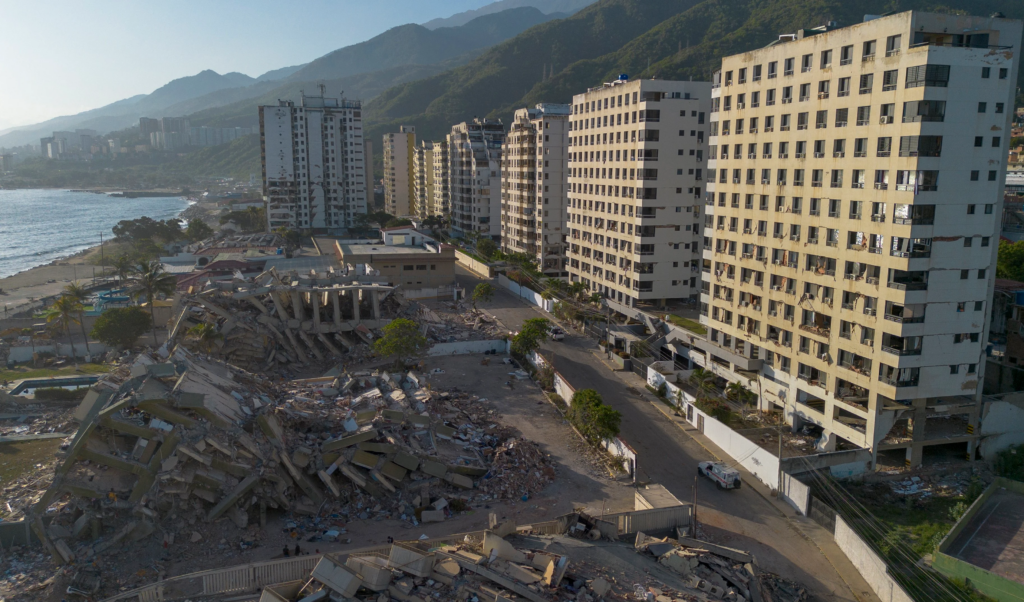
Nearly a month after the twin earthquakes on June 24 left at least 4,930 people dead, 17,854 displaced and thousands more missing, Venezuela is still trying to understand the full extent of the disaster. There is no central damage assessment, no formal accounting of destroyed buildings and no definitive picture of what was lost.
However, reconstruction cannot wait for complete data. Families need housing and infrastructure must be restored, but decisions made today will shape our cities for decades. Engineers, geologists and other specialists are converging on why earthquakes are so devastating, where the limits of current knowledge lie, and what common explanations are not supported by available evidence.
Why were earthquakes so devastating?
The physical properties of the June 24 earthquakes are relatively well understood. Instead of withstanding a single shock, many structures were exposed to a second, more powerful earthquake before recovering from the first. A structure that shakes with enough force to crack without collapsing loses its rigidity and consumes part of the reserve capacity built into its design, explains structural engineer and director of Cazadores de Fake News Adrian Gonzalez.
Thirty-nine seconds later, the second rupture struck what was actually a different building: one already weakened by the first quake. “The combined effect is not equivalent to just adding the two earthquakes together,” says Gonzalez.
The aftermath of the disaster quickly generated competing interpretations about construction quality, engineering standards, and government responsibility. However, the damage rarely speaks for itself. In order to draw useful lessons from the disaster, the evidence must be read in context.
Another factor was resonance. Esteban Tenrero, a structural engineer, has explained in multiple interviews that every structure has a natural sway period, which is the rhythm at which it tends to sway. As with sound, when seismic motion approaches this rhythm, the movement of the building can be amplified. However, the earthquake itself is only part of the story. Geologist Luiraima Salazar explains that the impact of an earthquake depends not only on its strength, but also on the ground through which its waves travel.
Soft sediments, such as those found under much of La Guaira, can amplify ground motion, prolong the period of shaking, and, in saturated soils, lead to sedimentation or liquefaction. Gonzalez explains the behavior of this type of soil using the metaphor of gelatin on top of a plate. Shake the dish once and the gelatin will continue to move in wide, slow waves after the dish stops.
Much of the La Guaira urban area lies on alluvial deposits that amplified and prolonged the movement, meaning that the buildings were hit by the second quake while the ground beneath them was still echoing the first.
What the ruins can (and cannot) tell us
The aftermath of the disaster quickly generated competing interpretations about construction quality, engineering standards, and government responsibility. However, the damage rarely speaks for itself. In order to draw useful lessons from the disaster, the evidence must be read in context.
Gonzalez distinguishes between two broad explanations for structural failure: insufficient capacity and excessive demand. The building may not have had sufficient capacity due to poor materials, lack of detail, or construction that failed to comply with applicable law. On the other hand, a code-compliant building may have experienced forces beyond what was expected, such as two large earthquakes within one minute.
The same caution applies when comparing buildings of different ages. The phrase “earthquake resistance” has not meant the same thing throughout Venezuela’s history, because earthquake regulations have evolved greatly. Before 1967, seismic forces were barely incorporated into structural design. Throughout the 20th century, regulations became increasingly complex, and with the 2001 law, engineers began calculating seismic forces according to a building’s period of vibration. According to Tenero, Venezuela’s earthquake regulations are relatively strict by international standards.
However, catastrophic earthquakes do not follow statistical tables, and many Venezuelan buildings have remained in use for much longer than their intended service life.
Earthquake-resistant buildings are not designed to emerge unscathed in every earthquake. It is designed to behave predictably under the “design earthquake” defined by applicable code. These standards are probability-based: engineers plan for a level of vibration that has a specific probability of being exceeded during the expected useful life of the building. However, catastrophic earthquakes do not follow statistical tables, and many Venezuelan buildings have remained in use for much longer than their intended service life.
Structural elements may crack or deform, but the main goal is to prevent collapse and protect occupants. Essential facilities such as hospitals, schools, and fire stations are subject to more stringent performance requirements because they are expected to remain operational after a disaster strikes.
However, even compliance with these standards cannot fully explain what happened on June 24. Civil engineer Luquin Quintana, who works with the damage documentation initiative SismoAyuda, points out that traditional seismic codes are not designed around two large earthquakes occurring 39 seconds apart. This distinction is not a universal explanation for the collapse, nor does it justify poor construction. It indicates that code compliance alone cannot explain why a particular building failed.
Venezuela still lacks a central assessment of structural damage, meaning that all broader diagnosis remains preliminary. However, reports collected through SismoAyuda are beginning to reveal the first patterns. By July 12, SismoAyuda had received reports of 2,366 buildings. Initial remote assessments classified 296 buildings as unsafe or collapsed, and another 592 as requiring restricted access, although the initiative stresses that its voluntary database cannot be treated as an official census.
Of the damaged buildings with a known construction date, 332 were built before 1970. This is more than all the buildings built after 1970 combined. The largest category consists of one- to three-story buildings, with 274 reported buildings requiring restricted access or classified as unsafe or collapsing. This result surprised engineers, because low-rise buildings generally face lower seismic requirements. At present, there is no plausible explanation.
This uncertainty is not a weakness of the investigation, but rather part of the process itself. Engineers do not draw conclusions from isolated examples. Instead, they look for patterns. An individual collapse may reflect poor construction, unfavorable soil conditions, or exceptionally strong shaking. Repeated failures involving the same structural system, materials, or design across multiple locations provide much stronger evidence of a systemic problem.
The task now is to examine failures build by build. These investigations must determine the standards governing each structure, whether appropriate soil studies have been carried out, whether the construction conforms to approved plans and whether the authorities have properly reviewed and inspected the work.
The same principle applies to some of the most controversial aspects of the disaster. In the days following the earthquake, the performance of individual buildings from Gran Mission Vivienda Venezuela became part of a broader political debate about the quality of buildings. Quintana says there simply isn’t enough evidence to draw broader conclusions about the housing program.
Determining the cause of building failure requires studying structural pathology rather than making comparisons between isolated buildings. Furthermore, just because a building remains upright does not mean it is safe: a structure with defects in materials or design may survive if the specific characteristics of ground movement do not push it to the limit, while remaining vulnerable to a future earthquake.
The same caution applies to viral images of expanded polystyrene found in aggregate. Quintana emphasizes that the mere presence of a substance does not mean that it contributed to the collapse, or that it was used incorrectly. Buildings fail as structural systems, not as isolated building materials.
The task now is to examine failures build by build. These investigations must determine the standards governing each structure, whether appropriate soil studies have been carried out, whether the construction conforms to approved plans and whether the authorities have properly reviewed and inspected the work. Only then will investigators be able to establish responsibility and identify errors that should not be repeated.
The economic cost of earthquakes will eventually be estimated. Continued investigations are expected to produce a clearer picture of the number of buildings that collapsed and the reasons for their collapse. The social and humanitarian damage will be much more difficult to measure. Families have been displaced, communities disrupted, and lives changed forever. These consequences will shape the country for years.
The country already has much of the technical know-how needed to build back safer. Now the challenge is to have institutions capable of putting this knowledge into practice.
|
Sources 2/ https://www.caracaschronicles.com/2026/07/18/what-we-know-about-material-damage-after-the-venezuela-earthquakes/ The mention sources can contact us to remove/changing this article |
What Are The Main Benefits Of Comparing Car Insurance Quotes Online
LOS ANGELES, CA / ACCESSWIRE / June 24, 2020, / Compare-autoinsurance.Org has launched a new blog post that presents the main benefits of comparing multiple car insurance quotes. For more info and free online quotes, please visit https://compare-autoinsurance.Org/the-advantages-of-comparing-prices-with-car-insurance-quotes-online/ The modern society has numerous technological advantages. One important advantage is the speed at which information is sent and received. With the help of the internet, the shopping habits of many persons have drastically changed. The car insurance industry hasn't remained untouched by these changes. On the internet, drivers can compare insurance prices and find out which sellers have the best offers. View photos The advantages of comparing online car insurance quotes are the following: Online quotes can be obtained from anywhere and at any time. Unlike physical insurance agencies, websites don't have a specific schedule and they are available at any time. Drivers that have busy working schedules, can compare quotes from anywhere and at any time, even at midnight. Multiple choices. Almost all insurance providers, no matter if they are well-known brands or just local insurers, have an online presence. Online quotes will allow policyholders the chance to discover multiple insurance companies and check their prices. Drivers are no longer required to get quotes from just a few known insurance companies. Also, local and regional insurers can provide lower insurance rates for the same services. Accurate insurance estimates. Online quotes can only be accurate if the customers provide accurate and real info about their car models and driving history. Lying about past driving incidents can make the price estimates to be lower, but when dealing with an insurance company lying to them is useless. Usually, insurance companies will do research about a potential customer before granting him coverage. Online quotes can be sorted easily. Although drivers are recommended to not choose a policy just based on its price, drivers can easily sort quotes by insurance price. Using brokerage websites will allow drivers to get quotes from multiple insurers, thus making the comparison faster and easier. For additional info, money-saving tips, and free car insurance quotes, visit https://compare-autoinsurance.Org/ Compare-autoinsurance.Org is an online provider of life, home, health, and auto insurance quotes. This website is unique because it does not simply stick to one kind of insurance provider, but brings the clients the best deals from many different online insurance carriers. In this way, clients have access to offers from multiple carriers all in one place: this website. On this site, customers have access to quotes for insurance plans from various agencies, such as local or nationwide agencies, brand names insurance companies, etc. "Online quotes can easily help drivers obtain better car insurance deals. All they have to do is to complete an online form with accurate and real info, then compare prices", said Russell Rabichev, Marketing Director of Internet Marketing Company. CONTACT: Company Name: Internet Marketing CompanyPerson for contact Name: Gurgu CPhone Number: (818) 359-3898Email: [email protected]: https://compare-autoinsurance.Org/ SOURCE: Compare-autoinsurance.Org View source version on accesswire.Com:https://www.Accesswire.Com/595055/What-Are-The-Main-Benefits-Of-Comparing-Car-Insurance-Quotes-Online View photos

 |
 |
 |