
International
As America celebrates its 250th anniversary, does that special relationship still exist? Or is Britain simply irrelevant? | american news
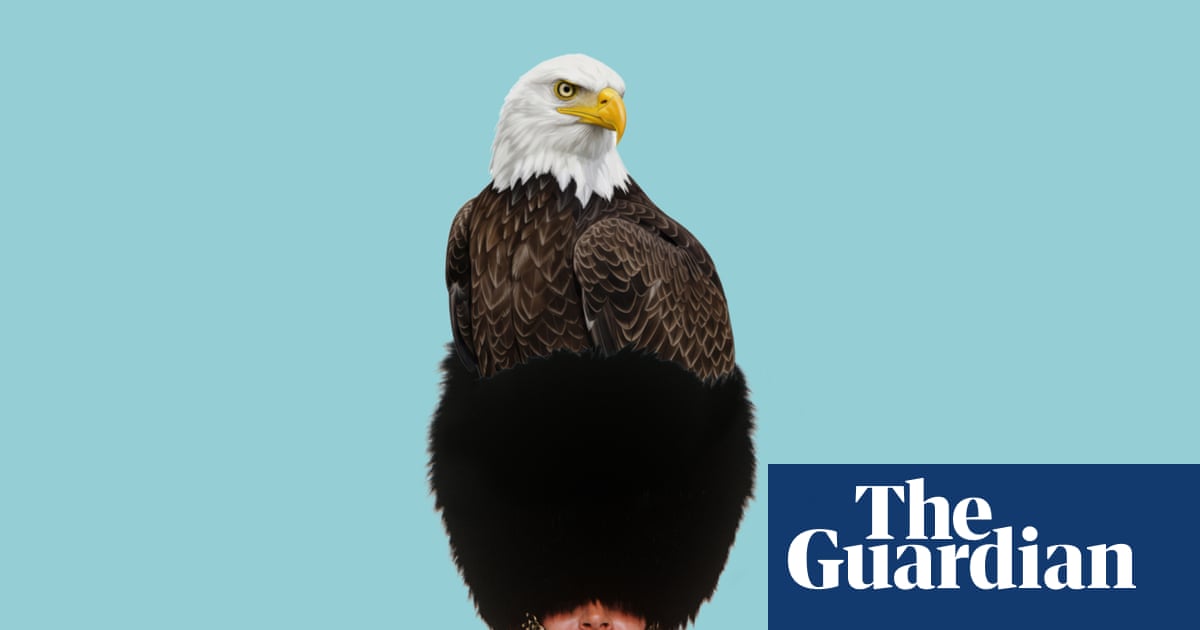
On June 1, 1785, John Adams visited London to become the American ambassador to England, where he was scheduled to meet King George III. By his own admission, Adams was shaken by the encounter. After all, it had been less than a decade since he helped Thomas Jefferson write the Declaration of Independence, condemning the king as an absolute “tyrant” who “plundered our seas, ravaged our coasts, burned our towns, and destroyed the lives of our people.”
A terrified Adams trudged through the London rain to St. James’s Palace to present his credentials to King George. After bowing three times, he declared, “I will be the happiest man if I can play any significant part in recommending our country more and more for Your Majesty’s Royal Mercy.”
Adams’ short speech was a lesson in self-abnegation on behalf of a people who had not only defeated the British just two years earlier, but had lost 25,000 combatants in the process. Despite the battles of Long Island, Camden, and the painful winters of Valley Forge and Morristown, Adams lavished praise on his defeated enemy.
Two and a half centuries later, this mixture of opposition, combined with an innate chauvinism for victory and a subservience to Britain’s old world traditions, is still much in evidence in America. Duality has a new champion as Adams’s successor in his 43rd and 45th presidencies: Donald Trump.
The president never once bowed to King Charles and Queen Camilla during his recent state visit to Washington (Charles received a lively handshake, while Camilla received a peck on the cheek from Melania). Trump’s flattering demeanor in all other respects would have made even Adams blush.
In welcoming the two men to the White House, Trump invoked the cliché of a “special relationship” and said that in the centuries since independence, “Americans have had no closer friends than the British.”
Keir Starmer picked up a UK-US trade deal document dropped by Donald Trump at the G7 summit in Canada. Photo: Stefan Russo/PA
But around the same time, Trump repeatedly mocked current British Prime Minister Keir Starmer. He belittled his refusal to involve British troops in Trump’s war with Iran, calling him “no Winston Churchill.”
With Starmer leaving office soon and likely to be replaced by Andy Burnham, Trump expressed sympathy for a country that, in his exaggerated view, is focused on keeping the country alive. “England is dying,” he memorably said.
As the United States celebrates its 250th anniversary, these conflicting feelings about the country that Jefferson called “the mother country” remain unresolved. Is Britain America’s Best Friend? Or is this a joke about a small island somewhere across the pond becoming increasingly useless?
President Trump emphasized two things in commemoration of the 250th anniversary. Above all, he provided milestones that commemorated his own greatness.
Second, contrary to expectations, he was eager to remind Americans of their bravery in defeating the British in 1783. His paean to the theme of six giant “freedom trucks” crisscrossing the country telling the story of the Revolutionary War is an elaborate exercise in rubbing Britain’s nose with 18 wheels.
The ‘Freedom Truck’ appeared at the Maricopa County Fair held in Phoenix, Arizona last April. Photo: Cassidy Araiza/Cassidy Araiza, The Guardian
The timing of the truck and ode to America’s founding triumphs is perhaps coincidental for Trump, considering the president has led the country back into a war he can’t seem to win or end. “It’s very cool to be able to show that Uncle Sam defeated John Bull,” said David Reynolds, a historian at Christ’s College, Cambridge and author of America: Empire of Liberty.
But Reynolds added that Trump’s praise lacked important historical context. “Trump doesn’t answer, but if you ask why America won the Revolutionary War, it’s because Britain lost control of the Atlantic Ocean against its enemies, especially the French and Dutch allies.”
Awkward truths aside, another question was raised in episode 250. Is America also interested in Britain? According to MIT Nobel Prize winner in economics Simon Johnson, who was born and raised in Sheffield, northern England, and has lived in the United States for the past 41 years, the prevailing American attitude toward his former homeland is indifference.
“I think America is a little indifferent.” he said “They don’t pay much attention to the UK.”
Scotland fans march along Ocean Drive in Miami Beach, Florida during the World Cup. Photo: Amanda Perovelli/Reuters
Johnson has been reminded of this departure in recent weeks by the turmoil surrounding the World Cup among his American peers. “Why does Scotland have its own team?” They say; “Is there an English soccer team?”
He summarizes the lack of awareness of the outside world, including Britain, as American exceptionalism and the isolationism it brings. But Johnson, the entrepreneurship professor, thinks the concept of exceptionalism can sometimes be exaggerated.
Consider the current space race, which in the United States is usually presented as the work of billionaire individuals like Elon Musk and Jeff Bezos. In fact, space exploration has been revived through what Johnson calls “large-scale public-private partnerships anchored by the state and supported by large NASA grants.”
And it is much more comparable to a similar approach in the UK. “There are certainly parallels with the UK, where we have a very good public-private mix that is looking at creative solutions.”
The perception gap has widened in recent years, with the US comparatively outperforming the UK on basic economic indicators. Both countries suffered greatly in the aftermath of the 2007 financial crisis, which Johnson believes is the cause of America’s political grumbling today.
But over the next 20 years, America drifted away from Britain. According to World Bank figures, GDP per capita in the United States continued to grow from $48,000 in 2007 to $85,000 in 2024 (in today’s dollars), while in the United Kingdom, growth stalled from $51,000 to $53,000 due to Brexit.
Tanks during a parade commemorating the 250th anniversary of the founding of the U.S. Armed Forces in Washington, D.C., June 14. Photo: ABACA/Shutterstock
The same pattern can be seen in military power. Although the UK has increased its military spending due to the Ukraine effect, the US plans to spend $921 billion on its military this year, almost 10 times more than Britain’s $94 billion.
“Everyone can see that the UK doesn’t have as much influence over the US as it used to, and that’s reality,” Reynolds said. “Britain’s sense of dependence is growing, as it finds itself diplomatically marginalized.”
But at a cultural level, historians believe there is a different story. “Yes, the Americans have the power, but there is an assumption that we have a savior festival. As Lord Halifax said to Lord Keynes in Washington in 1945, ‘It is true they have the bags of money, but we have all the brains.’”
The idea that the British are punching above their weight culturally is something Joanna Coles has been thinking about since she moved to the United States in 1997. The transatlantic journey took her from Otley, West Yorkshire, England, to the Guardian offices in London and New York, where she rose to the role of Chief Content Officer at Hearst Magazines and her current role overseeing the Daily Beast, which she co-owns and oversees all content.
A highly anticipated movie <오디세이> Christopher Nolan on set. Photo: Melinda Sue Gordon/Universal Pictures
Coles points to Hollywood as a case in point. She rates Christopher Nolan, whose upcoming summer blockbuster The Odyssey, “is the most influential and important director in Hollywood right now. What’s interesting about him is the scale of his ambition. He’s taking over Spielberg’s mantle.”
And young British talent is starting to make waves. Emerald Fennell, who has already directed Saltburn and Wathering Heights, is outspoken, while acting names include Florence Pugh, Benedict Cumberbatch and the Royal Academy of Dramatic Art (Rad)-trained Cynthia Erivo, who has “exploded into a huge star” as a performer.
A similar argument can be made for small screens. Two of HBO’s recent freak shows featured British producers Jesse Armstrong’s Succession and Industry duo Mickey Down and Konrad Kay. British-born John Oliver’s Last Week Tonight continues to hold a special place in the hearts of late-night viewers.
The hit HBO show Succession was created by British screenwriter and producer Jesse Armstrong. Photo: HBO
Coles attributes the disproportionate importance of British cultural figures in the United States, in part, to their paradoxical size compared to Britain’s smaller size. “The UK is a small country whose cultural industries have always looked outward. Ambitious British talent have long understood that success often means crossing the Atlantic.”
There’s also something about the centuries the British were trained to use words as tools or weapons. She thinks of Prime Minister’s Questions, the weekly parliamentary fracas in which politicians mercilessly throw verbal spears at each other.
“Watch broadcasting. Watch theatre. The UK has an unusually dense ecosystem of prestigious universities, world-class drama schools, the BBC and a national culture that values wit, irony and storytelling, which all work well here.”
It could be said that the American media is also seizing a British moment on the 250th anniversary.
The Daily Beast, Coles’ digital news site, was founded by Tina Brown, one of Britain’s cultural powerhouses in the United States. Tina Brown single-handedly brought a generation of British talent to America while editing Vanity Fair and The New Yorker. Even the Daily Beast’s title is taken from Evelyn Waugh’s novel Scoop, which satirizes London’s Fleet Street, the spiritual home of the British press.
Emma Tucker, editor-in-chief of the Wall Street Journal. Photo: Kent Nishimura/Bloomberg/Getty Images
Other Britons have taken on some of the country’s most respected media titles. Here’s Emma Tucker, who, as editor-in-chief, dusted off the Wall Street Journal and made it relevant and revitalized as a must-read in the age of Trump.
and John Micklethwait, who was given leadership of Bloomberg News by Michael Bloomberg. And Rupert Murdoch also hired Keith Poole, who held a similarly important role in the New York Post group.
As the Guardian reports, CBS News’ controversial editor-in-chief, Bari Weiss, recently went on a fishing trip to England to scout for new broadcasters and journalists. If David Ellison, the tech mogul who controls Paramount, completes his merger with Warner Bros Discovery and, as expected, puts CNN at least partially under Weiss’ control, there could be a high-profile clash between Weiss and CNN’s chief executive, Mark Thompson, a former BBC director-general.
CNN’s CEO is Mark Thompson, a former BBC director. Photo: Dimitrios Kambouris/Getty Images for Warner Bros. Discovery
The injection of British talent may not always be successful, but far from it. Jeff Bezos has placed the fate of the Washington Post, one of America’s most respected newspapers, in the hands of Will Lewis, former editor-in-chief of London’s Daily Telegraph and later CEO of Dow Jones.
David Folkenflik, NPR’s media correspondent, recalled Lewis’s activities as publisher of the Post, recalling, “It was as disastrous as I could imagine. Lewis didn’t ruin everything he touched, but it certainly felt that way to a lot of people.”
The paper is still reeling from the hundreds of staff laid off under Lewis in February and Lewis’s sudden and uncondoled departure days later.
For Folkenflik, an Englishman who spent part of his childhood in England and wrote about the British phone-hacking scandal in his book Murdoch’s World, the fact that so many Brits are prevalent throughout American cultural circles tells us less about British talent than about the level of confidence in America as the country approaches its National Day.
“In times of ideological uncertainty, when our position is shaky and our foundations are unclear, it is not surprising that our institutions look east,” Folkenflik said. “They are looking for that aura of clarity that the British have from afar, whether they maintain it or not.”
|
Sources 2/ https://www.theguardian.com/news/ng-interactive/2026/jul/04/us-250-britain-special-relationship The mention sources can contact us to remove/changing this article |
What Are The Main Benefits Of Comparing Car Insurance Quotes Online
LOS ANGELES, CA / ACCESSWIRE / June 24, 2020, / Compare-autoinsurance.Org has launched a new blog post that presents the main benefits of comparing multiple car insurance quotes. For more info and free online quotes, please visit https://compare-autoinsurance.Org/the-advantages-of-comparing-prices-with-car-insurance-quotes-online/ The modern society has numerous technological advantages. One important advantage is the speed at which information is sent and received. With the help of the internet, the shopping habits of many persons have drastically changed. The car insurance industry hasn't remained untouched by these changes. On the internet, drivers can compare insurance prices and find out which sellers have the best offers. View photos The advantages of comparing online car insurance quotes are the following: Online quotes can be obtained from anywhere and at any time. Unlike physical insurance agencies, websites don't have a specific schedule and they are available at any time. Drivers that have busy working schedules, can compare quotes from anywhere and at any time, even at midnight. Multiple choices. Almost all insurance providers, no matter if they are well-known brands or just local insurers, have an online presence. Online quotes will allow policyholders the chance to discover multiple insurance companies and check their prices. Drivers are no longer required to get quotes from just a few known insurance companies. Also, local and regional insurers can provide lower insurance rates for the same services. Accurate insurance estimates. Online quotes can only be accurate if the customers provide accurate and real info about their car models and driving history. Lying about past driving incidents can make the price estimates to be lower, but when dealing with an insurance company lying to them is useless. Usually, insurance companies will do research about a potential customer before granting him coverage. Online quotes can be sorted easily. Although drivers are recommended to not choose a policy just based on its price, drivers can easily sort quotes by insurance price. Using brokerage websites will allow drivers to get quotes from multiple insurers, thus making the comparison faster and easier. For additional info, money-saving tips, and free car insurance quotes, visit https://compare-autoinsurance.Org/ Compare-autoinsurance.Org is an online provider of life, home, health, and auto insurance quotes. This website is unique because it does not simply stick to one kind of insurance provider, but brings the clients the best deals from many different online insurance carriers. In this way, clients have access to offers from multiple carriers all in one place: this website. On this site, customers have access to quotes for insurance plans from various agencies, such as local or nationwide agencies, brand names insurance companies, etc. "Online quotes can easily help drivers obtain better car insurance deals. All they have to do is to complete an online form with accurate and real info, then compare prices", said Russell Rabichev, Marketing Director of Internet Marketing Company. CONTACT: Company Name: Internet Marketing CompanyPerson for contact Name: Gurgu CPhone Number: (818) 359-3898Email: [email protected]: https://compare-autoinsurance.Org/ SOURCE: Compare-autoinsurance.Org View source version on accesswire.Com:https://www.Accesswire.Com/595055/What-Are-The-Main-Benefits-Of-Comparing-Car-Insurance-Quotes-Online View photos

 |
 |
 |