
Politics
Narendra Modi: After PM Modi’s call, Indian jewelry industry says gold recycling could be the smartest solution – here’s how to do it
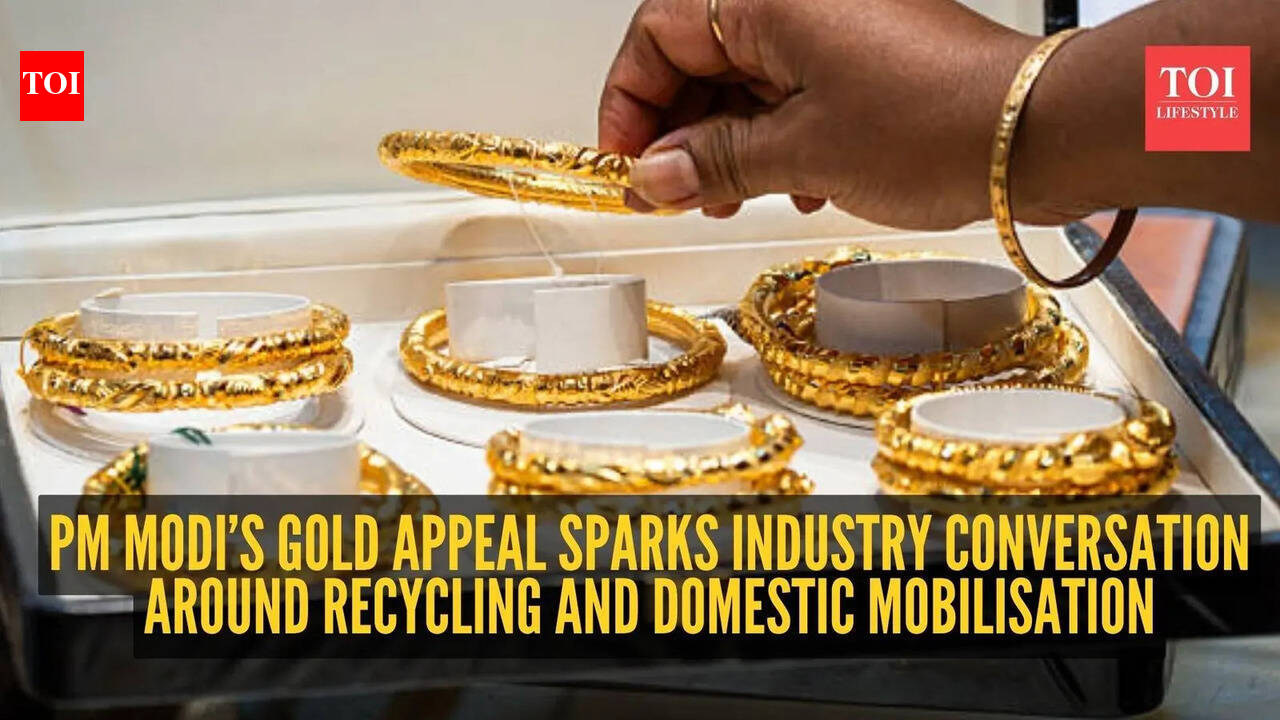
Gold in India has never been just about fashion. It’s emotion, family tradition, marriage culture, savings and, for many households, a financial safety net quietly hidden in the locker. This is why the recent debate on reducing gold purchases has triggered strong reactions in the jewelry industry.After Prime Minister Narendra Modi urged citizens to consider postponing their gold purchases to help protect India’s foreign exchange reserves amid ongoing global supply chain tensions linked to conflict in West Asia, the jewelry industry has now responded with a very different suggestion.
Instead of completely discouraging people from buying gold, industry body All India Jewelers & Goldsmith Federation (AIJGF) believes the real solution lies in better gold recycling and national mobilization.And according to the industry, the stakes are much higher than luxury shopping.
Why the jewelry industry is worried
In a letter to Commerce Minister Piyush Goyal, AIJGF national president Pankaj Arora said the government’s concerns over increased imports and foreign exchange pressure are understandable, but a reduction in consumer demand could seriously harm the jewelry ecosystem.“While the intention to protect India’s foreign exchange reserves is understandable, the solution should not be demand destruction. The solution should be domestic gold mobilization, recycling and productive circulation of India’s idle gold stocks,” Arora said.
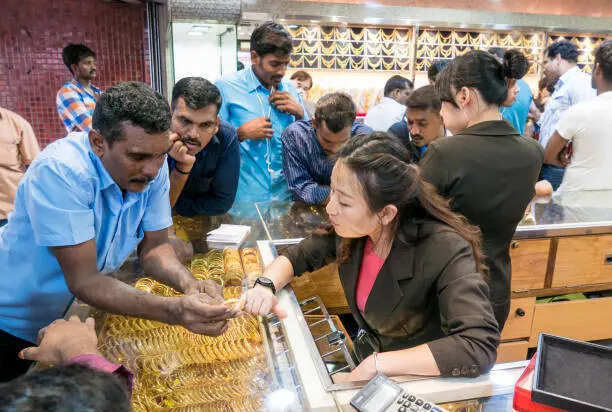
The federation warned that if consumers suddenly stopped buying jewelry, the impact would go far beyond luxury retail.According to the body, a slowdown in sales could affect small jewelers, karigars, artisans, manufacturers and workers across the supply chain, many of whom rely heavily on constant demand for weddings and parties to survive.“This is not just a question of gold trading. This is a question of livelihoods,” the federation added.
In India, gold is rarely “just jewelry”
One of the reasons the conversation has become so emotional is that gold occupies a very different cultural position in India compared to many other countries.For millions of families, gold jewelry is not considered an indulgence or an occasional luxury purchase. It often functions as savings, emergency security, inherited wealth, and a part of family traditions passed down from generation to generation.Especially at weddings, festivals and important family events, gold continues to hold enormous emotional value.The AIJGF strongly emphasized this point in its response.“For millions of Indian families, jewelry is not speculation, it is savings in portable form,” Arora wrote.And honestly, this idea resonates deeply in Indian homes.Whether it is bangles gifted by grandparents, bridal necklaces carefully purchased over the years, or coins purchased during festivals like Akshaya Tritiya and Dhanteras, gold in India often carries both financial and sentimental significance.
The industry’s alternative: recycle more gold already in India
Instead of reducing purchases, the federation believes India should focus on recirculating unused gold already stored in homes, lockers and safes.The AIJGF has proposed the creation of a dedicated bullion bank within the GIFT-IFSC or India International Bullion Exchange system. According to the federation, such a framework could help mobilize domestic gold stocks more effectively instead of relying heavily on imports.
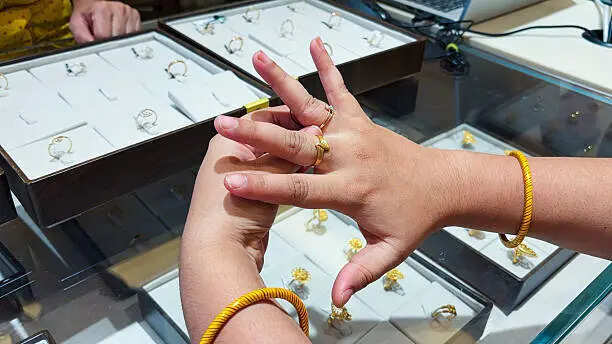
The body also suggested allowing gold ETFs to lend a portion of their holdings through a regulated banking structure.Another major recommendation was to overhaul India’s gold monetization program, which was launched in 2015 but has failed to grow significantly over the years.One of the biggest problems, industry experts say, is that huge amounts of gold remain locked up in the private sector without contributing to the economy as a whole.
“Nearly 200 tonnes of gold are locked up each year”
We also contacted Dr C Vinod Hayagriv, Managing Director, C. Krishniah Chetty Group, to get his views on the growing debate around gold consumption and imports.And his response highlighted how huge the problem could be.“India imports nearly 800 tonnes of gold annually, and industry estimates suggest that almost 200 tonnes are set aside each year in the form of raw bars purchased by individuals as passive investments. This creates pressure on foreign exchange reserves without contributing significantly to economic growth,” he said.At the same time, he highlighted that the gems and jewelry sector remains one of the major contributors to the Indian economy.“The gems and jewelry sector, which contributes nearly 7% to India’s GDP and supports over 5 million people, continues to generate significant value through manufacturing, retail, exports and skilled employment,” he added.
Perhaps the biggest problem is unused gold, not the jewelry itself
Dr Hayagriv also suggested structural reform that could potentially reduce unnecessary imports within a year.“At C Krishniah Chetty Group, we believe that a simple structural reform allowing sale of raw bullion only to GST-registered buyers can immediately reduce unnecessary imports, improve transparency and strengthen the organized jewelry ecosystem,” he said.According to him, it is not just about short-term restrictions, but also about building a more sustainable long-term system for the Indian economy.“India needs to encourage consumption of value-added gold rather than wasteful investments that do not support the economy as a whole,” he said.And honestly, this distinction becomes central to the entire conversation.The debate now appears to be less about whether Indians should buy gold and more about how gold is purchased, stored and distributed within the economy.
How to recycle gold jewelry
Recycling old gold jewelry doesn’t necessarily mean melting down precious keepsakes or getting rid of pieces that have emotional value. In most Indian homes, there is always some unused gold: an old chain with a broken clasp, bracelets that seem too heavy now, simple earrings that are missing a pair, or wedding jewelry that hasn’t been worn in years. Instead of leaving these forgotten pieces in a locker, many people are now giving them new life by redesigning them or trading them in for jewelry they’ll actually wear.A grandmother’s old necklace can become a modern bracelet, or an outdated ensemble can be transformed into everyday pieces without losing its sentimental connection. The important thing is to go to trusted jewelers, double check the purity, understand the deduction fees and make sure everything is transparent before exchanging anything. In a way, recycling gold is not only practical, it’s also a beautiful way to perpetuate old memories in a form that still fits your life today.
Why this conversation matters beyond jewelry
What makes this question particularly interesting is how it sits at the intersection of fashion, economics, culture and livelihood.The Indian jewelry sector is also deeply linked to craftsmanship. Millions of artisans, stonemasons, goldsmiths, polishers and small family businesses depend on this industry for their income.So whenever demand for gold slows sharply, the ripple effects often hit workers well before major retailers.At the same time, policymakers remain concerned about rising imports and pressure on foreign exchange reserves, particularly during periods of global instability.
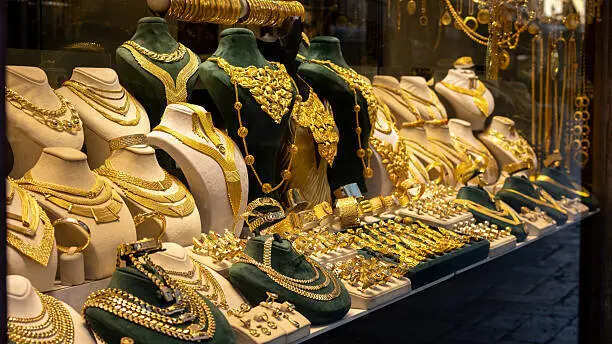
That’s why the industry is pushing for reforms focused on recycling, transparency and better circulation of existing gold instead of completely reducing consumer confidence in jewelry purchases.Because in India, gold has never been a simple fashion accessory.It’s about culture, memory, savings, status, know-how – and for many families, a financial backup plan discreetly worn around the neck or tucked away neatly in a locker.
|
Sources 2/ https://timesofindia.indiatimes.com/life-style/fashion/jewellery/after-pm-modis-appeal-indias-jewellery-industry-says-gold-recycling-could-be-the-smarter-solution/articleshow/131033904.cms The mention sources can contact us to remove/changing this article |
What Are The Main Benefits Of Comparing Car Insurance Quotes Online
LOS ANGELES, CA / ACCESSWIRE / June 24, 2020, / Compare-autoinsurance.Org has launched a new blog post that presents the main benefits of comparing multiple car insurance quotes. For more info and free online quotes, please visit https://compare-autoinsurance.Org/the-advantages-of-comparing-prices-with-car-insurance-quotes-online/ The modern society has numerous technological advantages. One important advantage is the speed at which information is sent and received. With the help of the internet, the shopping habits of many persons have drastically changed. The car insurance industry hasn't remained untouched by these changes. On the internet, drivers can compare insurance prices and find out which sellers have the best offers. View photos The advantages of comparing online car insurance quotes are the following: Online quotes can be obtained from anywhere and at any time. Unlike physical insurance agencies, websites don't have a specific schedule and they are available at any time. Drivers that have busy working schedules, can compare quotes from anywhere and at any time, even at midnight. Multiple choices. Almost all insurance providers, no matter if they are well-known brands or just local insurers, have an online presence. Online quotes will allow policyholders the chance to discover multiple insurance companies and check their prices. Drivers are no longer required to get quotes from just a few known insurance companies. Also, local and regional insurers can provide lower insurance rates for the same services. Accurate insurance estimates. Online quotes can only be accurate if the customers provide accurate and real info about their car models and driving history. Lying about past driving incidents can make the price estimates to be lower, but when dealing with an insurance company lying to them is useless. Usually, insurance companies will do research about a potential customer before granting him coverage. Online quotes can be sorted easily. Although drivers are recommended to not choose a policy just based on its price, drivers can easily sort quotes by insurance price. Using brokerage websites will allow drivers to get quotes from multiple insurers, thus making the comparison faster and easier. For additional info, money-saving tips, and free car insurance quotes, visit https://compare-autoinsurance.Org/ Compare-autoinsurance.Org is an online provider of life, home, health, and auto insurance quotes. This website is unique because it does not simply stick to one kind of insurance provider, but brings the clients the best deals from many different online insurance carriers. In this way, clients have access to offers from multiple carriers all in one place: this website. On this site, customers have access to quotes for insurance plans from various agencies, such as local or nationwide agencies, brand names insurance companies, etc. "Online quotes can easily help drivers obtain better car insurance deals. All they have to do is to complete an online form with accurate and real info, then compare prices", said Russell Rabichev, Marketing Director of Internet Marketing Company. CONTACT: Company Name: Internet Marketing CompanyPerson for contact Name: Gurgu CPhone Number: (818) 359-3898Email: [email protected]: https://compare-autoinsurance.Org/ SOURCE: Compare-autoinsurance.Org View source version on accesswire.Com:https://www.Accesswire.Com/595055/What-Are-The-Main-Benefits-Of-Comparing-Car-Insurance-Quotes-Online View photos

 |
 |
 |