
Politics
Will the Taiwanese accept Xi Jinping’s “One China” version?
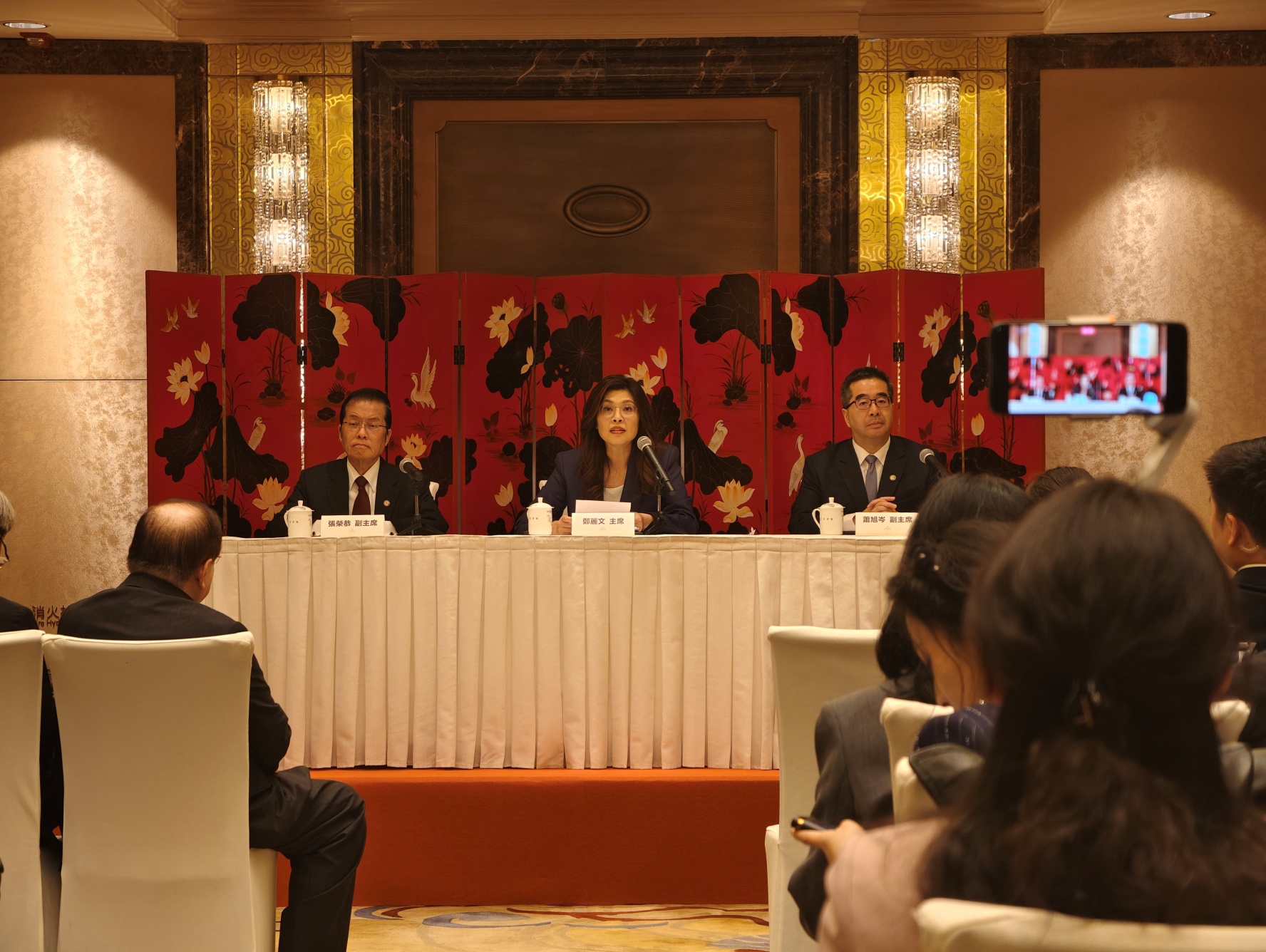
Figure 1
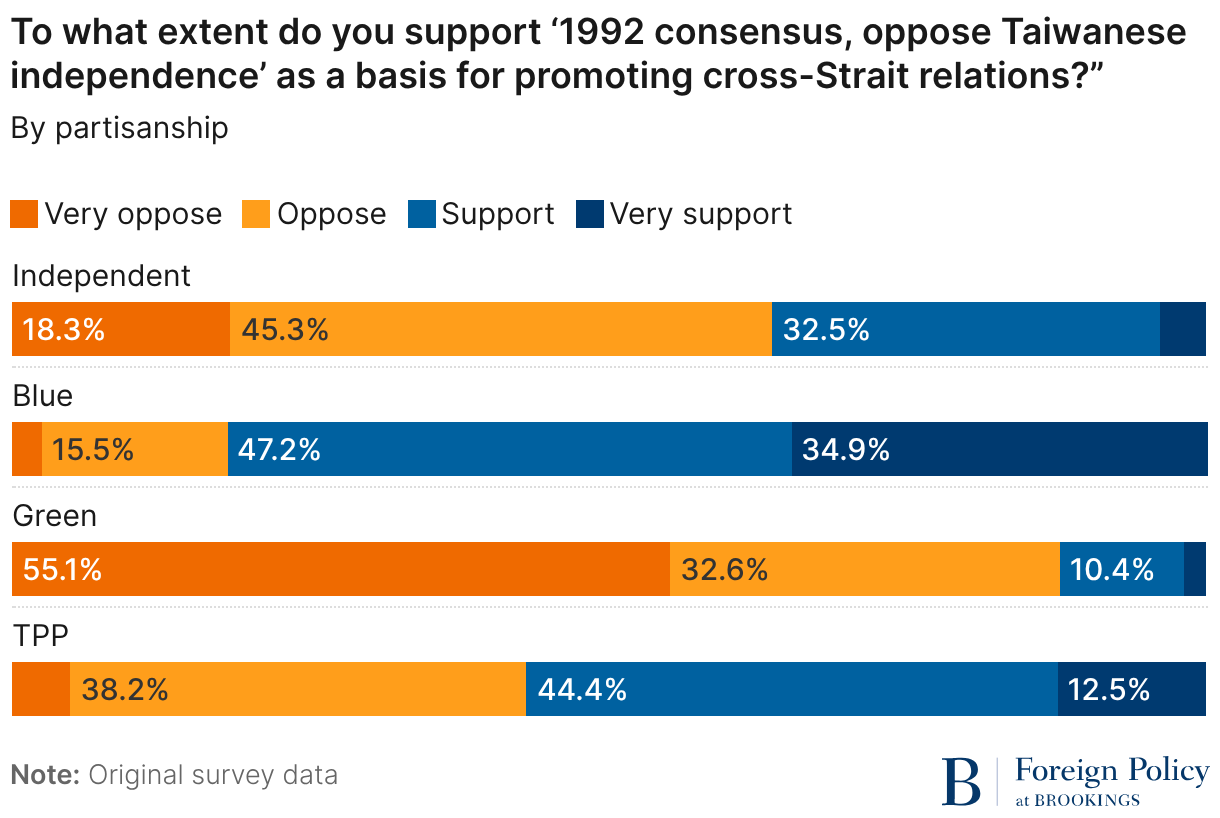
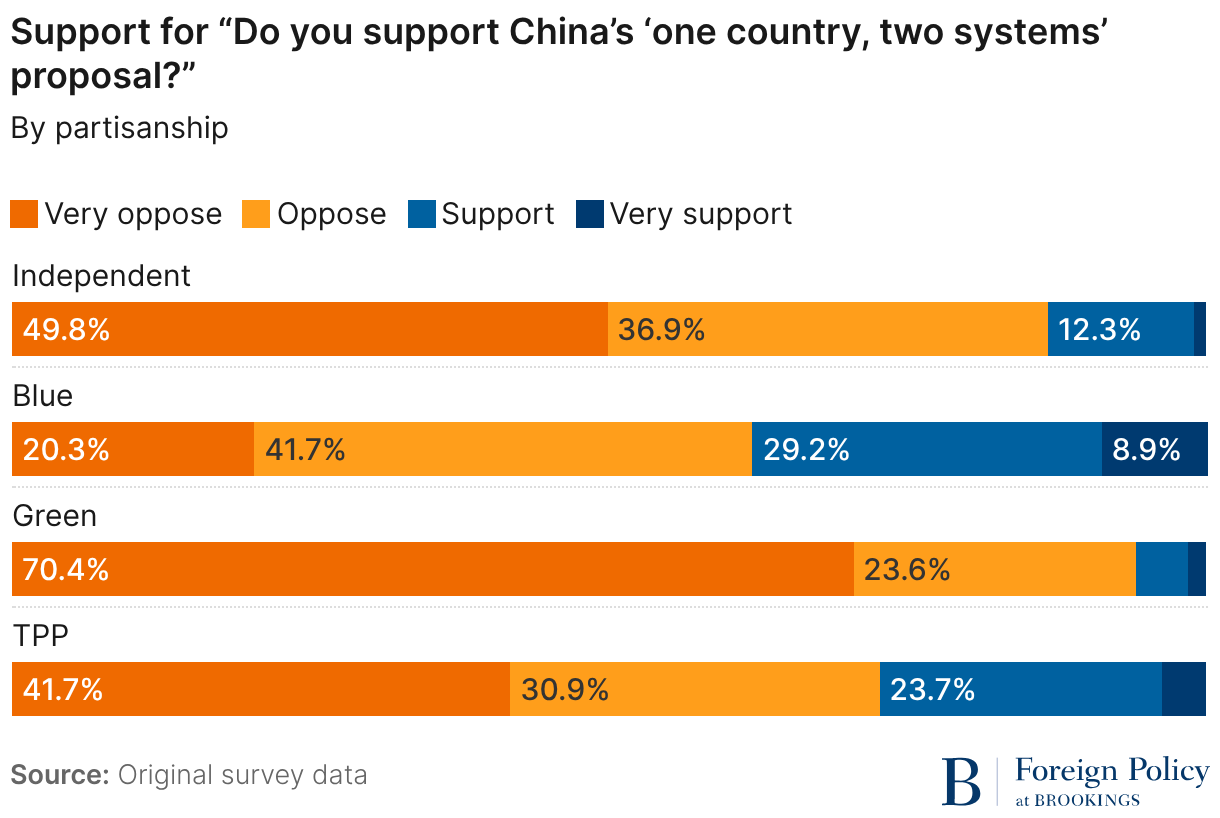
We then wanted to know how people viewed Cheng’s use of the slogan “1992 Consensus, Oppose Taiwan Independence,” compared to how they viewed “one country, two systems.” What we find is that while many non-DPP aligned Green voters support Cheng’s language, it does not apply to the principle of “one country, two systems.” Starting with KMT-aligned blue voters, we find that 80% support Cheng’s slogan, but less than 40% support “one country, two systems.” Among TPP voters, nearly 60 percent support Cheng’s slogan, but again, less than 30 percent support “one country, two systems.” Independent voters largely oppose Cheng’s slogan; despite expressing generally positive views on travel (see our previous article), only 13% support “one country, two systems”. Overall, 18% of respondents expressed opinions in favor of “one country, two systems”.
Figure 2
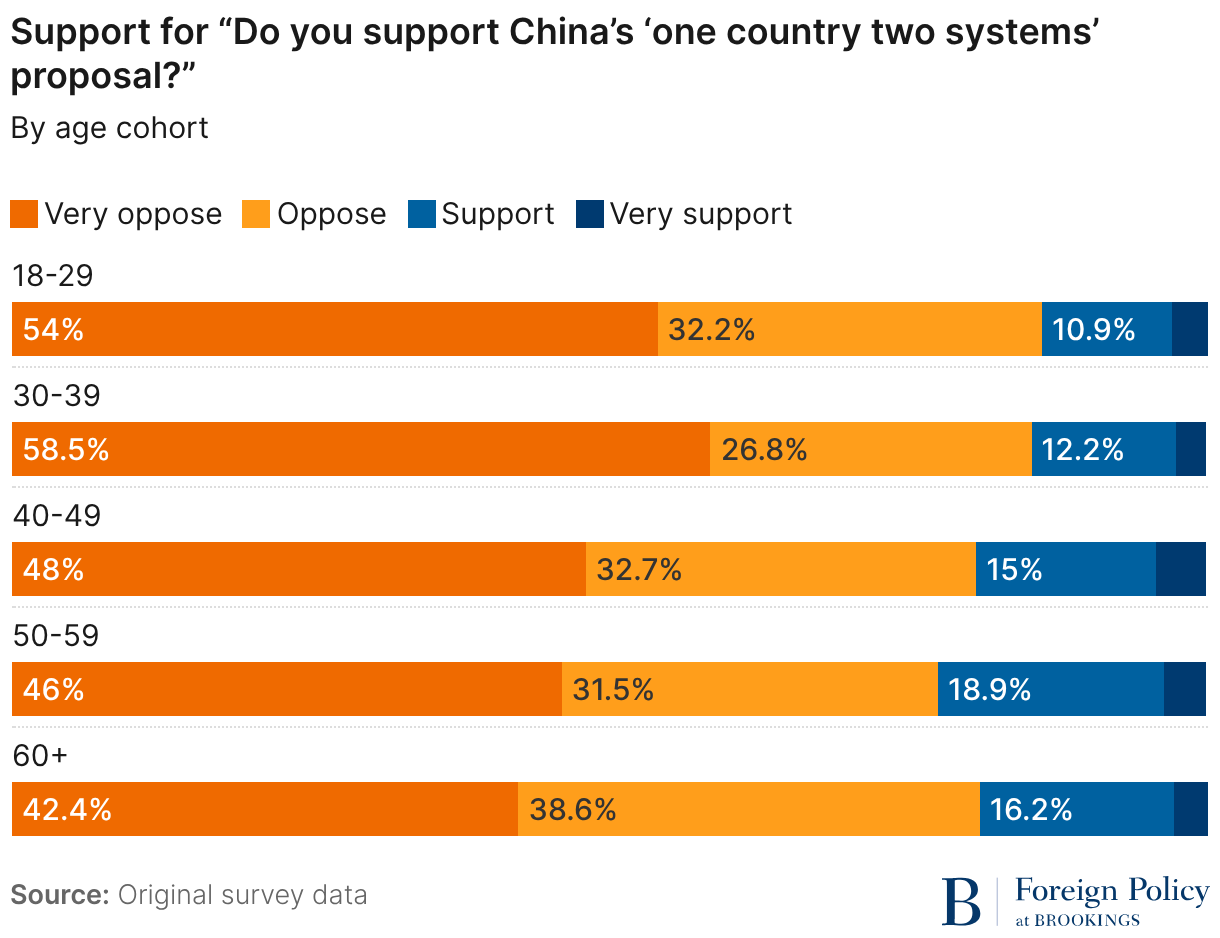
Age is also a crucial factor in gauging support for the “1992 Consensus” and the “one country, two systems” principle. For both slogans, support comes mainly from people aged 50 and over. The younger the respondents, the more they oppose both the “1992 Consensus, oppose Taiwan independence” and the “one country, two systems” slogans. While some observers While there is evidence to suggest that younger cohorts may be more pro-China, our results here show that the majority currently reject “one country, two systems” more than all other age groups.
Figure 3
What is clear is that Taiwanese voters view these two concepts as distinct. Taiwanese voters may support the 1992 Consensus because they see it as a path to meaningful engagement with the PRC. Since there is no formality, agreed consensusThe 1992 Consensus provides flexibility and ambiguity in creating ties with the PRC. “One country, two systems” is neither ambiguous nor imaginative, however, especially in light of what happened in Hong Kong, which Taiwanese voters followed closely.
For Beijing, however, these two concepts are linked, and Xi himself has explicitly linked them. Here we wish to highlight a risk of potential misinterpretation. Although Taiwanese voters largely reject the “one country, two systems” principle, many still express support for the 1992 Consensus. Yet, in international discourse, Beijing largely controls the formulation of the 1992 Consensus and continues to present it as inseparable from the “one country, two systems” principle. Beijing could try to argue that by accepting the 1992 Consensus, the Taiwanese will also accept the “one country, two systems” framework. We believe that this would be empirically incorrect.
Conclusion
For Green voters aligned with the DPP, the 1992 Consensus and “one country, two systems” are dead in the water. However, for KMT-aligned blue voters, the 1992 Consensus, and specifically Cheng’s formulation of consensus and opposition to Taiwan independence, is generally viewed positively. Independent voters once again make the most novel observation: a majority rejects Cheng’s rhetoric, but also perceives his trip to Beijing positively. Thus, independent voters paradoxically reject Cheng’s conception but see symbolic value in engagement with the PRC. Why is this the case? We believe that independent voters do not want Taiwan to unite with the PRC, but they might view engagement as a meaningful way to maintain the status quo on the island.
However, our findings also present a second, more important contradiction: KMT-aligned blue voters and TPP voters (and independents who support Cheng’s language) overwhelmingly reject “one country, two systems” although they support Cheng’s slogan. The inconsistency lies in how Xi connects the two slogans. For Xi, the slogan “1992 Consensus, Opposition to Independence” is a precursor to “one country, two systems.” Yet blue voters in Taiwan do not support Xi’s end goal.
One potential problem is that blue voters might view Cheng’s rhetoric as a way to maintain the status quo, believing that endorsing this type of policy agenda would support cross-strait relations by creating space for dialogue between the two shores. But from the PRC’s perspective, this rhetoric is not intended to maintain the relationship but to change it, so that “one country, two systems” can eventually be introduced to Taiwan. In other words, supporters of Cheng’s slogan may view the 1992 Consensus as a way to buy time and protect the status quo, but Beijing does not share this goal. Although blue voters may continue to support Cheng and his slogan, the disconnect between how Cheng and the KMT frame this slogan domestically and how Xi and Beijing interpret it may have significant implications for the future of the KMT’s relationship with the Chinese Communist Party, and for cross-Strait relations if or when a KMT politician is elected to lead Taiwan.
The Brookings Institution is committed to quality, independence, and impact.
We are supported by a wide range of funders. Consistent with our values and policies, each Brookings publication represents the sole views of its author(s).
|
Sources 2/ https://www.brookings.edu/articles/will-taiwanese-accept-xi-jinpings-version-of-one-china/ The mention sources can contact us to remove/changing this article |
What Are The Main Benefits Of Comparing Car Insurance Quotes Online
LOS ANGELES, CA / ACCESSWIRE / June 24, 2020, / Compare-autoinsurance.Org has launched a new blog post that presents the main benefits of comparing multiple car insurance quotes. For more info and free online quotes, please visit https://compare-autoinsurance.Org/the-advantages-of-comparing-prices-with-car-insurance-quotes-online/ The modern society has numerous technological advantages. One important advantage is the speed at which information is sent and received. With the help of the internet, the shopping habits of many persons have drastically changed. The car insurance industry hasn't remained untouched by these changes. On the internet, drivers can compare insurance prices and find out which sellers have the best offers. View photos The advantages of comparing online car insurance quotes are the following: Online quotes can be obtained from anywhere and at any time. Unlike physical insurance agencies, websites don't have a specific schedule and they are available at any time. Drivers that have busy working schedules, can compare quotes from anywhere and at any time, even at midnight. Multiple choices. Almost all insurance providers, no matter if they are well-known brands or just local insurers, have an online presence. Online quotes will allow policyholders the chance to discover multiple insurance companies and check their prices. Drivers are no longer required to get quotes from just a few known insurance companies. Also, local and regional insurers can provide lower insurance rates for the same services. Accurate insurance estimates. Online quotes can only be accurate if the customers provide accurate and real info about their car models and driving history. Lying about past driving incidents can make the price estimates to be lower, but when dealing with an insurance company lying to them is useless. Usually, insurance companies will do research about a potential customer before granting him coverage. Online quotes can be sorted easily. Although drivers are recommended to not choose a policy just based on its price, drivers can easily sort quotes by insurance price. Using brokerage websites will allow drivers to get quotes from multiple insurers, thus making the comparison faster and easier. For additional info, money-saving tips, and free car insurance quotes, visit https://compare-autoinsurance.Org/ Compare-autoinsurance.Org is an online provider of life, home, health, and auto insurance quotes. This website is unique because it does not simply stick to one kind of insurance provider, but brings the clients the best deals from many different online insurance carriers. In this way, clients have access to offers from multiple carriers all in one place: this website. On this site, customers have access to quotes for insurance plans from various agencies, such as local or nationwide agencies, brand names insurance companies, etc. "Online quotes can easily help drivers obtain better car insurance deals. All they have to do is to complete an online form with accurate and real info, then compare prices", said Russell Rabichev, Marketing Director of Internet Marketing Company. CONTACT: Company Name: Internet Marketing CompanyPerson for contact Name: Gurgu CPhone Number: (818) 359-3898Email: [email protected]: https://compare-autoinsurance.Org/ SOURCE: Compare-autoinsurance.Org View source version on accesswire.Com:https://www.Accesswire.Com/595055/What-Are-The-Main-Benefits-Of-Comparing-Car-Insurance-Quotes-Online View photos

 |
 |
 |