
Politics
China, Russia, America and the new world disorder
Dear friends and colleagues,
Thirteen years ago, on May 9, 2013, I sat in Red Square alongside dozens of other diplomats at a ceremony commemorating the anniversary of the Soviet victory over Nazi Germany in 1945, or what they call the Great Patriotic War. As U.S. Ambassador to Russia, I was proud to represent my country in honoring the enormous sacrifices made by all Soviet citizens to defeat fascism.
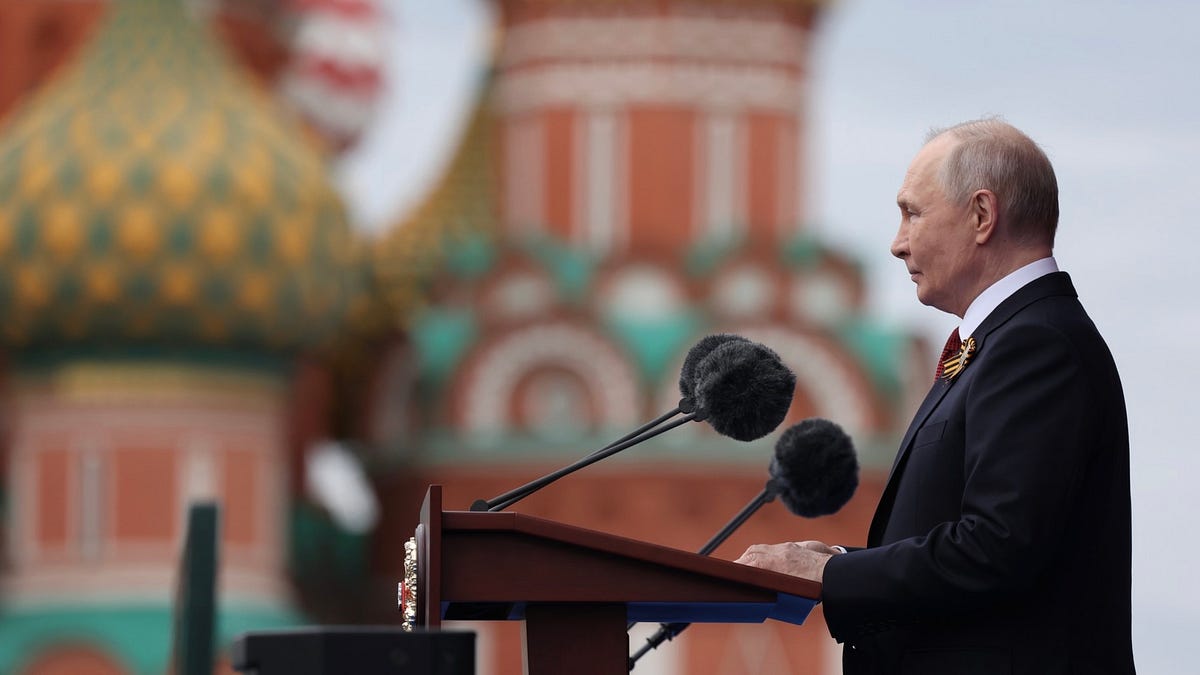
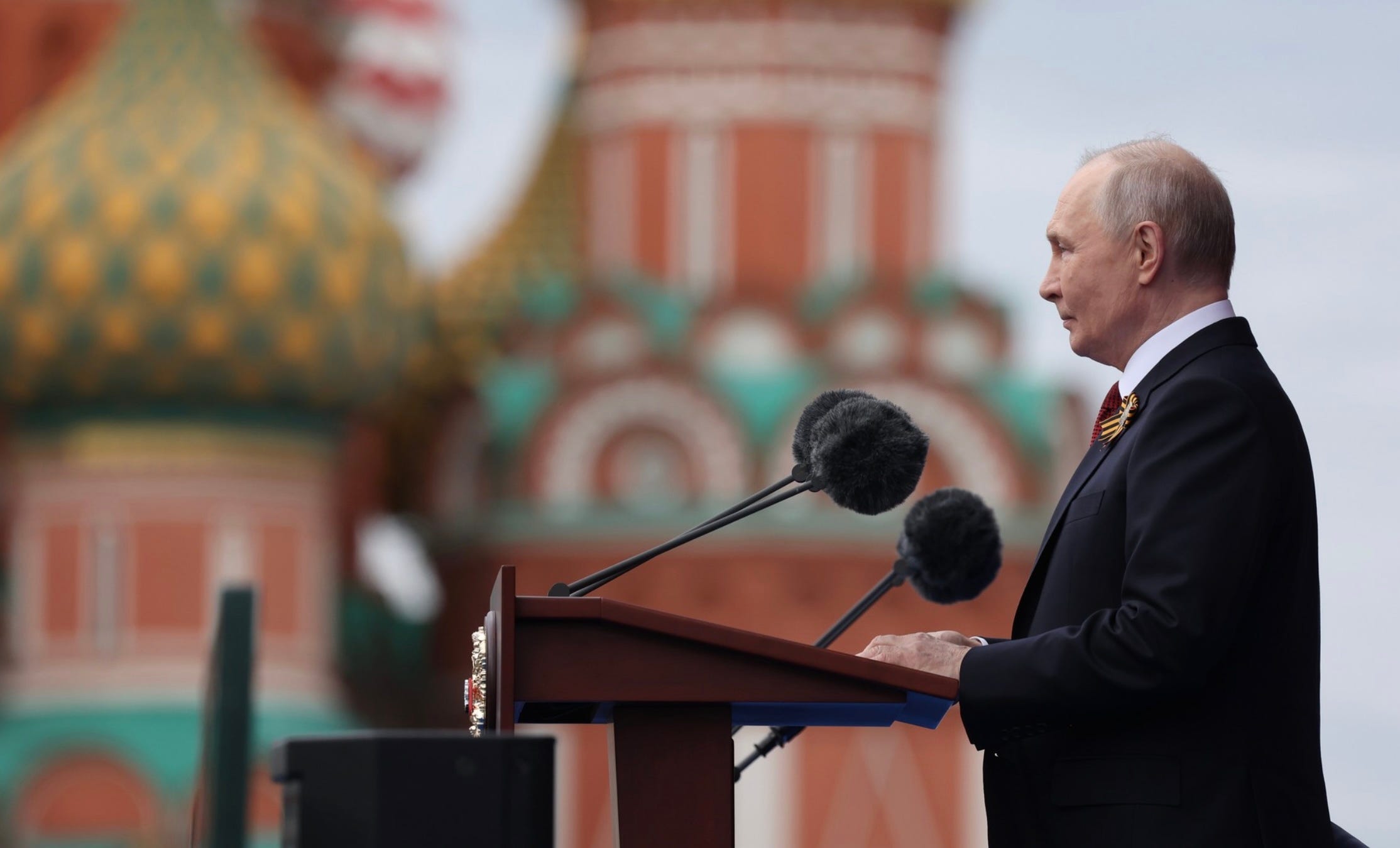
Over the years, however, VE Day evolved into something very different. Under Russian dictator Vladimir Putin, the commemoration increasingly became a ritual of state propaganda, intended to reinforce nationalism and legitimize his rule by appealing to past military glory. It has become customary to see columns of tanks, military equipment and even intercontinental ballistic missiles rolling down Tverskaya Street and into Red Square – a clear projection of Russian military power to the world. A few years ago on Substack, I wrote an essay explaining why I no longer celebrate this holiday. (Read it here.)
This year, however, something was different. For the first time in decades, tanks and other heavy military equipment did not pass through Red Square. It is difficult to celebrate the military victories of the past when your army is so underperforming today.
It is in this context that I published my Substack essay, Growing cracks in Putin’s dictatorship. In this article, I examine how the growing economic, social, and political costs of Putin’s war in Ukraine are generating increasingly visible signs of tension within Russia’s authoritarian system. This does not mean that Putin’s regime is on the verge of collapse; repression still works and the Russian state remains highly centralized and deeply coercive. It is also common knowledge that political change in autocracies is difficult to predict. But compared to four years ago, signs of dissatisfaction are now more visible among elites, pro-Kremlin commentators, military bloggers, economists and ordinary citizens. This is something I will be monitoring closely in the coming months.
Watch a video discussion of the ideas in this article here.
Trump in China
In 2025, as Russia marked the 80th anniversary of the Soviet victory over Nazi Germany, more than a dozen world leaders joined Putin in Red Square. Among them was Xi Jinping, chairman of the Chinese Communist Party, who occupied a prominent position to Putin’s right. The image was carefully choreographed: a public display of solidarity between the two leaders and a signal to the West about the deepening alignment between Moscow and Beijing.
This year, Xi was absent from Red Square, although Putin visited China on May 19 and 20 for talks with the Chinese leader. Notably – and this is no coincidence – the meeting took place just four days after the end of US President Donald Trump’s visit to Beijing.
Before Trump’s trip, I wrote a Substack essay called Détente 2.0: hoping for a boring summit in Beijing, in which I argued that Trump would arrive in China in a much weaker position than when he first visited Beijing as president in 2017. Some of the shifts in the balance of power in China’s favor can be attributed to Xi’s policies and China’s continued economic and military growth. But Trump’s actions themselves have also contributed to America’s relative decline.
In this essay, I argued that the best realistic outcome for the United States at this time might be a new détente with China—a new détente that would give America time to recover, rebuild, and renew itself. I also outlined a series of policy recommendations that future U.S. leaders will need to follow if the United States is to compete more effectively with China in the long term. Learn more about it here.
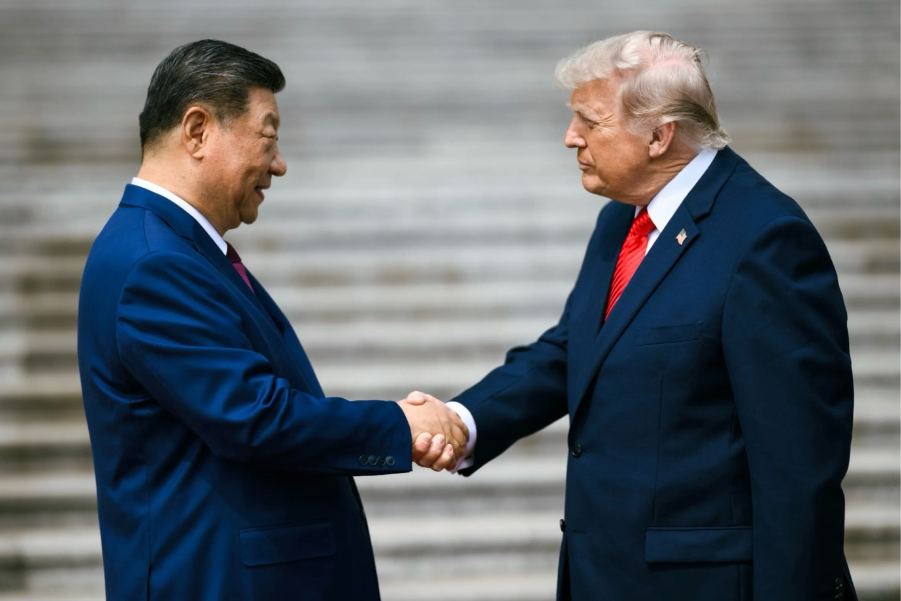
Ultimately, the Trump-Xi summit was heavy on pomp and light on substance. Sometimes in diplomacy – and especially in relationships between great power leaders – pomp and circumstance can yield concrete results that advance American national interests. But that didn’t happen in Beijing. As I wrote in my article, some economic and trade agreements were reportedly reached, but they were expected to be bigger.
More worrying were Trump’s comments on Taiwan, in which he stoked doubt about America’s commitment to defending the island. Asked whether he would follow through on his new arms sales to Taiwan, Trump hesitated, explaining that he had not yet made that decision and that the arms package was “a very good bargaining chip for us.” This is a disastrous policy change. These weapons strengthen deterrence and help maintain this peace. Treating these commitments as bargaining chips to secure unrelated concessions from Beijing would set a deeply troubling precedent, as I wrote in my article. Great discussions in Beijing, but few gains for America (yet).
If Trump hoped to get Xi’s help on his increasingly difficult foreign policy agenda — particularly the war in Iran and disrupting shipping in the Strait of Hormuz — he didn’t get it. Although Trump told Fox News that Xi promised to do “whatever he can to help,” Beijing offered no concrete public commitments following the summit. More broadly, this episode highlighted America’s weakened position. As I told Jen Psaki on MS nowthe very fact that the United States is now asking China to help reopen a strait that was functioning normally before Trump launched his war on Iran makes us look weak, not strong. I also criticized Trump’s incessant praise of Xi, calling him a “friend” and a “great leader.” This was not returned by XI. Again, as I told Ana Cabrera on MS nowthis asymmetry made Trump appear in a weakened position.
My visit to China
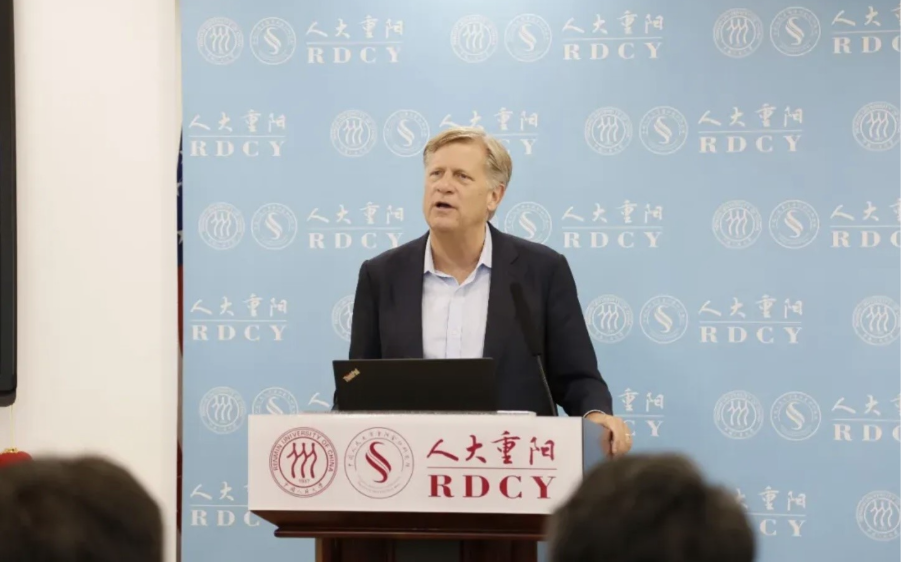
It wasn’t just Trump and Putin who visited China in May: I was also in Beijing to speak at a conference hosted by the Stanford Center at Peking University.
As I usually do when traveling to China, I also spoke at several universities and participated in a roundtable discussion with Chinese and American business leaders. In my latest Substack essay, I reflect on these conversations with academics, students, and businesspeople in China’s capital, as well as my broader impressions of the country. From AI to electric vehicles to Taiwan and great power competition, the trip challenged some of my assumptions and sharpened others. Read more in my Beijing trip report.
This month’s global events on great power relations echoed many of the themes I covered in my most recent book, Autocrats versus Democrats. Major summits between Xi, Trump and Putin this month in Beijing underscored that great-power relations will remain a major driver of international politics for decades to come. For my ideas on how the United States should deal with China and Russia more effectively than it does today, read the last three chapters of the book. I continue to give book talks, including at a fantasy book festival in Annapolis, Maryland, earlier this month. CSPAN Books filmed the event. You can watch it here.
That’s all for this month. Of course, I am monitoring developments in Iran as well as Ukraine and hope to write something on both topics soon.
As always, thank you for your continued engagement!
Microphone
|
Sources 2/ https://michaelmcfaul.substack.com/p/may-2026-newsletter-china-russia The mention sources can contact us to remove/changing this article |
What Are The Main Benefits Of Comparing Car Insurance Quotes Online
LOS ANGELES, CA / ACCESSWIRE / June 24, 2020, / Compare-autoinsurance.Org has launched a new blog post that presents the main benefits of comparing multiple car insurance quotes. For more info and free online quotes, please visit https://compare-autoinsurance.Org/the-advantages-of-comparing-prices-with-car-insurance-quotes-online/ The modern society has numerous technological advantages. One important advantage is the speed at which information is sent and received. With the help of the internet, the shopping habits of many persons have drastically changed. The car insurance industry hasn't remained untouched by these changes. On the internet, drivers can compare insurance prices and find out which sellers have the best offers. View photos The advantages of comparing online car insurance quotes are the following: Online quotes can be obtained from anywhere and at any time. Unlike physical insurance agencies, websites don't have a specific schedule and they are available at any time. Drivers that have busy working schedules, can compare quotes from anywhere and at any time, even at midnight. Multiple choices. Almost all insurance providers, no matter if they are well-known brands or just local insurers, have an online presence. Online quotes will allow policyholders the chance to discover multiple insurance companies and check their prices. Drivers are no longer required to get quotes from just a few known insurance companies. Also, local and regional insurers can provide lower insurance rates for the same services. Accurate insurance estimates. Online quotes can only be accurate if the customers provide accurate and real info about their car models and driving history. Lying about past driving incidents can make the price estimates to be lower, but when dealing with an insurance company lying to them is useless. Usually, insurance companies will do research about a potential customer before granting him coverage. Online quotes can be sorted easily. Although drivers are recommended to not choose a policy just based on its price, drivers can easily sort quotes by insurance price. Using brokerage websites will allow drivers to get quotes from multiple insurers, thus making the comparison faster and easier. For additional info, money-saving tips, and free car insurance quotes, visit https://compare-autoinsurance.Org/ Compare-autoinsurance.Org is an online provider of life, home, health, and auto insurance quotes. This website is unique because it does not simply stick to one kind of insurance provider, but brings the clients the best deals from many different online insurance carriers. In this way, clients have access to offers from multiple carriers all in one place: this website. On this site, customers have access to quotes for insurance plans from various agencies, such as local or nationwide agencies, brand names insurance companies, etc. "Online quotes can easily help drivers obtain better car insurance deals. All they have to do is to complete an online form with accurate and real info, then compare prices", said Russell Rabichev, Marketing Director of Internet Marketing Company. CONTACT: Company Name: Internet Marketing CompanyPerson for contact Name: Gurgu CPhone Number: (818) 359-3898Email: [email protected]: https://compare-autoinsurance.Org/ SOURCE: Compare-autoinsurance.Org View source version on accesswire.Com:https://www.Accesswire.Com/595055/What-Are-The-Main-Benefits-Of-Comparing-Car-Insurance-Quotes-Online View photos

 |
 |
 |