
Politics
China’s military command body issues rules that marginalize Xi Jinping’s authority

On May 27, Chinese state news agency Xinhua reported that the Central Military Commission (CMC), the Party-controlled body that commands China’s armed forces, had issued a document titled “Several Measures to Strengthen the Education, Management and Supervision of Senior Military Personnel.” The documentpublished in summary form only, covers 26 provisions across seven areas. Its stated goals include achieving “ideological rectification”, deepening “political training”, and establishing what it calls “iron rules” for strict education, strict management, and strict supervision of senior officers.
Among its stated priorities are: strengthening control over commanders, “strengthening the collective leadership of Party committees,” “maintaining cadre management and selection of Party personnel,” and “strengthening supervision and management of top leaders.”
The next day, May 28, the PLA Daily, China’s official military newspaper, published a front page editorial under the title “Establish ironclad rules to strictly strengthen the training, management and supervision of senior executives”.
PLA Daily abandoned Xi loyalty slogans in striking reversal
Tang Jingyuan, a US-based Chinese political commentator who closely follows CCP factional dynamics, drew a direct comparison between this May 28 PLA Daily editorial and one published seven weeks earlier, on April 9. On April 8, Xi personally attended and delivered a speech “Senior military personnel training class” held in Beijing, in what Tang called an attempt by Xi to use his official position as chairman of the CMC to reassert his personal control over the armed forces through legitimate channels. The subsequent April 9 PLA Daily editorial was saturated with the political vocabulary of Xi’s personal authority: the word “loyalty” appeared 32 times; “core” appeared five times; the editorial explicitly invoked the ideological formula “2-4-4-2,” a shorthand for four sets of Party slogans that Xi formulated. OBLIGATORY ; and he called on officers to respect the “CMC president’s accountability system” and “support the core.”
The editorial of May 28 contained none of this. The expressions “loyalty”, “core”, “CMC president accountability system” and “2-4-4-2” are completely absent. The Xinhua dispatch accompanying the directive once mentions “thoroughly implementing Xi Jinping Thought on strengthening the military,” a standard ritual phrase, but otherwise strips away any markers of personal loyalty that Xi’s apparatus typically demands.

Success
You are now subscribed to our newsletter
Success
Check your email to finalize your registration
The missing sentences indicate a factional struggle over who controls the army.
In the CCP’s political culture, “rectification campaigns” (zhengfeng) are not routine administrative exercises. Historically, they have been launched when senior leaders have failed to consolidate control, when internal divisions are contested, and when one side must impose loyalty on subordinates who have not yet chosen sides. A ruler who has already acquired unquestioned authority does not need a rectification campaign; rectification is the tool of a leader who is still fighting to achieve it. The new directive fits into this model. The emphasis on “collective leadership of Party committees” is particularly revealing. During periods when Xi was at his peak, official military communications instead referred to the “CMC chairman accountability system,” a formulation that focuses authority on Xi personally. The phrase “collective leadership” has been functionally suppressed in Xi-era military discourse precisely because it dilutes individual command authority. Its reappearance in a document released by the CMC is a deliberate reaffirmation by forces that want to prevent Xi from recentralizing his personal control.
The 26 provisions appear to be intended to set, through formal regulatory language, the rules governing how senior military officers, likely at the rank of major general and above, can be promoted, transferred, assigned duties and dismissed, so that no single leader can make these decisions unilaterally.
CCP elders operating through shadow council block Xi’s return to military control
Tang’s argument is that the directive did not come from Xi. Its real author, he claims, is a body known as the “Central Decision-Making Awareness and Coordination Mechanism,” an informal but authoritative council composed of senior CCP officials operating outside the formal Party structure. Tang views this body as the operational successor to Deng Xiaoping’s Central Advisory Commission, the vehicle through which Deng, after formally resigning from office, retained ultimate veto power over Party affairs and used it to remove two general secretaries, Hu Yaobang and Zhao Ziyang.
According to Tang, the coordination mechanism was established on July 1, 2025, with an explicit mandate to “deliberate on major affairs, discuss major issues, and supervise major decisions,” while also pledging to “coordinate without substitution and reach positions without overstepping.” Tang interprets this formulation as a division of authority: Xi manages the Party’s day-to-day operations, but all decisions of strategic importance require approval from the council of elders.
The Mechanism’s influence on military affairs is, at present, unusually direct. The CMC normally functions as a seven-member body. After the 2023-2024 wave of military purges, which swept away figures such as Zhang Youxia, the former vice chairman of the CMC, and Liu Zhenli, the former chief of staff of the Army’s Joint Staff Department, only two members remain: Xi himself and Zhang Shengmin, a CMC member responsible for overseeing discipline. With the corps thus depleted, the council of elders effectively holds a casting vote on all major military decisions, as there is no quorum of Xi loyalists to override it.
According to Tang, current military commanders are well aware that Xi wants to reassert his personal control and that this would likely mean purging officers who owed their positions to Zhang Youxia’s patronage network. Faced with this threat, they calculated that it was safer to align with the council of elders rather than Xi. The new directive is the institutional expression of this alignment: an attempt to formalize, in binding regulations, a system of collective decision-making that Xi cannot unilaterally dismantle.
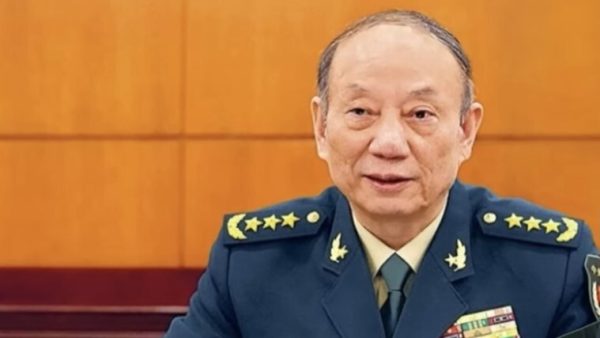
Xi is blocked through official channels, but extralegal steps remain possible
Tang’s conclusion is straightforward. Xi’s April 8 participation in the senior military cadre training class was an attempt to reassert his personal military authority through his formal institutional role. The response, a CMC directive that strips this role of its key prerogatives and buries the vocabulary of loyalty on which Xi depends, amounts to a formal rebuff delivered by the official state apparatus he nominally leads. Xi’s path to regain direct military command through institutional procedures is now closed.
Tang adds a qualification. Xi is not Hua Guofeng, the transitional leader who succeeded Mao Zedong and was removed from power through institutional maneuvering without serious resistance. Xi has shown a willingness to use surprise and force when institutions work against him, as demonstrated by the sudden expulsions of Zhang Youxia and Liu Zhenli. Tang does not rule out that Xi could act against the council of elders or individual military commanders through equally extralegal means.
|
Sources 2/ https://www.visiontimes.com/2026/06/01/chinas-military-command-body-issues-rules-that-sideline-xi-jinpings-authority.html The mention sources can contact us to remove/changing this article |
What Are The Main Benefits Of Comparing Car Insurance Quotes Online
LOS ANGELES, CA / ACCESSWIRE / June 24, 2020, / Compare-autoinsurance.Org has launched a new blog post that presents the main benefits of comparing multiple car insurance quotes. For more info and free online quotes, please visit https://compare-autoinsurance.Org/the-advantages-of-comparing-prices-with-car-insurance-quotes-online/ The modern society has numerous technological advantages. One important advantage is the speed at which information is sent and received. With the help of the internet, the shopping habits of many persons have drastically changed. The car insurance industry hasn't remained untouched by these changes. On the internet, drivers can compare insurance prices and find out which sellers have the best offers. View photos The advantages of comparing online car insurance quotes are the following: Online quotes can be obtained from anywhere and at any time. Unlike physical insurance agencies, websites don't have a specific schedule and they are available at any time. Drivers that have busy working schedules, can compare quotes from anywhere and at any time, even at midnight. Multiple choices. Almost all insurance providers, no matter if they are well-known brands or just local insurers, have an online presence. Online quotes will allow policyholders the chance to discover multiple insurance companies and check their prices. Drivers are no longer required to get quotes from just a few known insurance companies. Also, local and regional insurers can provide lower insurance rates for the same services. Accurate insurance estimates. Online quotes can only be accurate if the customers provide accurate and real info about their car models and driving history. Lying about past driving incidents can make the price estimates to be lower, but when dealing with an insurance company lying to them is useless. Usually, insurance companies will do research about a potential customer before granting him coverage. Online quotes can be sorted easily. Although drivers are recommended to not choose a policy just based on its price, drivers can easily sort quotes by insurance price. Using brokerage websites will allow drivers to get quotes from multiple insurers, thus making the comparison faster and easier. For additional info, money-saving tips, and free car insurance quotes, visit https://compare-autoinsurance.Org/ Compare-autoinsurance.Org is an online provider of life, home, health, and auto insurance quotes. This website is unique because it does not simply stick to one kind of insurance provider, but brings the clients the best deals from many different online insurance carriers. In this way, clients have access to offers from multiple carriers all in one place: this website. On this site, customers have access to quotes for insurance plans from various agencies, such as local or nationwide agencies, brand names insurance companies, etc. "Online quotes can easily help drivers obtain better car insurance deals. All they have to do is to complete an online form with accurate and real info, then compare prices", said Russell Rabichev, Marketing Director of Internet Marketing Company. CONTACT: Company Name: Internet Marketing CompanyPerson for contact Name: Gurgu CPhone Number: (818) 359-3898Email: [email protected]: https://compare-autoinsurance.Org/ SOURCE: Compare-autoinsurance.Org View source version on accesswire.Com:https://www.Accesswire.Com/595055/What-Are-The-Main-Benefits-Of-Comparing-Car-Insurance-Quotes-Online View photos

 |
 |
 |