
Politics
Xi closes the door after promising US CEOs to open more
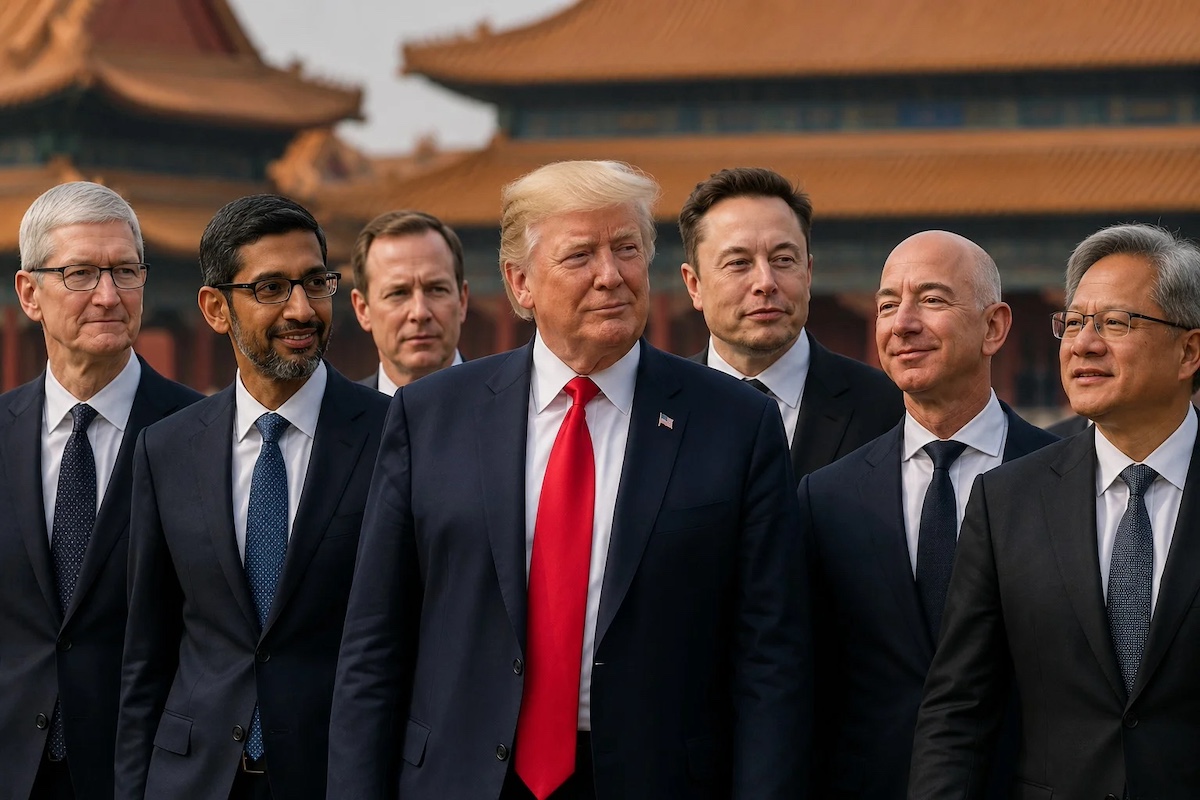
TOKYO — The billionaire CEOs who accompanied U.S. President Donald Trump to Beijing last month are probably feeling whiplash.
Part of this disorientation comes from Trump himself – a president who built two campaigns aimed at confronting China and who has since reconverted himself into an open admirer of Xi Jinping, oscillating between hard and soft positions with little warning.
But most acute is how quickly Xi’s promises have curdled. His assurances to Trump’s business entourage – that China “open wider” and offering American companies “broader perspectives” – these already sound like dispatches from another era. What was supposed to inspire Apple’s Tim Cook, Tesla’s Elon Musk, Nvidia’s Jensen Huang and the other titans of American business now looks like a fake.
The reality is that China is now imposing stricter controls on cross-border capitala siled AI sector and diminishing transparency. In other words, less openness, not more, as Xi promised his American guests.
It’s no wonder that Chinese markets are being left behind. The CSI 300 is on the rise only 7% this year, compared to a 108% increase in South Korea, 57% in Taiwan and 33% in Japan – even amid energy disruptions from the war in Iran.
It is far from certain that Xi’s decision to restrict overseas travel by Chinese AI experts will help the country capitalize on the ongoing global technology rally. The optics are particularly poor: Beijing is effectively putting a leash on its AI talents, echoing the Soviet-era practice of preventing academics, athletes and artists from straying abroad.
For the cohort of billionaires who accompanied US President Donald Trump to Beijing, it is a deflating turning point. Many returned hoping that AI cooperation could constitute a tangible economic victory from the Xi-Trump summit.
As longtime China watcher Bill Bishop notes, “the burst of positive energy among analysts after May’s Xi-Trump summit subsided somewhat toward the end of the month.”
On his way out of Beijing, Bishop writes, China’s consul general in New York, Huang Ping, framed the moment as “a narrow strategic window for China to engage different U.S. interest groups and secure a place in global AI governance and high-value industrial ecosystems.”
Team Xi now seems determined to build a new Great Wall around China’s AI sector. At the same time, Beijing is making it harder for retail investors to buy U.S. stocks, accelerating a broader shift toward tighter controls on where domestic capital can and cannot go. As Vey‑Sern Ling of Union Bancaire Privée notes, this “could potentially reduce funds for US-listed ADRs.”
The deeper problem lies in the message these measures send. The crackdown is “much more severe and systematic” than previous efforts, says Dan Wang, head of China analysis at Eurasia Group.
Henry Gao of the Singapore Management University adds that it is becoming “increasingly difficult for Chinese investors to invest abroad independent of state oversight”, a sign of Beijing’s growing concern over capital outflows and pressure on foreign exchange reserves.
This all sounds more like anxiety than confidence. China saw a record $1 trillion of capital outflows in 2025 – double the levels since 2021 and the largest annual outflow since data began in 2006. To stem even greater losses, Xi tolerated a much stronger yuan than currency traders expected. The yuan is already up more than 3% in 2026.
This is part of a broader, multi-pronged strategy. A stable or rising yuan serves three purposes. First, it reduces the risk of heavily indebted property developers defaulting on their offshore obligations.
Second, it supports Xi’s ambition to position the yuan as a credible reserve currency. Third, it lowers the temperature with the Trump White House, which remains highly sensitive to any signs that Beijing might weaken its currency to help exporters.
There are also fundamental arguments for a stronger yuan. “If Chinese domestic demand strengthens thanks to aggressive stimulus measures, the yuan carry trade will begin to ease as business confidence improves and the yield gap between the United States and China narrows,” notes economist Larry Hu of the Macquarie Group. “This would allow the yuan to appreciate more strongly against the dollar.”
Added to this is the budgetary mess in Washington, including a national debt that has reached $40,000 billion, or twice China’s annual gross domestic product. In other words, confidence in American politics is heading in the wrong direction.
“Since Donald Trump took office in early 2025, his administration’s economic policies in areas such as trade, energy security, climate change, financial/monetary stability, and international aid have together constituted a radical departure from the postwar economic consensus,” notes Chatham House economist Creon Butler. The “Trump shock,” he adds, is leading China to prepare “long-term resistance to certain critical international economic norms” that are evolving at an accelerating pace.
Many, of course, will counter that China, too, has made radical departures from global economic norms, including failing to fully commit to World Trade Organization rules since 2001. But, as Butler concludes, “China is far from the only country to behave this way, but as the second largest national economy after the United States, it has become a very disruptive influence.” »
Therefore, the news this week that gold has exceeds U.S. Treasury securities are the primary reserve asset held by central banks around the world. In a report released this week, the European Central Bank said that gold’s share of official foreign exchange reserves reached 27%, compared to 22% for US Treasuries.
As European Central Bank President Christine Lagarde noted in the report: “Fragmentation forces are increasingly pronounced. Geopolitical tensions continue to drive strong central bank demand for gold.”
Global inflation fears support gold in the near term. As HSBC analysts write in a report, Trump’s war in the Middle East is fueling a “super-restriction” on raw materials that will only intensify if the Strait of Hormuz remains closed. “The longer the strait is closed, the more stocks are depleted, the more likely we are to reach ‘tipping points’ in the markets for certain commodities,” notes HSBC.
Yet Xi’s recent policy shifts suggest the slow pace of major reforms is not picking up — despite the impression he made at Trump’s parade of CEOs last month.
When Xi officially took power in 2013, he pledged to let market forces play a “decisive” role in economic decision-making. Thirteen years later, he produced one of the most impactful economic split screens in modern history.
On the one hand, Made in China 2025 agenda generates real technological victories: champion of BYD electric vehicles surpassing Tesla in global sales and AI newcomer DeepSeek is shaking up Silicon Valley. On the other hand, Xi’s ambitions for global technological leadership are undermined by a fragile financial system that cannot support the weight of these aspirations.
“China manifests a striking paradox,” says economist Keyu Jin of the Hong Kong University of Science and Technology. “It is one of the world’s most dynamic technology powers, producing breakthroughs in AI, electric vehicles and advanced manufacturing at an accelerating pace, but economic growth continues to slow. The reason is no mystery. As the government’s latest five-year plan recognizes, China is experiencing a structural transition, not a cyclical slowdown. The old model is giving way to a new one, which has yet to take root.”
China’s growth engine is weakened by powerful domestic headwinds, including a still deeply disrupted real estate sector. With around 70% of household wealth linked to real estate, market stabilization is essential to revive consumer spending and maintain 5% growth.
Without bold, credible action to put a floor on housing and give 1.4 billion people reason to be optimistic, the “deflationary spirit” weighing on the economy will continue to fester.
Beijing also faces a long list of urgent structural tasks: building more vibrant capital markets, reducing youth unemployment, tackling runaway local government debt, curbing the dominance of state-owned enterprises and improving transparency.
Team Xi must expand social safety nets to encourage households to shift from saving to consuming. It must also grant the People’s Bank of China greater independence and move toward a fully convertible yuan — steps long seen as a prerequisite for a modern, resilient economy.
Yet Xi’s actions over the past month suggest a focus on symptoms rather than causes. If a sweeping crackdown on offshore trading platforms is truly necessary, regulators must explain why – and reassure global investors that the Communist Party has learned the lessons of the past five years.
For many global funds, the onslaught of internet platforms at the end of 2020 – starting with the co-founder of Alibaba Jack Mom — still lacks coherent justification. These unresolved questions now weigh on Xi’s new limits on cross-border capital flows and the freedom of movement of AI engineers.
More control and less openness are difficult to reconcile with what Xi promised at Trump’s CEO meeting in Beijing.
Follow William Pesek on X at @WilliamPesek
|
Sources 2/ https://asiatimes.com/2026/06/xi-closes-the-door-after-promising-us-ceos-to-open-wider/ The mention sources can contact us to remove/changing this article |
What Are The Main Benefits Of Comparing Car Insurance Quotes Online
LOS ANGELES, CA / ACCESSWIRE / June 24, 2020, / Compare-autoinsurance.Org has launched a new blog post that presents the main benefits of comparing multiple car insurance quotes. For more info and free online quotes, please visit https://compare-autoinsurance.Org/the-advantages-of-comparing-prices-with-car-insurance-quotes-online/ The modern society has numerous technological advantages. One important advantage is the speed at which information is sent and received. With the help of the internet, the shopping habits of many persons have drastically changed. The car insurance industry hasn't remained untouched by these changes. On the internet, drivers can compare insurance prices and find out which sellers have the best offers. View photos The advantages of comparing online car insurance quotes are the following: Online quotes can be obtained from anywhere and at any time. Unlike physical insurance agencies, websites don't have a specific schedule and they are available at any time. Drivers that have busy working schedules, can compare quotes from anywhere and at any time, even at midnight. Multiple choices. Almost all insurance providers, no matter if they are well-known brands or just local insurers, have an online presence. Online quotes will allow policyholders the chance to discover multiple insurance companies and check their prices. Drivers are no longer required to get quotes from just a few known insurance companies. Also, local and regional insurers can provide lower insurance rates for the same services. Accurate insurance estimates. Online quotes can only be accurate if the customers provide accurate and real info about their car models and driving history. Lying about past driving incidents can make the price estimates to be lower, but when dealing with an insurance company lying to them is useless. Usually, insurance companies will do research about a potential customer before granting him coverage. Online quotes can be sorted easily. Although drivers are recommended to not choose a policy just based on its price, drivers can easily sort quotes by insurance price. Using brokerage websites will allow drivers to get quotes from multiple insurers, thus making the comparison faster and easier. For additional info, money-saving tips, and free car insurance quotes, visit https://compare-autoinsurance.Org/ Compare-autoinsurance.Org is an online provider of life, home, health, and auto insurance quotes. This website is unique because it does not simply stick to one kind of insurance provider, but brings the clients the best deals from many different online insurance carriers. In this way, clients have access to offers from multiple carriers all in one place: this website. On this site, customers have access to quotes for insurance plans from various agencies, such as local or nationwide agencies, brand names insurance companies, etc. "Online quotes can easily help drivers obtain better car insurance deals. All they have to do is to complete an online form with accurate and real info, then compare prices", said Russell Rabichev, Marketing Director of Internet Marketing Company. CONTACT: Company Name: Internet Marketing CompanyPerson for contact Name: Gurgu CPhone Number: (818) 359-3898Email: [email protected]: https://compare-autoinsurance.Org/ SOURCE: Compare-autoinsurance.Org View source version on accesswire.Com:https://www.Accesswire.Com/595055/What-Are-The-Main-Benefits-Of-Comparing-Car-Insurance-Quotes-Online View photos

 |
 |
 |