
Politics
Sixth in ten years: Will Burnham be able to reverse the trend of Prime Ministers?
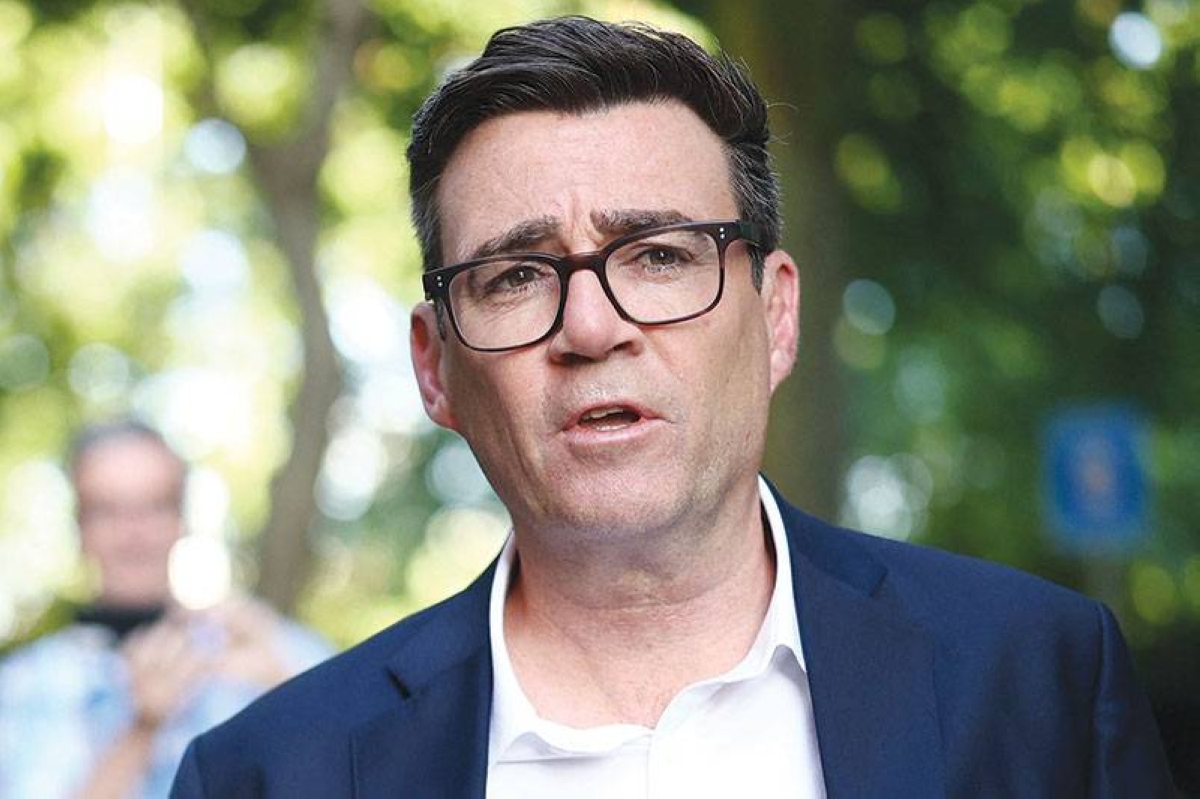
Labor MP and challenger to Labor Party leader Andy Burnham. (AFP)
 Barring unforeseen circumstances, Andy Burnham will become Prime Minister on July 20, almost ten years to the day since Theresa May became the first head of government of the Brexit era on July 13, 2016. Remarkably, Burnham will become the sixth British Prime Minister in ten years, or indeed the fourth in four years since Boris Johnson was forced to leave office in the summer of 2022. is unprecedented in modern British political history and demonstrates how the last decade has been disruptive.
David Cameron announced in January 2013 his intention to hold a referendum on Britain’s membership of the European Union if the Conservatives won the next general election, which took place in May 2015.
The vote took place on June 23, 2016 and, to Cameron’s surprise, resulted in a 52–48% decision to leave the EU. Cameron resigned as prime minister the day after the referendum, choosing to walk away from the issue that will forever define his political legacy that has eclipsed most of his six successors at 10 Downing Street.
The fact that the question on the ballot paper was framed solely as a question of whether Britain should leave or remain in the EU meant that no direction was given as to the details of how and when this should happen, causing chaos for years.
Brexit finally happened on January 31, 2020, under Johnson, but it was followed almost immediately by the Covid-19 pandemic, which ultimately contributed to Johnson’s political loss two years later. While Johnson and May had each served three years as prime minister, their successors’ tenure was even shorter: a historic 49 days for Liz Truss, 20 months for Rishi Sunak and just over two years for Keir Starmer. Not since 1922-24, when Andrew Bonar Law, Stanley Baldwin and Ramsay MacDonald each held the office of prime minister for less than a year, has there been such rapid change at the top of the British political tree. The era when Britain had a total of three prime ministers – Margaret Thatcher, John Major and Tony Blair – in 28 years, from 1979 to 2007, seems unimaginable just twenty years later.
It is now up to Burnham, who must hold a general election by July 2029 at the latest, to see if he can turn the tide and restore some stability to British politics. Burnham is an experienced politician who served in the House of Commons from 2001 to 2017 and was a junior minister under Tony Blair and a Cabinet member in Gordon Brown’s government. Burnham left Westminster in 2017 and became elected mayor of Greater Manchester, a position he held until returning to Parliament last month. He thus missed the infighting within the Labor Party during and after Jeremy Corbyn’s leadership and performed well in his job, presenting himself as a credible Northern alternative to his London counterparts.
To some extent, Burnham followed the path set by Boris Johnson, who was also elected to the House of Commons in 2001, the year of Tony Blair’s second landslide victory. Johnson resigned from Parliament in 2008 when he was elected mayor of London and served two terms before returning to Westminster in 2015. Just as Burnham did in Manchester, Johnson used his time leading a major city to build a reputation as an effective governor. Their shared experience shows how there are multiple paths to the top, particularly in an era of decentralized government where more powers are delegated to regional authorities.
As prime minister, Burnham will inherit a difficult set of tasks, including restoring the credibility and direction of a Labor government that won a large majority just two years ago but was adrift under Starmer. Although Starmer came to politics after a distinguished career in the legal profession, which included five years as Director of Public Prosecutions, his tenure as Prime Minister was marred by a series of policy failures that made him deeply unpopular with the public and ineffective within his own party. Burnham will need to restore a sense of party management if he is to energize a government that already appears exhausted and out of ideas just two years after coming to power.
Once in government, Burnham will also need to focus on the political threat posed by Nigel Farage and Reform UK. This is not only a threat to Labor, but also an existential challenge to the Conservative Party, which was reduced to winning 2.2% of the vote in the Makerfield by-election that returned Burnham to the House of Commons. The focus on Reform UK from both left and right may increase as the next general election approaches, as Labor and the Conservatives seek to prevent a further decline in support for reform.
One of Burnham’s main calling cards in office has been his ability to meet and defeat the Reform challenge at Makerfield by increasing Labor’s vote share from 45% in 2024 to 54% and winning by 20 percentage points.
Changes in leadership mid-parliament rarely work as planned because they mean something is wrong within the ruling party. James Callaghan, who succeeded Harold Wilson in 1976, and Gordon Brown, who replaced Blair in 2007, lost the next general election, after which Labor remained out of power for 18 and 14 years respectively.
Burnham hopes to avoid the fate of his two predecessors as Labor prime minister and replicate that of Johnson, who replaced Theresa May two years into the 2017 parliament and called a snap election in December 2019 which he won easily.
At the very least, Burnham appears to possess the political skills that Starmer so lacked, which could give him an early lead in opinion polls as he settles into life as Britain’s next prime minister.
- The author is a leading scholar of Gulf politics and international political economy, and a fellow of the Baker Institute and co-director of the Middle East Energy Roundtable.
|
Sources 2/ https://www.gulf-times.com/article/728702/opinion/sixth-in-ten-years-will-burnham-be-able-to-buck-the-trend-for-pms The mention sources can contact us to remove/changing this article |
What Are The Main Benefits Of Comparing Car Insurance Quotes Online
LOS ANGELES, CA / ACCESSWIRE / June 24, 2020, / Compare-autoinsurance.Org has launched a new blog post that presents the main benefits of comparing multiple car insurance quotes. For more info and free online quotes, please visit https://compare-autoinsurance.Org/the-advantages-of-comparing-prices-with-car-insurance-quotes-online/ The modern society has numerous technological advantages. One important advantage is the speed at which information is sent and received. With the help of the internet, the shopping habits of many persons have drastically changed. The car insurance industry hasn't remained untouched by these changes. On the internet, drivers can compare insurance prices and find out which sellers have the best offers. View photos The advantages of comparing online car insurance quotes are the following: Online quotes can be obtained from anywhere and at any time. Unlike physical insurance agencies, websites don't have a specific schedule and they are available at any time. Drivers that have busy working schedules, can compare quotes from anywhere and at any time, even at midnight. Multiple choices. Almost all insurance providers, no matter if they are well-known brands or just local insurers, have an online presence. Online quotes will allow policyholders the chance to discover multiple insurance companies and check their prices. Drivers are no longer required to get quotes from just a few known insurance companies. Also, local and regional insurers can provide lower insurance rates for the same services. Accurate insurance estimates. Online quotes can only be accurate if the customers provide accurate and real info about their car models and driving history. Lying about past driving incidents can make the price estimates to be lower, but when dealing with an insurance company lying to them is useless. Usually, insurance companies will do research about a potential customer before granting him coverage. Online quotes can be sorted easily. Although drivers are recommended to not choose a policy just based on its price, drivers can easily sort quotes by insurance price. Using brokerage websites will allow drivers to get quotes from multiple insurers, thus making the comparison faster and easier. For additional info, money-saving tips, and free car insurance quotes, visit https://compare-autoinsurance.Org/ Compare-autoinsurance.Org is an online provider of life, home, health, and auto insurance quotes. This website is unique because it does not simply stick to one kind of insurance provider, but brings the clients the best deals from many different online insurance carriers. In this way, clients have access to offers from multiple carriers all in one place: this website. On this site, customers have access to quotes for insurance plans from various agencies, such as local or nationwide agencies, brand names insurance companies, etc. "Online quotes can easily help drivers obtain better car insurance deals. All they have to do is to complete an online form with accurate and real info, then compare prices", said Russell Rabichev, Marketing Director of Internet Marketing Company. CONTACT: Company Name: Internet Marketing CompanyPerson for contact Name: Gurgu CPhone Number: (818) 359-3898Email: [email protected]: https://compare-autoinsurance.Org/ SOURCE: Compare-autoinsurance.Org View source version on accesswire.Com:https://www.Accesswire.Com/595055/What-Are-The-Main-Benefits-Of-Comparing-Car-Insurance-Quotes-Online View photos

 |
 |
 |