
International
The rise of urban swimming in the United States
Published on May 27, 2026 at 3:15 a.m.
Last summer at the Chicago River Swim, the first in a century on this iconic waterway of stunning skyscrapers and ornate drawbridges, swimmers were captivated by one of the joys of urban swimming: a unique perspective of the city, from the water.
“There were guys who said, ‘I came to be competitive and I ended up sightseeing,’” says founder and organizer Doug McConnell.
From Chicago to New York, Baltimore to Portland, swimmers across America are turning to urban waterways, expanding public access to rivers and harbors through open-water swim races, water parties on piers, permanent swimming beaches and even plans for a floating river pool off the coast of Manhattan.
It’s a movement decades in the making, as anti-pollution laws and billions spent to renovate sewer systems and clean up contaminated riverbeds have made waterways safe for swimming again. It has been bolstered more recently by the growing popularity of open water swimming, inspired by everything from the Olympic debut of a 10k swim in 2008 to the current wellness trend of cold water immersion.
Today, urban swimming advocates benefit from the support of Swimmable Cities, a global grassroots movement created in 2024 that defends the right to swim in urban waterways. The alliance highlights more than 200 member organizations from more than 100 municipalities that have found creative ways to get people safely into municipal waters, and it inspires others to take on the challenge.
“The trajectory we’re on is that swimming will become a major part of urban planning and integrated water management,” says Matthew Sykes, co-founder of Swimmable Cities, which plans to choose a North American city for its next summit in 2027.
“Canada, the United States, Mexico: I think those are all places where we’re going to see a lot of growth,” Sykes says. “There’s the sporting part of this community, but I think the biggest growth comes from everyday people just wanting access to their waters.”
Olympian Olivia Smoliga finished first in the one-mile Chicago River Swim in 2025. (Photo: Chris Costoso)
To be sure, many U.S. rivers and streams remain unsafe for swimming, and those deemed safe may still be marred by sewer overflows or harmful runoff after rains, and swimmers may face hazards from currents and debris. Then there are the bureaucratic obstacles to lifting the swimming bans. And open water swimming may not be a struggling city’s top fundraising prospect.
The biggest obstacle in McConnell’s 13-year quest to put swimmers in the Chicago River was the long-held idea that the river was a toxic soup. “A lot of the problems that these urban swims have faced, not just in Chicago but elsewhere, is not so much that the water is not clean, but rather that people’s perception is that the water is not clean,” McConnell says.
In the weeks leading up to the one-mile and two-mile swims last September, all 72 water tests showed “solidly in the green zone” for safe swimming, says McConnell, who is organizing the event through his family’s nonprofit, A Long Swim, which supports ALS research. The second swim is planned for September 20, with a target of 750 places, compared to 500 previously.
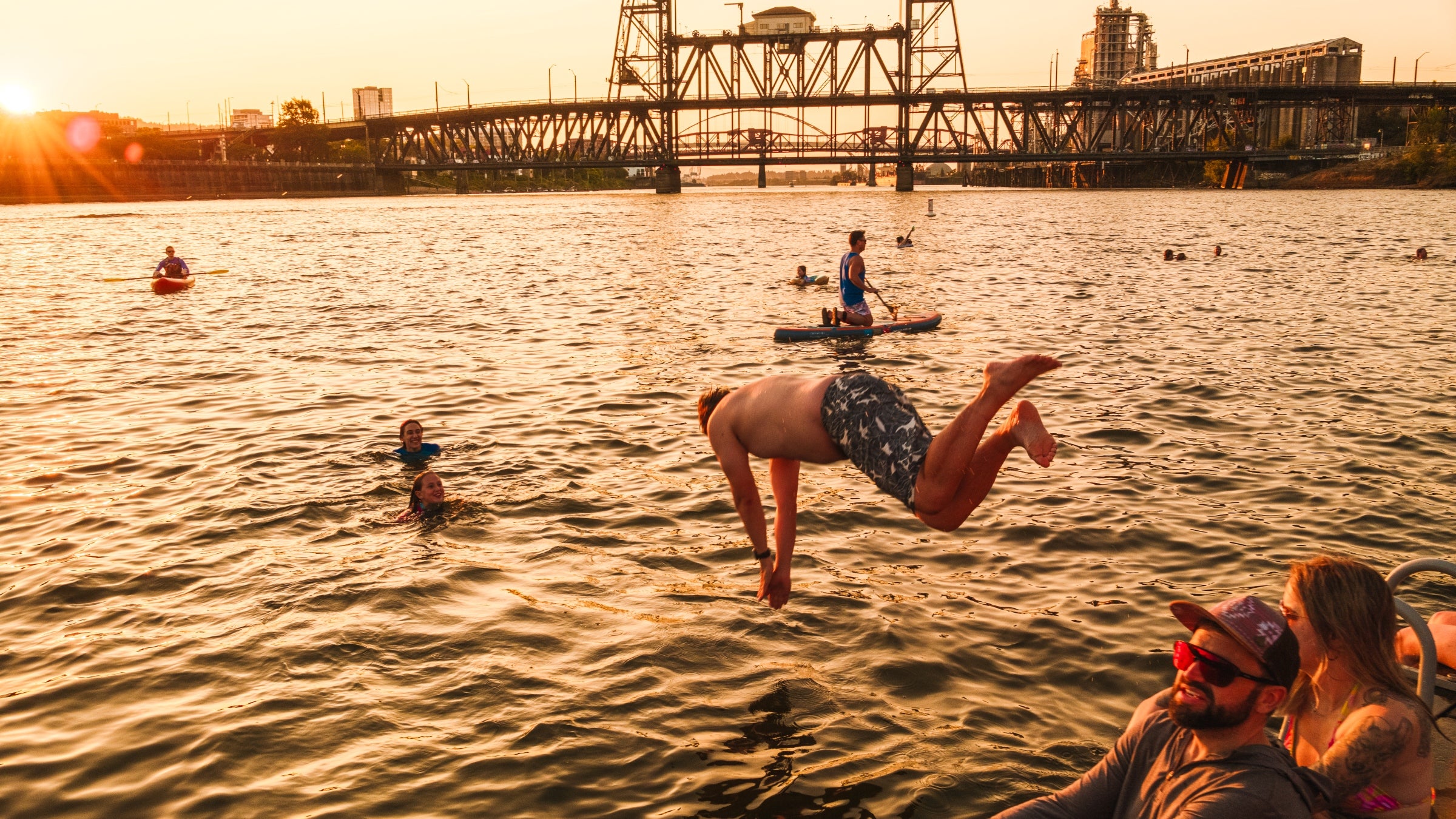
While Chicago Swimming opened access once a year, the Human Access Project (HAP) in Portland, Oregon, has paved the way for permanent access to seven beaches and two piers on the Willamette River since its founding in 2010, with another beach opening this year.
A two-decade, $1.4 billion renovation of the city’s stormwater and wastewater treatment system, completed in 2011, helped clean up the river. HAP and its volunteers removed more than 500 tons of concrete from the river and its banks, explains its executive director, Scott Fogarty.
Now it weighs on Superfund’s pending cleanup of the riverbed, mostly downstream from swimming sites, and adds more evening Splashdown parties and a second weekday Huggers Willamette River crossing.
“We like to say it’s activism disguised as a party,” Fogarty says. “We’re looking at not only greater access, but also more open water swimming in the future. »
The Human Access Project (HAP) transformed the Kevin Duckworth Memorial Dock in Portland, Oregon, into a non-motorized urban swimming pool. (Photo: Dustin Pattison)
In Baltimore, ultramarathon swimmer Katie Pumphrey uses the sport to draw people to the harbor. This year, she launched Baltimore Open Water Swimmers with plans for a one-mile swim this summer in the harbor and, possibly, another in the fall that replicates her famous 24-mile swim in 2024, crossing the Chesapeake Bay to Baltimore’s Inner Harbor.
People tend to ignore environmental progress, but regularly seeing swimmers in the harbor resonates emotionally and even pushes people to try it themselves, she says. It will also partner with learn-to-swim programs.
Pumphrey has the support of Baltimore’s Waterfront Partnership, a nonprofit group that set a goal in 2010 to make the harbor safe for swimming. The water was safe enough for public swimming in 2024, after the city spent more than $1 billion on sewer improvements, said partnership vice president Adam Lindquist. Next, the group plans to hold more summer Harbor Splash events and survey sites for a permanent swim site.
“I hope Baltimore will have better access to recreation,” Pumphrey says, “making sure it’s open and accessible to everyone.”
New York City is eliminating the risk of river swimming with its proposed floating pool in the East River near the Manhattan Bridge. Over the past decade, the +POOL initiative has gathered public and government support for free and safe access to the river through the concept of a plus-sign-shaped swimming pool with filtered river water flowing through its walls.
Kara Meyer, executive director of +POOL, expects a smaller pilot pool to be tested off Pier 35 this summer and open to swimmers in 2027.
There’s no specific date for when +POOL will open, but the organization has already achieved another first: establishing a regulatory pathway for other organizations seeking approval for what the state calls new swimming facilities, such as a swimming beach next to a park.
Swimming groups have been organizing special swims around Manhattan or the Statue of Liberty for years, but Meyer says about 500 of New York’s 520 miles of waterfront (aside from designated beaches like Coney Island in Brooklyn) are not classified for swimming.
“We’re really proud of this policy work and we hope other people benefit from it,” Meyer says. “We have a vision that people across New York City access their waters safely.”
Patrick Scott is a Denver-based travel writer who has swum the Nile, Ganges, Mekong and Rhine Rivers, and now frequents 10K swims in the tropics. His adventure stories, often involving water in Southeast Asia and the Middle East, have been published in The New York Times, The Wall Street Journal and others.
This article is from the Summer 2026 issue of Outside magazine. To receive the print magazine, become an Outside+ member here.
|
Sources 2/ https://www.outsideonline.com/adventure-travel/destinations/north-america/city-swimming-urban-rivers/ The mention sources can contact us to remove/changing this article |
What Are The Main Benefits Of Comparing Car Insurance Quotes Online
LOS ANGELES, CA / ACCESSWIRE / June 24, 2020, / Compare-autoinsurance.Org has launched a new blog post that presents the main benefits of comparing multiple car insurance quotes. For more info and free online quotes, please visit https://compare-autoinsurance.Org/the-advantages-of-comparing-prices-with-car-insurance-quotes-online/ The modern society has numerous technological advantages. One important advantage is the speed at which information is sent and received. With the help of the internet, the shopping habits of many persons have drastically changed. The car insurance industry hasn't remained untouched by these changes. On the internet, drivers can compare insurance prices and find out which sellers have the best offers. View photos The advantages of comparing online car insurance quotes are the following: Online quotes can be obtained from anywhere and at any time. Unlike physical insurance agencies, websites don't have a specific schedule and they are available at any time. Drivers that have busy working schedules, can compare quotes from anywhere and at any time, even at midnight. Multiple choices. Almost all insurance providers, no matter if they are well-known brands or just local insurers, have an online presence. Online quotes will allow policyholders the chance to discover multiple insurance companies and check their prices. Drivers are no longer required to get quotes from just a few known insurance companies. Also, local and regional insurers can provide lower insurance rates for the same services. Accurate insurance estimates. Online quotes can only be accurate if the customers provide accurate and real info about their car models and driving history. Lying about past driving incidents can make the price estimates to be lower, but when dealing with an insurance company lying to them is useless. Usually, insurance companies will do research about a potential customer before granting him coverage. Online quotes can be sorted easily. Although drivers are recommended to not choose a policy just based on its price, drivers can easily sort quotes by insurance price. Using brokerage websites will allow drivers to get quotes from multiple insurers, thus making the comparison faster and easier. For additional info, money-saving tips, and free car insurance quotes, visit https://compare-autoinsurance.Org/ Compare-autoinsurance.Org is an online provider of life, home, health, and auto insurance quotes. This website is unique because it does not simply stick to one kind of insurance provider, but brings the clients the best deals from many different online insurance carriers. In this way, clients have access to offers from multiple carriers all in one place: this website. On this site, customers have access to quotes for insurance plans from various agencies, such as local or nationwide agencies, brand names insurance companies, etc. "Online quotes can easily help drivers obtain better car insurance deals. All they have to do is to complete an online form with accurate and real info, then compare prices", said Russell Rabichev, Marketing Director of Internet Marketing Company. CONTACT: Company Name: Internet Marketing CompanyPerson for contact Name: Gurgu CPhone Number: (818) 359-3898Email: [email protected]: https://compare-autoinsurance.Org/ SOURCE: Compare-autoinsurance.Org View source version on accesswire.Com:https://www.Accesswire.Com/595055/What-Are-The-Main-Benefits-Of-Comparing-Car-Insurance-Quotes-Online View photos

 |
 |
 |