
International
A call for inclusive health at the 79th World Health Assembly
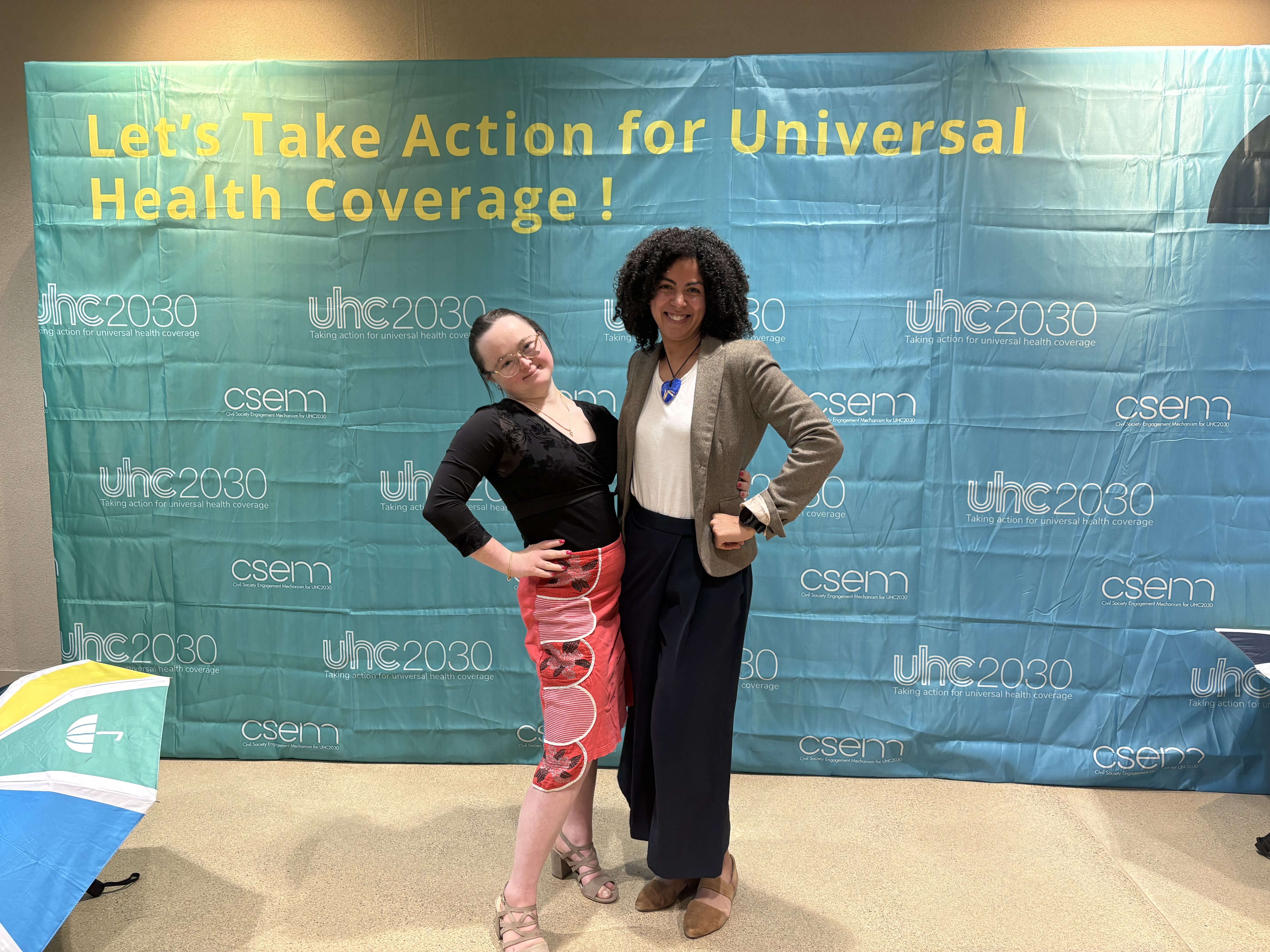
Pearl Lüthy (left), International Down Syndrome Ambassador, Insieme21 Self-Advocate, Special Olympics Switzerland Athlete and World Winter Games Switzerland 2029 Athlete Ambassador, and Anjela Jenkins, Special Olympics Senior Director, Global Inclusive Health Advocacy (right), pose after a presentation at a side event at the World Health Assembly.
Each year at the World Health Assembly, the World Health Organization (WHO) brings together delegations from 194 Member States to discuss the state of global health policy and goals for the future, working towards better health and well-being for all.
This year, as leaders gathered for the 79th edition of the event to propose solutions for greater health equity, the health of people with intellectual and developmental disabilities was an area of focus. This effort was led in part by Anjela Jenkins, senior director of global advocacy for inclusive health, as part of Special Olympics’ participation in the WHO Health Equity Network for People with Disabilities. Special Olympics Switzerland athlete Pearl Lüthy presented her role as an international Down syndrome ambassador and self-advocate with Insieme21, alongside representatives from WHO, the International Cerebral Palsy Society, the International Consortium on Disability and Development, the Disability Rights India Foundation and others, at a side event titled “Connecting for Change: Integrating Disability Equity into Programming Global Health Initiatives” organized by the Civil Society Engagement Mechanism for UHC2030.
The session highlighted the vital importance of inclusive health and the need for health systems and partner organizations to work in tandem to advocate for and implement the changes needed to make health systems more inclusive for people with disabilities.
The session was highlighted by Pearl’s powerful remarks, which reflected her lived experiences with access to health care, particularly her interactions with doctors as a person with intellectual and developmental disabilities.
Reflecting on a particularly upsetting experience, in which lack of communication and lack of bedside manner left her feeling isolated, Pearl shared, “I was very sick and exhausted for a few weeks, and my parents took me to the hospital to find out what was wrong. After a few hours and many blood tests, a nurse came and lifted up my hospital gown and gave me an injection in my stomach. When my parents asked what was going on, the nurse didn’t give any information and said this would be my life now and we should all get used to it.”
29%
of participants with Down syndrome said doctors spoke to them in a way they could understand
38%
said doctors were helpful, for example by allowing more time during appointments or using simpler language.
52%
of people with intellectual or developmental disabilities surveyed said they always understood their health care provider.
Pearl’s experience of discomfort and distrust of health care providers reflects the many experiences that people with intellectual and developmental disabilities face when interacting with health care workers who are ill-equipped to communicate with these patients and provide them with appropriate care. Citing a report from Down Syndrome International, Pearl said only 29 percent of participants with Down syndrome said doctors spoke to them in a way they could understand, and only 38 percent said doctors were helpful, such as giving them more time during appointments or using simpler language. These findings echo those presented in the Special Olympics Global Health Report: Focusing on the Invisible, which found that only 52% of people with intellectual or developmental disabilities surveyed said they always understood their health care provider.
Reflecting on these statistics and her own experience, Pearl offered the following call to action: “Healthcare workers – doctors and nurses – need to learn how to talk to people with disabilities. They need to use words that are easy to understand. They need to give us more time. They need to ask us, not the person next to us. And in my experience, they need to ask us before they do anything to our bodies.”
Anjela Jenkins (far left) and Pearl Lüthy (third from left) appear on the panel “Connecting for Change: Integrating Disability Equity Across Global Health Agendas.”
Photo by Daphné Visser, Liliane Fonds
Beyond her personal experiences, Pearl also emphasized the importance of ensuring that people with disabilities have a seat at the table in all health policy discussions. By sharing their lived experiences, they can help shape policies and practices that influence their health and ultimately improve daily care. “When you make a plan for health, ask us. When you write policy, ask us. When you decide what training health workers need, ask us. There’s a saying we use a lot: ‘Nothing about us without us.’ It’s simple. If you’re making decisions about our health, we should be in the room.
Anjela Jenkins built on Pearl’s remarks by highlighting the work of the Disability Health Equity Network (DHEN) to raise awareness of the health inequities faced by people with disabilities in global health systems and to translate that awareness into coordinated advocacy efforts that lead to lasting policy and systems change. The DHEN was launched in November 2025 with 31 member states, 13 intergovernmental organizations, 72 civil society organizations, 32 academic entities, and four private sector organizations, all working toward a common goal of health equity for people with disabilities globally.
Jenkins chairs the network’s second line of work, which aims to make health equity for people with disabilities a health policy priority, which includes ensuring that world leaders recognize the importance of inclusive health in the broader global health agenda.
The inclusion of this session alongside the World Health Assembly, along with the participation of 152 stakeholders, marks an important step towards inclusive health. However, as Pearl pointed out, there is still a long way to go to ensure that health systems are truly inclusive for all, regardless of disability.
“If no one asks me, I’m not in my own health care,” Pearl said. “It’s not health for everyone. It’s just health for some people.”
|
Sources 2/ https://www.specialolympics.org/stories/athletes/nothing-about-us-without-us-a-call-for-inclusive-health-at-the-79th-world-health-assembly The mention sources can contact us to remove/changing this article |
What Are The Main Benefits Of Comparing Car Insurance Quotes Online
LOS ANGELES, CA / ACCESSWIRE / June 24, 2020, / Compare-autoinsurance.Org has launched a new blog post that presents the main benefits of comparing multiple car insurance quotes. For more info and free online quotes, please visit https://compare-autoinsurance.Org/the-advantages-of-comparing-prices-with-car-insurance-quotes-online/ The modern society has numerous technological advantages. One important advantage is the speed at which information is sent and received. With the help of the internet, the shopping habits of many persons have drastically changed. The car insurance industry hasn't remained untouched by these changes. On the internet, drivers can compare insurance prices and find out which sellers have the best offers. View photos The advantages of comparing online car insurance quotes are the following: Online quotes can be obtained from anywhere and at any time. Unlike physical insurance agencies, websites don't have a specific schedule and they are available at any time. Drivers that have busy working schedules, can compare quotes from anywhere and at any time, even at midnight. Multiple choices. Almost all insurance providers, no matter if they are well-known brands or just local insurers, have an online presence. Online quotes will allow policyholders the chance to discover multiple insurance companies and check their prices. Drivers are no longer required to get quotes from just a few known insurance companies. Also, local and regional insurers can provide lower insurance rates for the same services. Accurate insurance estimates. Online quotes can only be accurate if the customers provide accurate and real info about their car models and driving history. Lying about past driving incidents can make the price estimates to be lower, but when dealing with an insurance company lying to them is useless. Usually, insurance companies will do research about a potential customer before granting him coverage. Online quotes can be sorted easily. Although drivers are recommended to not choose a policy just based on its price, drivers can easily sort quotes by insurance price. Using brokerage websites will allow drivers to get quotes from multiple insurers, thus making the comparison faster and easier. For additional info, money-saving tips, and free car insurance quotes, visit https://compare-autoinsurance.Org/ Compare-autoinsurance.Org is an online provider of life, home, health, and auto insurance quotes. This website is unique because it does not simply stick to one kind of insurance provider, but brings the clients the best deals from many different online insurance carriers. In this way, clients have access to offers from multiple carriers all in one place: this website. On this site, customers have access to quotes for insurance plans from various agencies, such as local or nationwide agencies, brand names insurance companies, etc. "Online quotes can easily help drivers obtain better car insurance deals. All they have to do is to complete an online form with accurate and real info, then compare prices", said Russell Rabichev, Marketing Director of Internet Marketing Company. CONTACT: Company Name: Internet Marketing CompanyPerson for contact Name: Gurgu CPhone Number: (818) 359-3898Email: [email protected]: https://compare-autoinsurance.Org/ SOURCE: Compare-autoinsurance.Org View source version on accesswire.Com:https://www.Accesswire.Com/595055/What-Are-The-Main-Benefits-Of-Comparing-Car-Insurance-Quotes-Online View photos

 |
 |
 |