
Politics
Where is the Indian Prime Minister now?
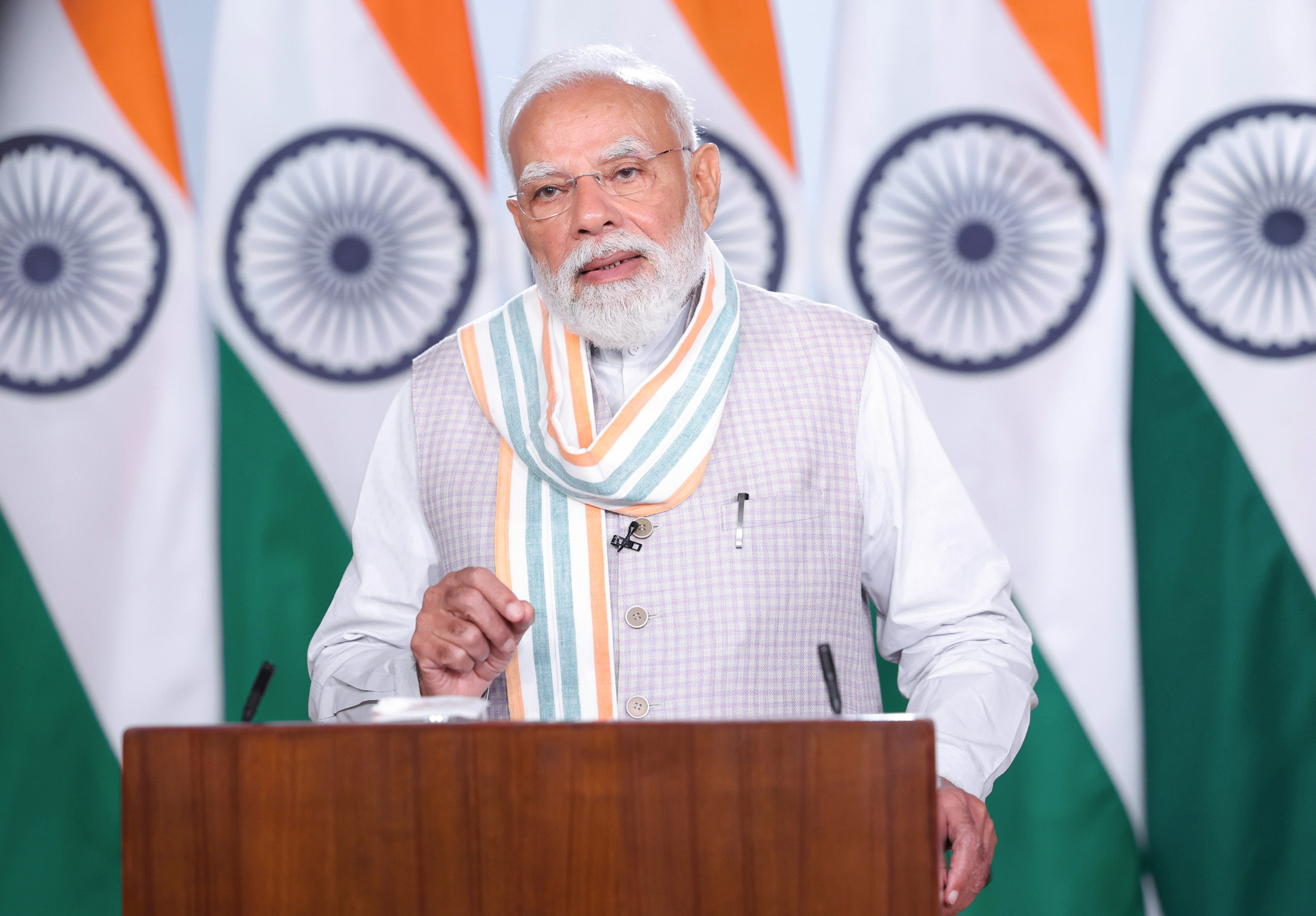
On May 26, 2014, Narendra Modi stood in the forecourt of Rashtrapati Bhavan and took the oath of office. The crowd was immense. The hope was greater. India had elected not only a prime minister, but also a promise: that a chai-wala from Gujarat, a self-made man who had carved his way from nothing, would finally deliver the India that had been talked about for decades but had never really arrived.
Twelve years later, it’s worth stopping. Neither to celebrate nor to condemn. Just to watch.
Today, gas prices have risen again. The fourth hike in less than two weeks. Crude oil has risen above a hundred dollars a barrel, driven by the US-Iran conflict and the closure of the Strait of Hormuz. In Delhi, in Mumbai, in every city where a working family fills up the gas tank or pays for a car ticket, the anniversary is marked in the only currency that matters: the cost of the day.
This is not entirely Modi’s fault. Global oil markets are not responding to the Southern bloc. But twelve years ago, when prices rose under Manmohan Singh, Modi called it a failure of governance. He wasn’t wrong then. He cannot ask to be judged differently now.
This is the first entry in the ledger.
Let’s be fair about what these twelve years have brought.
India’s infrastructure has been transformed. Highways that were once nightmares have become real roads. Airports that embarrassed the country have become airports worthy of becoming one. The UDAN program brought air travel to cities that had never seen commercial flight. Jan Dhan accounts banked the unbanked. Toilets were built – hundreds of millions of them – in a country where open defecation had been a public health disaster for generations. The Ayushman Bharat health insurance scheme extended a safety net to families who did not have one.
These are not small things. These are big things. Fair accounting must say so.
READ: Crony capitalism didn’t start with Modi – but it never looked like this (May 23, 2026)
Modi also gave India something harder to quantify but impossible to ignore: a renewed sense of national confidence. Whether one agrees with its ideological form or not, the India that finds itself facing Washington today is no longer the one that politely nodded its head and hoped for the best. When Rubio arrived last week with an invitation from the White House and promises of US energy deals, India received him on its own terms. This posture didn’t come out of nowhere. Twelve years of deliberate strategic autonomy built it.
And then there was the Melody caramel.
This seems trivial. This was not the case. During his visit to Italy, Modi took out a packet of Melody – an Indian sweet worth ten rupees – and handed it over to Italian Prime Minister Giorgia Meloni. Meloni smiled, called it “very, very good caramel” and the moment went viral around the world within hours. The hashtag was already there – the internet had long called them “Melodi”, a combination of their names – and Modi, with a simple gesture, played it perfectly.
In the entire history of diplomacy, no ten-rupee toffee had ever done so much work. No head of government has ever shown up to a G7 summit with a bag of candy and left having conquered the Internet. It was spontaneous, it was confident, it was undeniably Indian – and it could only have been done by a leader completely comfortable in his own skin on the world stage. It’s not nothing. It’s actually something.
Credit where credit is due.
Now the other side of the ledger.
The promise of two billion jobs a year – the central economic commitment of 2014 – has never been delivered. Unemployment among educated youth in India remains a quiet crisis that no infrastructure project has addressed. The economy has grown, sometimes impressively, but growth has not been strong enough. The man who sells vegetables, the woman who does piecework at home, the graduate with a degree and no offer letter – they are still waiting.
The NEET paper leak scandal is before the Supreme Court today, on this anniversary. It’s a fitting coincidence. India’s examination system – the gateway through which millions of young people hope to escape poverty and enter a profession – has been repeatedly compromised. The government that promised to clean up the institutions has struggled to protect the most fundamental element: the integrity of a fair test.
And then there is the question that twelve years have made unavoidable.
Modi came to power promising minimum government and maximum governance. What India got was something different – maximum Modi. The Prime Minister’s face appears on vaccination certificates, on government advertisements, on station walls. The party has become the man, and the man has become the State. Ministers do not speak without calibrating what he would like. Institutions that are supposed to be independent have learned to be careful. The press that was supposed to ask tough questions has, with few exceptions, learned to ask soft questions.
READ: Voter roll crisis in India: how democracies are fighting back (
It is not a dictatorship. Let’s be specific. India has elections, they are contested and sometimes the BJP loses them. But democracy is not limited to elections. It is also the quality of disagreement, the freedom of dissent, the confidence of institutions to act without looking over their shoulders. On these measures, the twelve years have not been kind.
There is a particular sadness in seeing a leader with real ability – and Modi has ability, this column will not pretend otherwise – slowly become incapable of distinguishing between himself and the country he leads. When criticism of the government becomes, in the ruling party’s view, criticism of India itself, something important is lost. Not just for the opposition. For everyone.
The greatest leaders leave institutions stronger than they found them. They build systems that survive them. Over time, they become useless. The test of Modi’s twelve years – and the three remaining in this term – is whether he builds an India that will prosper after Modi, or an India shaped by Modi that will struggle to find itself after he leaves.
Twelve years later, this question still has no comfortable answer.
The forecourt of Rashtrapati Bhavan was full of hope that evening in May 2014. Some were justified. Part of it is still pending. And part, discreetly, was abandoned.
It’s not nothing. But that is not enough.
|
Sources 2/ https://americanbazaaronline.com/2026/05/26/481564/ The mention sources can contact us to remove/changing this article |
What Are The Main Benefits Of Comparing Car Insurance Quotes Online
LOS ANGELES, CA / ACCESSWIRE / June 24, 2020, / Compare-autoinsurance.Org has launched a new blog post that presents the main benefits of comparing multiple car insurance quotes. For more info and free online quotes, please visit https://compare-autoinsurance.Org/the-advantages-of-comparing-prices-with-car-insurance-quotes-online/ The modern society has numerous technological advantages. One important advantage is the speed at which information is sent and received. With the help of the internet, the shopping habits of many persons have drastically changed. The car insurance industry hasn't remained untouched by these changes. On the internet, drivers can compare insurance prices and find out which sellers have the best offers. View photos The advantages of comparing online car insurance quotes are the following: Online quotes can be obtained from anywhere and at any time. Unlike physical insurance agencies, websites don't have a specific schedule and they are available at any time. Drivers that have busy working schedules, can compare quotes from anywhere and at any time, even at midnight. Multiple choices. Almost all insurance providers, no matter if they are well-known brands or just local insurers, have an online presence. Online quotes will allow policyholders the chance to discover multiple insurance companies and check their prices. Drivers are no longer required to get quotes from just a few known insurance companies. Also, local and regional insurers can provide lower insurance rates for the same services. Accurate insurance estimates. Online quotes can only be accurate if the customers provide accurate and real info about their car models and driving history. Lying about past driving incidents can make the price estimates to be lower, but when dealing with an insurance company lying to them is useless. Usually, insurance companies will do research about a potential customer before granting him coverage. Online quotes can be sorted easily. Although drivers are recommended to not choose a policy just based on its price, drivers can easily sort quotes by insurance price. Using brokerage websites will allow drivers to get quotes from multiple insurers, thus making the comparison faster and easier. For additional info, money-saving tips, and free car insurance quotes, visit https://compare-autoinsurance.Org/ Compare-autoinsurance.Org is an online provider of life, home, health, and auto insurance quotes. This website is unique because it does not simply stick to one kind of insurance provider, but brings the clients the best deals from many different online insurance carriers. In this way, clients have access to offers from multiple carriers all in one place: this website. On this site, customers have access to quotes for insurance plans from various agencies, such as local or nationwide agencies, brand names insurance companies, etc. "Online quotes can easily help drivers obtain better car insurance deals. All they have to do is to complete an online form with accurate and real info, then compare prices", said Russell Rabichev, Marketing Director of Internet Marketing Company. CONTACT: Company Name: Internet Marketing CompanyPerson for contact Name: Gurgu CPhone Number: (818) 359-3898Email: [email protected]: https://compare-autoinsurance.Org/ SOURCE: Compare-autoinsurance.Org View source version on accesswire.Com:https://www.Accesswire.Com/595055/What-Are-The-Main-Benefits-Of-Comparing-Car-Insurance-Quotes-Online View photos

 |
 |
 |